
Episode #327: I Am You Are with Ivy Huang
About This Episode
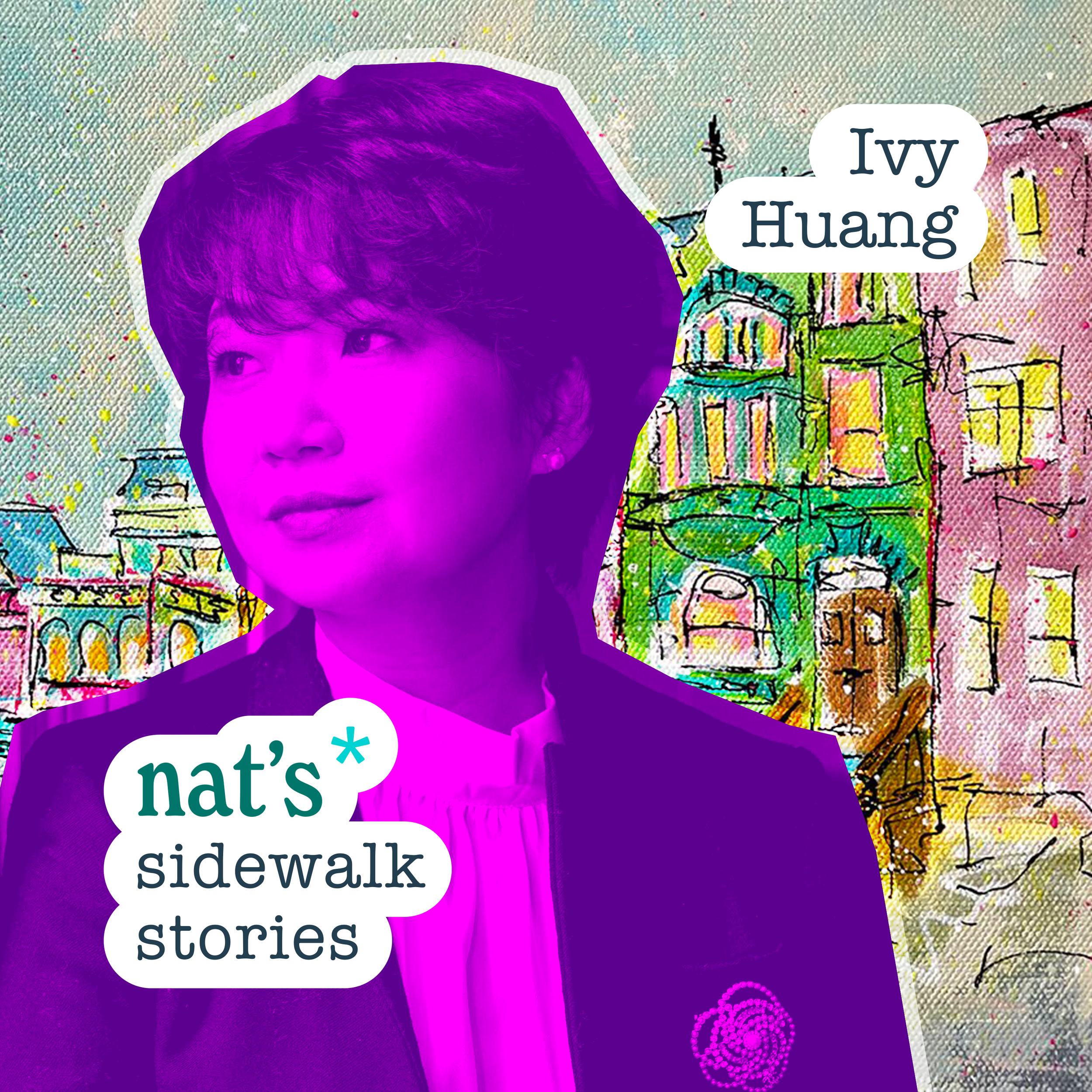
What does a gallery actually owe to the artists it represents? Ivy Huang has a clear answer — and it goes well beyond hanging work on a wall. In this conversation, Ivy talks about what it means to truly see an artist, how to make a gallery feel like a place anyone can walk into, and why she thinks the gallery's role has fundamentally changed in the social media age. She also tells the story of her grandmother, a Chinese opera singer who lost her voice and still woke every morning at 5:30 to practice — a woman whose example shapes everything Ivy has built in Jersey City and beyond.
Meet Ivy Huang
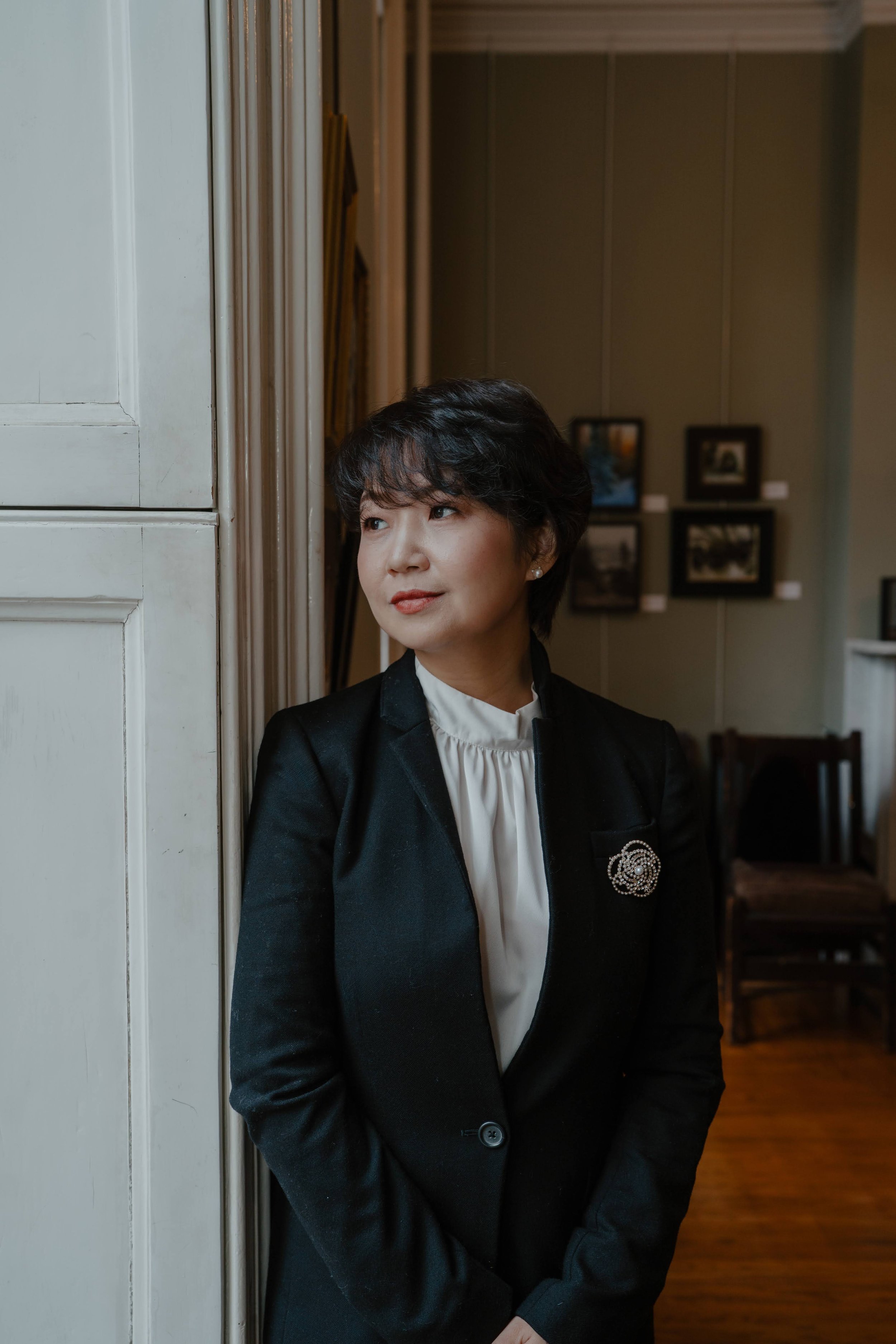
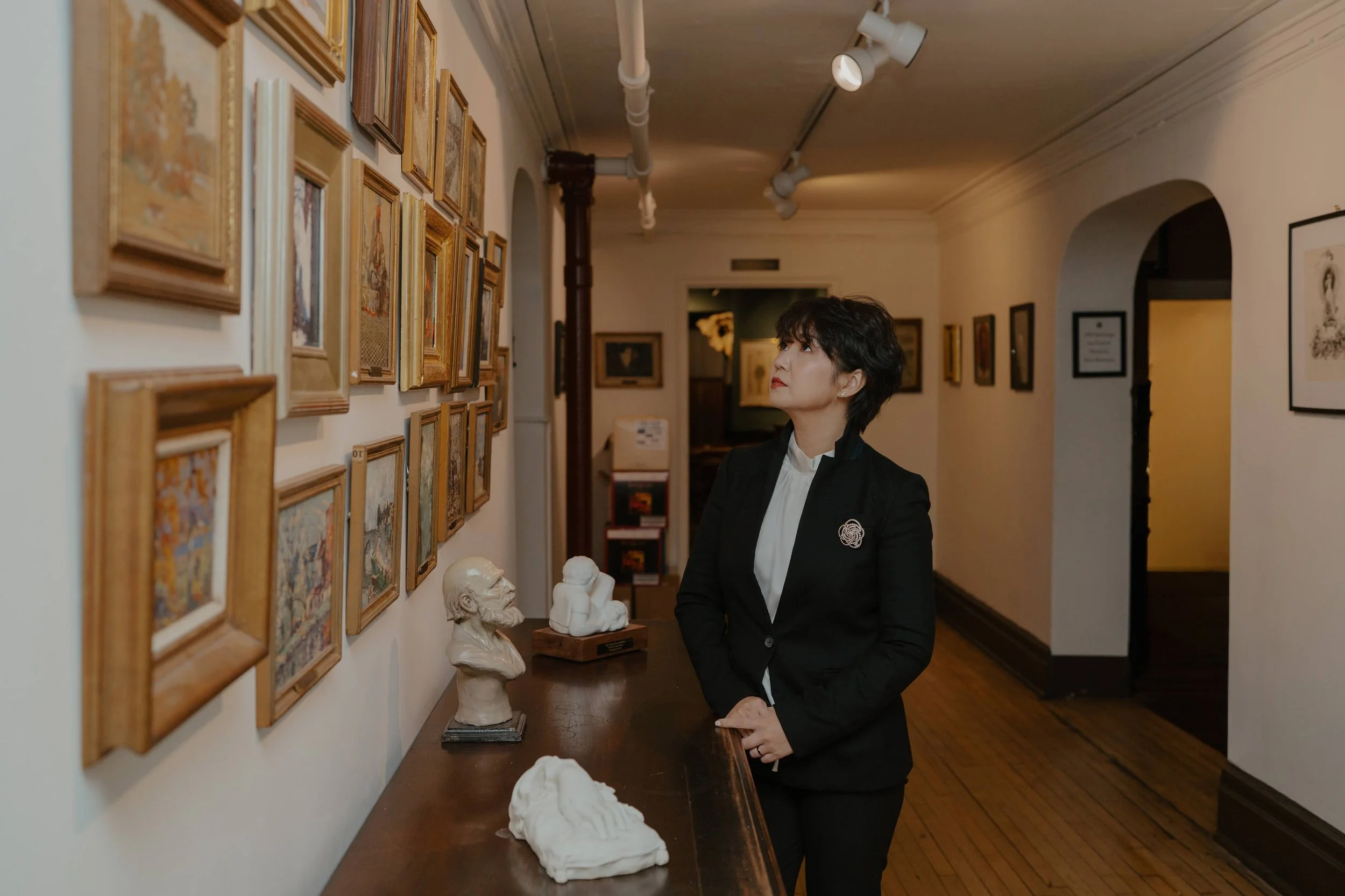
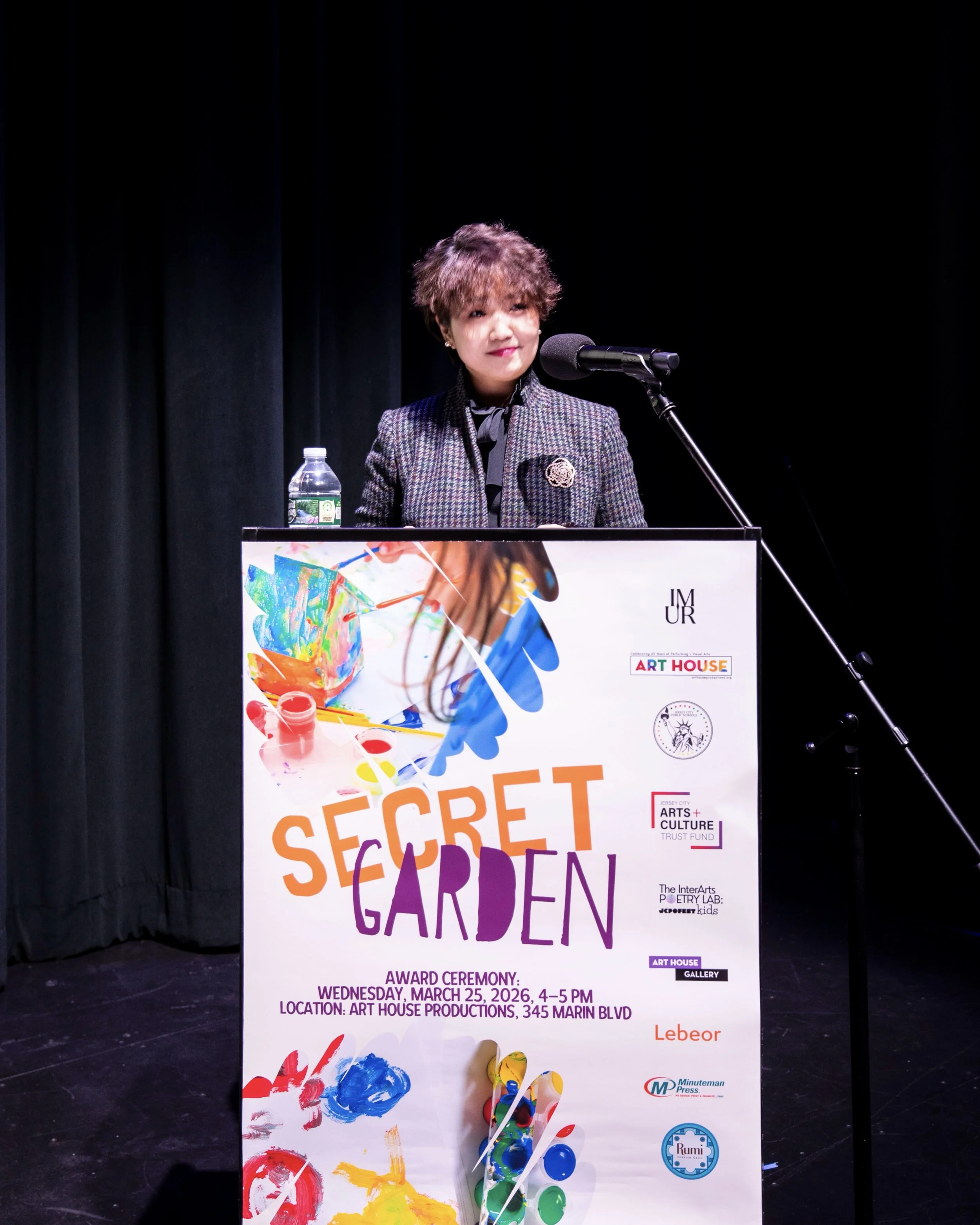
Ivy Huang is the founder of IMUR Gallery on Green Street in Jersey City — a space whose name, I Am You Are, arrived by accident and turned out to be Rumi spelled backwards (which is also the name of the amazing Turkish restaurant next door). Before opening the gallery, Ivy worked in international marketing and logistics and practiced law as a barrister at the High Court of New Zealand. She is also co-founder of Ivy and Tris Productions with writer Tris McCall, which produces short documentary content about artists and curators. Through IMUR Initiatives, she connects Jersey City artists with international opportunities and residencies.
Connect with Ivy Huang
Key Insights
A gallery is not a storefront. Ivy is clear that IMUR exists to carry a message, not just to display work. Every exhibition has a conceptual direction — diversity, rethinking collaboration, positivity — and the gallery's identity depends on that consistency.
Studio visits are about mutual recognition. Ivy has done around 160 studio visits. She goes not just to evaluate work, but to let artists evaluate her — to see whether there's genuine understanding on both sides before any commitment is made.
Showing is more powerful than teaching. Ivy's grandmother, a Chinese opera singer who lost her voice, never stopped practicing every morning. Ivy says she wasn't teaching — she was showing. That distinction runs through everything Ivy does.
Artists shouldn't have to post like influencers. The gallery's new role, in Ivy's view, is to take on the marketing, branding, and social media strategy — so artists can focus on making work rather than performing their own visibility online.
Collaboration requires matching expectations, not just enthusiasm. Ivy's test for a good collaboration: both parties want the same thing, communicate openly, and are thinking about the long-term relationship — not just the project at hand.
Jersey City artists need opportunities beyond Jersey City. Through IMUR Initiatives and Art Voyages, Ivy is working to connect local artists with international residencies and exchanges — not for commercial reasons, but because exposure to different environments deepens the work.
Resources
Tris McCall — Episode 105 of Nat's Sidewalk Stories
Ivy and Tris Productions — 'The Curators' Episode 1
Coming Up Next
Join me for the next episode where I will talk with artist Kati Vilim!
Connect with Nat
Music:Our theme music is “How You AmazeMe,” composed by Jim Kalbach and performed by Jim Kalbach, Bryan Beninghove, Charlie Siegler, and Pat Van Dyke.
Support the Show: Subscribe to the podcast and sign up for Nat's Substack to receive additional stories and visuals that complement each conversation.
Nat's Sidewalk Stories explores the intersection of place, community, and storytelling through conversations with artists, organizers, and community builders shaping Jersey City. New episodes release on the 2nd and 4th Thursdays of each month.
Full Transcript
NSSP 327 Ivy Huang
[00:00:00]
Ivy Huang: We cannot just have a place to hang all the artwork without saying anything. There's a value inside the gallery, the inside organization.
Every market changes so fast these days because of social media, because computer generated, systems . Gallery, we have to do posting, we have to design, we have to do marketing. Otherwise who's gonna do those things for an artist? I don't think it's entirely reasonable for the artist to take care of their own social media all the time. Posting like influencers. That's not their job.
Nat Kalbach: That's Ivy Huang, and that sentence tells you a lot about how she thinks about what a gallery actually is and what it owes to the people it [00:01:00] represents. Ivy is the founder of IMUR, or IMUR Gallery on Green Street in Jersey City, a space whose name, IMUR, arrived by accident and turned out to be Rumi spelled backwards.
That is also the name of the Turkish restaurant next door, which I love. Make of that what you will. Before the gallery, Ivy worked in marketing, international logistics, and she also practiced law as a barrister at the High Court of New Zealand. She didn't leave any of those lives behind. She says she enlarged herself, and in this conversation, I really felt that.
She was raised by her grandmother, a Chinese opera singer in China, who lost her voice and still woke up every morning at 5:30 to practice. I think everything Ivy has built traces back to that woman. The discipline, the long view, and the belief that showing someone something is more powerful than teaching them.[00:02:00]
I'm Nat Kalbach, and this is Nat's Sidewalk Stories.
Ivy Huang: Hi Nat. Thank you so much for having me today. It's a beautiful day and I'm excited to do this with you.
Nat Kalbach: So tell me a little bit about The name of your gallery , because I am UR is pretty philosophical, and then having it next to Rumi is a pretty cool thing. Where did it come from and does it still describe what you're doing?
Ivy Huang: So when I first started the gallery, I, I need to have a name and I didn't want to have a long name. I want to keep it short and. I want that name to have a meaning, of course that reflect the concept of the gallery.
I am You are. And so it was originally spelled out IMUR. And then it was one day I was thinking about it's too long and I have to put a comm in between. So [00:03:00] I just, used the initial, from each word and I put together it become IMUR, the four letters, right? And then I actually think, oh, this actually Rumi spelled backward.
And then I instantly decide that's it. That's the name for my gallery.
I think the gallery right now is more well known for Im more rather than IMUR.
Nat Kalbach: You told me that you have done I think it was like 160 studio visits, right. And you said that, there are about finding out whether there's a mutual, respect between you and the artist, and if you can build something meaningful, together. So what does that moment of recognition that you can do that feel like?
Ivy Huang: I love studio visit, not because, only I want to get to know them. I want them to feel me as a person as well, since that relationship has to start [00:04:00] from like mutual understanding. I can explain how I feel about that particular style or that form of art. And from there they can see, okay, this gallery understands me or not. Right? Not only just trying try to sell, which is nothing wrong with with that either, but for them to have the initial understanding that I do see more than just selling the commercial point. I think this is in the longer term that we can work together. The goal is to find more audience, , that can resonate to that particular art style.
And sometimes it is important to know the artist's personal stories, how they come all the long, long way to create this art, and how much time they spend. These are information that can support our marketing strategy, not heavily relying on their personal stories, but to [00:05:00] elevate their personality in individualism from that particular artist.
So more people can find, okay, I feel the same, or, I really love the art. So that come back to the name of the gallery. I am You are. So the collectors or the audience, they instantly can relate to the artwork.
Nat Kalbach: 160 visits, that's a lot. Are there visits something unexpected happened
Ivy Huang: Not ever. Studio visit will come to a exhibition. Sometimes I have to get to know them and they have to get to know me. For example, some of the, installation work, that I see from artist, they were laying on the table. And then when I go back to, my gallery, I start thinking about the space and then I suggested we can hang them up, make it floating and to automate the, effect, visually.
The artist never thought about it, and then it turns out to be [00:06:00] a, a really good presentation. I like those moments when we come to the same conclusion. Okay, let's, let's do this. That's gonna make the exhibition look great. That moment, that feeling is really satisfying.
We understand that we are in this together. Not okay, I give you my work and you do whatever you need to do. Everyone's part of this. Every single artist, even in a group show, they're part of, something . That feeling is really different than. Just commercial, transactional, work.
Nat Kalbach: I think that people are sometimes very intimidated about going to a gallery or just like walking into a gallery. They are intimidated by that feeling that they're entering a space where someone might want to sell them something. And then the other thing I think is that they are, afraid that they don't know what this artwork is supposed to be or how that connects to them. What do you do to make them feel less concerned about these [00:07:00] things?
Ivy Huang: That's one of the things when I first started the gallery and I didn't want to create another rigid or cold. Space. I want that space to be more open, more warm, so people walk in, they don't feel any pressure. I do love, have like small conversations with them, I normally just say, hi, I never seen you before. Do you live around here? This is the first time you visit, or like, this kind of a small personal conversations. And then you can see their reactions too. They instantly become more relaxed. They sometimes, that's okay for me. And then we start having little conversations I encourage them to go upstairs because lighting is different. So everything is based on the fact that what they can see from the gallery, not something, they have to project. I want them to know I don't have any expectations other than I hope you enjoy the art that you see.
It's very natural [00:08:00] to create that natural initial, encounter, I think it, , is type of art. We can be coming knowing each other. They can come back and they have no hesitation to ask me, Hey, what do you think?
I, I like this art, but I think the frame is a little bit dif difficult for me to handle or all this become practical, become like human questions rather than. This artist looks very prestigious or this, it's not about that. It's really about the art itself and how comfortable they can be in the environment to express how they react to certain things.
If everything happened naturally, I don't think art is that difficult, to be accepted.
Nat Kalbach: Ivy came to the gallery world through a long and winding route. She grew up in China, raised mostly by her grandmother, a Chinese opera singer. She lost her voice before Ivy was born, but never stopped practicing, and that is something really touching that Ivy will [00:09:00] talk about.
It will tell you something about where Ivy's values come from
Ivy, you told me, that your grandmother, was an opera singer in China and you were interested in going the art path, but that wasn't the path for you and now you spent your life, in service of other people's art, right?
So do you ever think about that irony or is that not an irony at all?
Ivy Huang: I miss my grandma a lot. She was the one raised me and she was the one taught me a lot before I turned 13. That's the time that she passed away I just think the art really can give people, a different power, to move forward, to sense something different in their lives.
They don't have to be the artist, but a lot of people can enjoy art. And then the art make them feel better as individual and they can do their professions even better than anyone [00:10:00] else. Culturally, it is not common like for Asian family to allow you to become artist, based on whatever the economic reason.
But that's always something I enjoy doing throughout my whole life so far. No matter what profession I was in, international trading or legal work, all these of things. When I get tired and when I go out to the museum to look for art, I feel recharged. I feel there's something wonderful happening in my brain, and then I come back to my work, to my profession, and then I can do more. I feel there's more I can provide, this is how the art impact on me and I appreciate that and I appreciate my grandmother a lot.
Nat Kalbach: I'm sure as an opera singer, you have to have a lot of discipline and, there's also lots of sacrifice do you think she knew what she was teaching you.
Ivy Huang: I think she was [00:11:00] very much aware of her responsibility to the next generations. Back in the day as a Chinese opera, there was no books. You follow, you are practicing as apprentice to a master. So you follow that person the whole time. So every lyric is word by word, mouth by mouth.
So she started to know how to read or write by herself, because she's thinking why I am learning everything from. Talking, right? So she started to know, I, I, I think it's important for me to read newspaper and all that.
And then because she lost her voice because medical reason, that's why she stopped , her career. She got married to my grandpa and, and then started family that way. She still kept on waking up 5:30 AM in the morning and start practicing her Posture.
She tried to, revive her voice, her vocal, and she tried many [00:12:00] years. . The reason I know that is, I still have like tiny memories from the past. 'cause I was, with her all the time and I still remember, wow, 6:00 AM I can hear Chinese, Opera in the radio.
I think she was fully aware what she's responsible for me, , as a caregiver, right? She's not teaching. I think it is more about, she's showing me this is the life and this is the value, and this is what I believe, how to be a decent person, and she's showing that to me rather than teaching me. And then that hugely and deeply influenced me until today.
Nat Kalbach: You're a person that reinvented herself, marketing and logistics and a barrister at the high court of New Zealand. It's a long way from being at Im war gallery and on Green Street. Are they different Ivys or the same Ivys?
Ivy Huang: All these. Life turning [00:13:00] point. I really learned something and I kept the knowledge and the experience I learned from that particular profession at the time. And slowly they accumulating, I don't think. I ever realized that was a turning point. I just naturally thinking, okay, this is next step. Okay, what am I gonna do now? , I learned marketing strategy. I learned how to do branding. Then I start doing international logistic and trading.
I have to check all the details and making, making sure everything's correct, all the small things that help me for the next profession. So when I study law, I also have to pay attention to details.
But in a wider range of understanding of the whole system, the legal system, the human behavior, how we think, what's the intention, how to show you have intention, what's your action, all that. And, and I start excited again. Okay. This is [00:14:00] new and another new environment, another new, area for me to study, to learn to build.
I don't think I changed. I think I become, I enlarged myself, but it is still me based on what my initial value was formed, when my grandma told me. So everything is built up, to this point and it's very fortunate that I can use whatever that I know I learned to the current profession.
I'm just very lucky to be myself at this point.
Nat Kalbach: You have worked with the Turkish consulate and with, art House and the Poetry Festival.
Tris McCall, and with other curators. What's the common fret in collaborations that work
Ivy Huang: When both parties want to achieve something through the collaboration. First you both have to love [00:15:00] and open to the idea , you understand the scale . There's an intention. I want to collaborate, and then there's, agenda.
How to collaborate. What to collaborate, and then open communication. As we are going through the collaboration we have to be always on the same page, like when to post, should I tag you? That seems like very tedious thing to ask, but I think that's courtesy. That shows mutual respect.
So you both want this, you want to maintain that good relationship from the start to the middle, to the end, to the future. That long-term relationship that you want to have, it is the base for the collaboration. This project finished doesn't mean okay, our relationship finished.
Nat Kalbach: You and Tris McCall, who I also had on the podcast, you have, an actual entity together, which is Ivy and Tris Productions.
That's a very different level of commitment what [00:16:00] made you formalize that? What is in the work, what can we expect from you two? Um, with Ivy and Tris productions.
Ivy Huang: So Ivy Entries Productions, was established in Jersey City. For both of us, we want to do more things for the Jersey City artists . There are many of Jersey City artists and we try to figure out a way that's more modern and effective to promote them.
He's been writing a lot about Jersey City artist he is, um, a well respected person, In Jersey city, in the whole community actually.
We both really respect artists, the hard work they put behind, their profession. We want to put something together on television, like mini TV series, like the curators. So we can show the audience in different way, not just a regular studio visit, but how we put shows together. Why there is [00:17:00] exhibition.
Who's doing the exhibitions? Differences between this exhibition or like a museum, exhibition, gallery, exhibition, commercial space, so in a way is to educate the audience, to educate the market, if possible, in order to accept and to open up to the artist.
Nat Kalbach: I love the first episode. We will link it up in the show notes. It was really great.
You are connecting with other galleries. International artists, from Turkey and other places with artists that are locally. Are you thinking of that as a whole network of different things that can happen under your or with your Ivy Universe?
Ivy Huang: The original idea, if we can bring, artists from overseas to here to show, um, if we can take our work from here to go overseas to show , is helping, it is building the bridge between different [00:18:00] continent and different culture. When you in a different environment, it kind of stimulate your creative process differently. You are absorbing all the information coming from completely different environment, culture, and the music, the language, the fashion.
Everything can be different. And that will show and reflect on your artwork. I'm hoping, Jersey City artist, they need to have more opportunity outside of a Jersey city.
Not necessarily about selling. Again, this is not about only commercialized, but how they develop as individual, as artist, it is really something can make you different than the other. From the beginning, that was the goal.
We collaborate with, organizations overseas or in Asia and Europe. A lot of the younger artists, they don't even know how to start writing the application.
They don't [00:19:00] have any references, right? They just graduate and they want to apply for residency. Who gonna give them reference? Who they never worked with anybody professionally or from school. But the professors, cannot always individually assist your reference request, right? And you need to have a more, experience that way.
Is investment per. Process too for the artist. Not everything maybe is free, but you have to look at the value that generated from that particular program that you want to sign your up.
Nat Kalbach: So IMUR, sits in a city that's changing pretty fast, how do you feel the gallery's role if there is one in that ever changing, place, are you a stabilizing force, are you a mirror or are you something else?[00:20:00]
Ivy Huang: Gallery always have conditionally have a role validate artists, in the market.
In my gallery, I feel there's so much responsibility to the community.
A positive curatorial direction is important we don't normally do exhibition without any conceptual, background behind it. There must be some message we try to, present. Diversity or positivity or rethink, collaboration.
That's one of the biggest role the gallery has. We are responsible to the community. We are responsible to what we show.
Sometimes it is in the lighter end, sometimes in the heavier end. But the gallery itself has to have identity.
We cannot just have a place to hang all the artwork without saying anything. There's a value inside the gallery, the inside organization.
Every market changes so fast these days because [00:21:00] of social media, because computer generated, systems . Gallery, we have to do posting, we have to design, we have to do marketing. Otherwise who's gonna do those things for an artist? I don't think it's entirely reasonable for the artist to take care of their own social media all the time. Posting like influencers. That's not their job.
It's very stressful. So it's, it, it gets to be for on someone's shoulder and right now I think the gallery has responsibility to do it. So this has become gallery's new role. And I, I know that role is not easy because you have to know a lot of things. In order to do that, you have to connect with the right people. We normally host artist dinner. When we have oversee artists coming in or from outside of Jersey City coming to Jersey City, we will organize those kind of things. Not only just for posting purpose. We actually want the artist to communicate with each other. So last time we had this artist [00:22:00] from Turkey and he is also a professional, video game designer. He digitalized museum for the Turkish government. So I have all these, local artists coming to the table and talk about that. The topic about ai. They talk for one hour almost over the dinner.
This is interesting how you think this is gonna change our artist life. They having the conversation themselves. So this is also, the gallery's role. We put the people together. We're not event organizer in general. We are organizing the event for an artist's purpose. The goal is to understand and to reach wider audience for the artist. So it's a big role that we play.
Nat Kalbach: Thank you so much for sharing that, Ivy. I found that very interesting. I wanna come to my last question, which is my signature question. If you could spend an afternoon with anyone [00:23:00] from Jersey City's past, who would it be?
Which corner would you choose as your meeting spot, and what one question would you ask them?
Ivy Huang: I did look up, because I'm not from Jersey City. But in general, I always love to spend time or if I have the chance to ask, someone that have more, um, intersection in their career. Maybe there's something to do with myself too. I like to know how they put things together.
So I picked a person, his name is Frank Hague.
He was former Jersey City, um, mayor. And I think he did a lot of things and he's very much a intersection of a lot of areas. So if I have a afternoon span with him, in Newark Avenue where a lot of things happening from there, I do want to ask him like, how do you build something that's long [00:24:00] lasting without losing your own integrity in, in the process because you involving yourself with the process. That's for sure.
Nat Kalbach: I love that you picked him, and it's also almost like a tongue in cheek. Question to him because he did lose his integrity, right? Almost like, Hey, Mr. Hague, what would you do differently .
He does have a legacy of course, in the city that
just undeniable. We have so many buildings that are built during his 30 years of being a mayor someone who came from such a poor, uh, background and starting out with a lot of maybe , good intentions too, right?
It's a great choice.
Ivy Huang: It is a great city to live in. It's great city. Very dynamic. , It just really up to us how we can build this together rather than just how I can do this. If we can do everything, more [00:25:00] together., Maybe we can even do things faster.
Nat Kalbach: Yeah. And there comes your philosophy of collaboration out again, which I think that's, your special superpower. I'm curious and excited to see where that superpower is leading you in the future, because I think that's the way to go in general. That was such a great conversation.
Thank you so, so much, Ivy, for taking the time and being on Nat's Sidewalk Stories today.
Ivy Huang: Thank you so much for having me today. I had a great conversation with you as well.
Nat Kalbach: What Ivy said at the end, that it's really up to us how we build this together, that stayed with me. It's the same thing she said about the gallery, about collaboration, about the city. It always comes back to the you are in I am, you are.
You can find Ivy's gallery, IAMYOUARE, on Green Street in Jersey City and on Instagram. I will link it in the show notes. And keep an [00:26:00] eye out for Ivy and TRIS Productions. Their first episode, "The Curators," is already out, and I'll link it in the show notes as well. The music you heard is "How You Amaze Me," composed by Jim Kalbach, performed by Jim Kalbach, Bryan Benninghove, Charlie Siegler, and Pat Van Dyke.
I'm Nat Kalbach, and you can find me at natkalbach.com. See you on the sidewalk.
