
Episode #326: Earning Your Stripes with Chris Perez
About This Episode
Some buildings hold a whole city's story inside them — and some people dedicate years to making sure those buildings don't disappear. Chris Perez, president of the Jersey City Landmarks Conservancy and founder of the Bayside Park Neighborhood Association, has been doing exactly that. This conversation moves between the personal and the civic: how an outsider earns his place in a community, why history belongs to the people who bother to learn it, and what it actually takes to save a building — and a neighborhood — from being erased.
Meet Chris Perez
Chris Perez grew up in Queens, moved to Jersey City's South Side in 2007, and spent years quietly learning the history of a neighborhood that wasn't originally his. He founded the Bayside Park Neighborhood Association and now serves as president of the Jersey City Landmarks Conservancy, leading the Save the Powerhouse campaign to adaptively reuse the 1908 landmark before it's lost. His community work spans historic preservation, zoning advocacy, youth programming, and building connection between new and longtime residents.
Connect with Chris:
Jersey City Landmarks Conservancy
Walking Tours- Jersey City Landmarks Conservancy on Eventbrite
Key Insights
Earning your place in a community takes patience, curiosity, and listening before you ever try to lead.
History on the South Side isn't lost — it's sitting in archives, old maps, and the memories of neighbors who are slowly disappearing.
The Save the Powerhouse campaign has been running since 1999. Preservation takes longer than anyone wants it to.
Once a historic site goes into fully private hands, the community loses its ability to shape what it becomes.
New arrivals don't always know what already exists — giving them access to neighborhood history changes how they show up.
The goal for the Powerhouse isn't just preservation — it's public access, community use, and Jersey City maintaining some ownership stake.
Visual Documentation
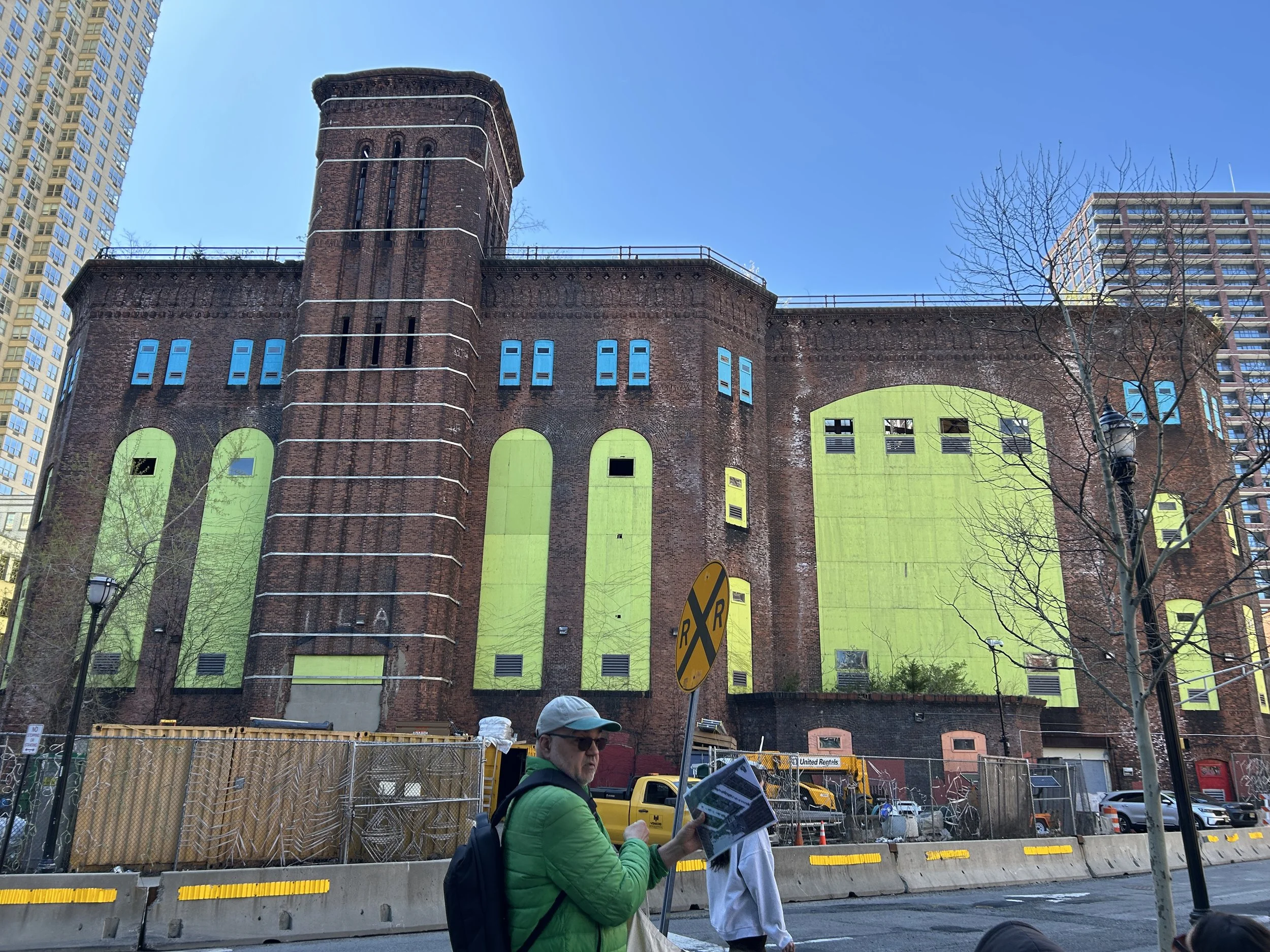
Powerhouse at a recent walking tour with John Gomez - photo Nat Kalbach
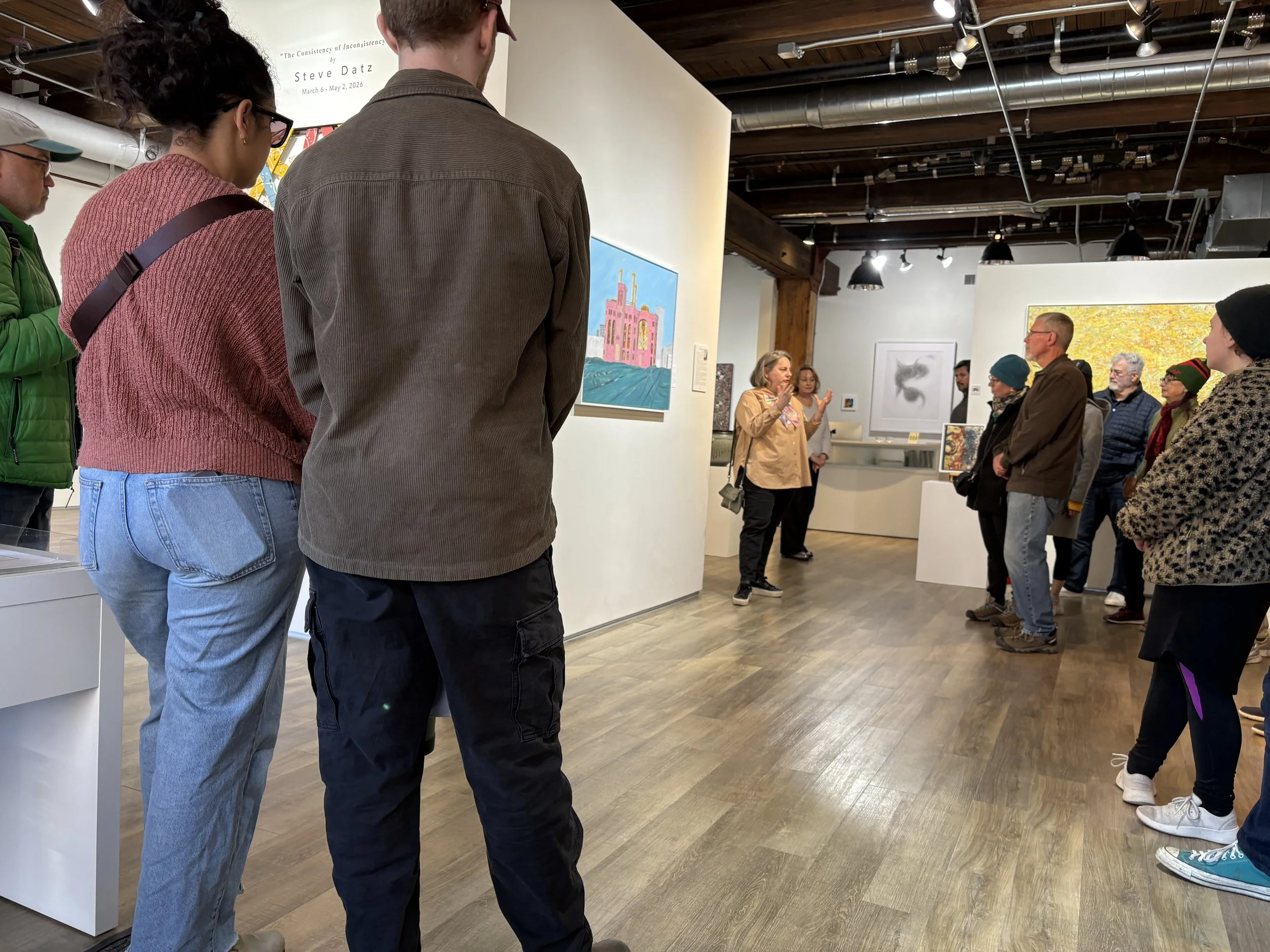
At Novado Gallery- talking to the JCLC walking tour participants about the powerhouse painting at Novado Gallery - Photo Chris Perez
Related Resources
Jersey City Landmarks Conservancy: jclandmarks.org
John Gomez, founder of the JCLC — one of the best walking tour guides in Jersey City
Save the Powerhouse campaign — follow updates at jclandmarks.org
Bergen Arches and the Embankment
Coming Up Next
Next up: Ivy Huang, founder and director of IMUR Gallery — artist, educator, and connector of creative communities across Jersey City and beyond.
Connect with Nat
Website: natkalbach.com
Music: Our theme music is "How You Amaze Me," composed by Jim Kalbach and performed by Jim Kalbach, Bryan Beninghove, Charlie Siegler, and Pat Van Dyke.
Support the Show: Subscribe to the podcast and sign up for my Substack to receive additional stories and visuals that complement each conversation.
Share Your Story: What sidewalk stories have you discovered in your neighborhood? Share them with me through email or social media.
Nat's Sidewalk Stories explores the intersection of place, community, and storytelling through conversations with practitioners, community leaders, and local changemakers.
Full Transcript
Chris Perez: You couldn't possibly recreate the vibe of the powerhouse. That's one of the core reasons why it's so important that it's preserved and adaptively reused. It's magical and irreplaceable, and creates an opportunity to experiences, whether they're dining or arts, open space on the roof and on the little bit of land around it.
There's so much opportunity that can come from that place.
Nat Kalbach: Some buildings hold a whole lot of story of a city in them.
And for me, that's the Jersey City Powerhouse. It was built in 1908 to electrify the path trains, though they weren't called that to back then, [00:01:00] and It is just one of those buildings, it's been sitting downtown for over a century, and it's crumbling a little bit more each year while people argue about what it could become. my guest today has been arguing on its behalf for years, Chris Perez is the president of the Jersey City Landmarks Conservancy and the founder of the Bayside Park Neighborhood Association. He actually grew up in Queens and moved to Jersey City in 2007, and he has spent years quietly persistently learning the history of a neighborhood that wasn't originally his. Trying to earn his place in it, and then he was fighting to make sure that place doesn't disappear. This conversation today is about preservation, but not just of buildings. It's about who gets to tell a neighborhood story.
And how new arrivals and longtime residents find each other and what we lose when we don't pay [00:02:00] attention. I'm Nat Kalbach, and this is Nats sidewalk stories.
Chris Perez: I'm originally from Queens. I was born in Jackson Heights and Flushing. My father is from Cuba. I'm first-born American on that side. My mother, I just recently learned this, she passed a long time ago, is of Scottish descent.
It's kind of crazy how we're learning about our ancestry as we're going along, and we think certain things, and then there's some corrections along the way. I moved around a lot as a child, for a lot of different reasons. Pretty chaotic family life, I went off to school in Upstate New York lived in Manhattan. And then I wanted, to find a sense of community, and to be really honest, find a place I could afford, to buy to live in.
And I discovered this place called Jersey City. , I came out here after work one evening at, like, [00:03:00] midnight, just to get an idea of what it was like. I ventured to MLK Drive and Wilkinson Avenue, at midnight in the middle of the summer of, two thousand and seven.
And it was kind of like an awakening. It kinda taps into me always being curious. Within, six months or nine months, I found a home on the south side, and that's how it happened.
I started to just get in- involved in the community. Jersey City, had some of the qualities of New York that I remember when I was younger. A little more sense of neighborhood, a little bit more of, knowing your neighbors, a villagey kinda feeling, a little sense of closeness and intimacy in terms of just knowing who the people are around you.
New York has changed a lot. And Jersey City had something that resonated with me, some feeling of community that was nice.
Nat Kalbach: Was there like a specific moment after you moved where you really felt that this is a place where you're [00:04:00] rooted?
Chris Perez: I feel like I went through a period of having to earn my stripes, in the neighborhood. The neighborhood back then was predominantly Black and brown, and I was a light-skinned Latino guy, and I know, I gave gentrifier vibes. So there was a whole journey about, really being curious and learning about the community and wanting to get involved . when did I feel like I, rooted here? There were a couple of moments when the community had my back. I had this one incident on my block, where this guy came over threatening me and calling me the F word, about being gay, and, my boyfriend at the time was with me I grew up in the city, so I have fangs too. And I had to, represent, and be like, you know, "We're not doing this." And later on that day, um, a bunch of people came to my door. One guy came to my door and he said, "I'm really sorry.
That was my grandpa." [00:05:00] His grandpa looked damn good for his age. And, he apologized. I could feel a little bit of uncomfortability, um, about being gay and some of the environment around me. But overall, I really felt like, okay, we have each other's back. We're looking out for each other.
I take that whole journey, in stride and as a lesson, because it really helps you understand a lot of the long-term fears and wounds and trauma, that particularly are experienced in the Black community, getting some of that and being very patient and understanding that.
It was a, pivotal experience, and it kinda just compelled me to wanna get involved in many different ways to channel resources and bring love to the community,
Nat Kalbach: I feel like when you come somewhere, and you may think there is a need, and you may not be totally wrong, but you don't actually know what's already there and what the history [00:06:00] is. Who are you to come and tell people how to change things or what they need if you haven't really listened to them before?
Chris Perez: The reason why I do what I do, is because I enjoy it.
It feels good. I don't really want anything out of it. A lot of people who get into community work with aspirations of going into certain directions, getting a job, getting into politics.
But bringing something That, brings, uh, ease or happiness or enjoyment to people, makes me happy. I enjoy it. I particularly love working with kids and doing activities in the park.
I love enriching people with information that helps them better represent themselves. Development became something that I got kinda heavily involved in. There was this whole journey for me learning about development and zoning and then articulating that in everyday language so that my community could learn and not be so [00:07:00] intimidated by it.
Helping people understand how to advocate for themselves using language that made them feel confident. As a child, um, I grew up with a lot of limitations sometimes when people grow older from those kind of backgrounds, some of us, have this journey of, wanting to, uh, have stuff or have money or have wealth
For me, it's more about having love and connection and building relationships. That, satiates, heals those wounds and just makes me feel good.
Nat Kalbach: Yeah, I had in my upbringing oftentimes people that cared enough, so that they would get involved in maybe something that other people think that they shouldn't, and they were helping making my life as a child much better. And, I think that's something that when you learn that, you are like, " I wanna be that [00:08:00] person too."
What's the organization that really makes you be like, "Yeah, I wanna put my energy into that," and not any other non-for-profit organization that's maybe out there and does also good work, right?
Chris Perez: The places I like to be are the places, where we're interacting with people in real time out and about outdoors. Parks help bring people together. Community meetings, brings people together. History telling, historic preservation. I think history is particularly important, especially on the South Side, because there's a lot of history that we don't know.
It's there. It's sitting in a book or in an archive, or in a neighbor that's been in the community a long time and as time progresses, these neighbors are passing on or relocating, and the stories, if they're not, saved and memorialized [00:09:00] somehow- they could be lost. With so much change going on in Jersey City, I think it's very important that Jersey City has a platform for telling its story so that, when new people arrive, there's a good, resource of ways to learn what exists before we jump to reinventing the wheel when developers are talking about emerging markets, it's like they're trying to suck the blood out of something. But as you mentioned, there's a whole system and environment, a community that exists, the emerging market is basically preying on the demise of that.
That's scary.
Nat Kalbach: Chris and I have watched Jersey City change faster than either of us expected. Imagine what someone who was born here would say about that. The waterfront, the Heights Journal Square . Greenville, has held on longer than most, but that doesn't mean that it hasn't changed [00:10:00] what Chris started to see in his own neighborhood.
Surprised even him.
Greenville is one of the last bastions there's a chance, to not do it the same way, to not do the same mistakes or, not in a way that make people lose their sense of place is that something that goes through your mind as well as being part of that?
Chris Perez: Part of my thinking about the community work, -- in hindsight, I look at what has changed here, it's changed faster and more than I thought it would. We definitely have lost some of the qualities, I really liked. Haven't lost, but they're diminished.
The challenge of how do we build relationships between, people who are arriving into a community and the people who have been the stakeholders and stewards of the community for many years.
I found it quite challenging in [00:11:00] the last five years to seven years, to get the participation that I used to get. I would say at least thirty percent of my community is gone.
It's changed quite dramatically. Ten or twelve years ago, we were challenging a development in our community, this was back in the day when you had to go down to city hall for a zoning hearing, and we had, like, thirty-five or forty residents
Nat Kalbach: Wow.
Chris Perez: And it was kind of shocking to the zoning board. It was a beautiful moment of empowerment for my community.
This day and age, it would be much more of a struggle to get people to come together, and it's something I'm still trying to figure out. We have to figure out a way to, to get people in the same room so that they can learn from each other. And some of these barriers, um, and biases that we don't even realize, like these unconscious [00:12:00] biases, we can kinda strip them away.
A lot of new people coming into communities, they're in a new place, maybe they're a little nervous. It creates this barrier. And if we could work on that I think we could get people kind of more on the same page for what would help everybody.
I'll have people hit me up, "Oh, you run the community association. I just got a place, in the neighborhood, and I, I wanna learn about, um, what's your vision?"
And it kind of scares me a little bit when someone says that because I almost go, "Oh, they want the neighborhood to be reinvented." That hunger is because maybe they don't know what already exists.
By default, we tend to gravitate towards things we're familiar with, people who might look like us or be interested in, the things we're interested in. And so I-I'm still figuring out how we disrupt those [00:13:00] barriers
The way that I've experimented with creating a little bit of a welcome package is just using a Google Drive that I have for one of the groups and uploading some community information.
Important phone numbers. And then there's a little bit about the neighborhood history and some pictures, and I, I've actually had some people say, "Hey," they, they know stuff. Like, I'll be at a meeting and I'll start going on.
They'll be like, "Oh, I learned that from the link that I got." And I was like, "Holy shit, this works. What would be cool is if people in different neighborhoods in Jersey City got together and, like, we compared notes,
Share different tools that we're using to build connectivity, I call it building the connection between the new residents and the veteran residents. When I moved into the community, I had people be able to, "Oh, Miss Rivers owned your house. Oh yeah, um, she passed away, and then her grandson inherited it." And you get all these stories, um, and it's awesome.[00:14:00]
Nat Kalbach: I love that. Even though it's a city, there's a lot of caring for each other.
When did historic preservation become important to you personally? Was there a building or a place or a story that made that click for you,
Chris Perez: My interest in history starts with old cars, believe it or not. Cuba is known for having old cars because of the embargo, they basically just keep them going, with-- very creative ways to keep them going.
My dad, was into old car. By the age of seven, I was working on car. And I had this book I would flip through and look at cars from, like, the turn of the century into the '50s.
I just used to imagine what it was and that's where I think my curiosity and interest in history really started.
As I grew older, aesthetically, I just happened to like older architecture better. There's something about a sense of stories and warmth [00:15:00] and knowing that other families and lives have been carried out in different places, . So coming to Jersey City, naturally I started doing two or three years into my arrival here, I actually reached out to Dan Wrieden, um, who's the head of historic preservation for the city.
I called him and I, I started talking about some history of my neighborhood, and, we got into this hour-long conversation. It was the weirdest thing 'cause I'm calling the city, right? I'm not expecting a long conversation, but that kind of fed my curiosity to learn more about when houses were built and what did this look like before it was urbanized, the Black history, the different families that were farm land owners. I discovered the historic original name, for, uh, my community, and people were scratching their head and they're like, "Where did that come from? You made that up." I was like, "No, look at this. These are these old maps."
And funny enough, I reached out to the Landmarks [00:16:00] Conservancy. In two thousand and twelve. I emailed them, never got a response. And then I wound up getting involved five years later, because of something at Bayside Park. Not through the email that I sent them that never got answered.
Nat Kalbach: That's so funny. Things never change, right? Right now you're the president of the, Jersey City Landmarks Conservancy, full - disclosure, I'm on the advisory board but let's pretend I don't know anything, right?
Let's talk about the powerhouse and the Save the Powerhouse campaign. So for anyone who doesn't know what is this building and why does it matter?
Chris Perez: The powerhouse is really important to Jersey City for a couple of reasons. Back in the day, the electric grid didn't have the capacity to power big infrastructure projects like subways and trains, right? [00:17:00] So the powerhouse powered the path, which back then was the Hudson and Manhattan tubes.
It's nineteen oh eight. We need to juice the track somehow. And so this structure was created to generate electricity to power the system. And its location was important because it was about midway of the system so that the energy could go out equidistant in both directions, towards the square and into Manhattan.
It was decommissioned in nineteen twenty. It's also a reflection of growth in Jersey City and development in Jersey City. Area that was settled in the mid-sixteen hundreds and how much has changed, um, in terms of urban-- urbanization, right?
Imagine tubes onto the river to go to Manhattan when people were hopping on boats to go back and forth, right? Like that is [00:18:00] crazy. We take it for granted now, but back then, that was probably out of this world.
These different advances in getting around led to the uprise and, and sometimes decline of communities, Jersey City, New York was popular because of ports, and then trains came along, then highways came into play, the rail systems that used to connect outside of downtown to Greenville. There was a whole train system that the light rail is on, uh, that had a former rail system on it that went down in the sixties.
The powerhouse tells a lot of stories directly or indirectly. In that community, it stands out like a sore thumb in a great way. It creates, a reprieve from all of the towers and newness that's coming. You can only take a new building and make it so interesting, right?
Here we have a historic structure, that is [00:19:00] completely different. It's like, the elephant in the room, you couldn't possibly recreate the vibe of the powerhouse, . That's one of the core reasons why it's so important that it's preserved and adaptively reused . It's magical and, and irreplaceable, and creates an opportunity experiences whether they're dining or arts, open space on the roof and on the little bit of land around it.
There's so much opportunity that can come from that place.
Nat Kalbach: Yeah, I love that. And It is, from a time when util-utilitarian, buildings, were built with a lot of thought and it was kind of like, doesn't need to be ugly. When you look at some of the transformer buildings you're like, "How do you put that in the middle of a city in a neighborhood?"
Like, do we not deserve
Chris Perez: windows.
Nat Kalbach: Yeah. Like,
Chris Perez: fake windows.
Nat Kalbach: Yeah. It's crazy. The [00:20:00] conservancy launched - this Save the Powerhouse campaign. Can you tell us about the current situation with the building, and what does the Jersey City Landmarks Conservancy try to accomplish ?
Chris Perez: The Landmarks Conservancy started this campaign in nineteen ninety-nine, so it's been a long journey. There was a lot of momentum in the early two thousand, and that all had to come to a pause because there's a critical piece that had to happen. There's infrastructure in the building and on the land behind it that still powers the path, and we're currently in a transition stage now where Port Authority is transitioning that into a new building.
At the end of the year, that's supposed to be complete. And so we, advanced the campaign last year in anticipation of this big change that's coming. It's time to get back on it, , and bring the long-term plan to fruition. We have met with several different teams that are [00:21:00] involved in similar projects so that we could learn about the nuances, the ups and downs, the challenges, and, and the opportunities that come, with working on this kind of site because on the outside it can look intimidating.
But the reality is structures like this have been adaptively reused all over the country and have afforded communities really great, experiences, and offering. The Jersey City Redevelopment Agency is currently working on a stabilization plan to stabilize the tower. The structure is pretty stable.
The tower is its weak spot. There will be an interim stabilization plan that will be hopefully implemented in the next couple of months And that will make sure the tower doesn't move anymore. There's been a lot of press about the tower, but the truth is, if you're looking at it every day like we do, we know that not much has changed.
Those cracks have been pretty much like that for twelve to fifteen years. [00:22:00] We have met with a couple of parties that are interested in proposing plans the plan is to hopefully get this project underway by the beginning of next year, support Jersey City with the teams that we're working with, with the resources that we're putting together.
And also we're gonna be reintroducing community engagement sessions to get an update on what the community wants to see. This project's been going on for twenty-seven years, right? And the needs of the community have certainly changed, , we've also, uh, launched walking tour, Save the Powerhouse walking tours, which are led by our founder, John Gomez. We get to walk through the neighborhood, learn about the history of the neighborhood, get into some projects that are ap- adaptive reuse projects, and then we get to arrive at the powerhouse, and that's the icing on the cake.
Our biggest fear and what we don't want, [00:23:00] we don't really want it to be owned by a developer who's going to create a private experience that everyday people aren't gonna be able to enjoy. It's a building that is soon to be transitioned into Jersey City ownership. It's a building of the people, and it should be able to be accessed and enjoyed by everyday people
Nat Kalbach: The walking tours are really amazing. I've painted, not the actual building, but about the building, like on canvas, um, many times, and
Chris Perez: many paintings are we gonna get out of this, Nat?
Nat Kalbach: I don't know. More probably. But it's like just one of those buildings that really grabs you and, , ignites the fantasy of what it could be.
I know you wanna listen to the community. I want the same thing, right? Like that, that's like the priority, what they want. But everyone has a dream could be. I'm f- I'm thinking about actually a building in Hamburg where I,, lived before I moved to Jersey [00:24:00] City, which had an insane building, a World War II bunker in the middle of the city.
It's like massive. With four huge towers, a big opening where people could run in. They couldn't get rid of it because, detonating it would've been impossible.
And so it became this Art studio, music. You can play music in that thing till the dawn, like no one hears you. There are some businesses in there, and then they actually built some apartments on top, so that kind of paid for it.
But it's just a very creative way dealing with something that it's not a great history. It's terrible, right? But it now is a part of the community. It's there, you can't do anything about it, and it offers something that's creative. That would be my dream for it, right? [00:25:00] But what would be yours?
Chris Perez: Putting me on the spot. My dream answer would be to restore the building the way it is, and recreate the experience of what it felt like. Imagine the light coming in those big windows, um, and hitting down, fifty feet or more onto the s- onto the floor and onto, the mechanicals and the generating plant, which really not much of it is there anymore.
I was in there in twenty twenty-two, and, it was just like this creepy, amazing experience. You had birds flying around in there, and you had the sun poking in in certain places, and you had this, sense of, like, peace and spookiness going on at the same time.
If it could be restored so that it could just be something we could walk in to enjoy, maybe it [00:26:00] could host events, but the space just kind of preserved what it was as a powerhouse, and you could feel that, intimidating massiveness of it, that would be really cool. But dial back to reality where things have to be kind of financially viable, and proposals for the powerhouse from, , ten, fifteen years ago, aren't gonna work the economy is different. So I envision sort of a multi-experiential environment, kind of like what you described, Where we can preserve a lot of the openness, but create spaces in there that can accommodate community needs, whether it's for art or for learning, or outdoor space, , a place to relax, a place to read a book, a place to get a bite to eat.
Maybe there can be areas that are carved into, residences [00:27:00] or hotel rooms. But I think whatever it is, the idea of public access, it's gonna be a delicate balance of preserving some of that openness while also utilizing some of the bulk in there to create offerings to the community. We've seen some presentations where people have proposed putting things on top of the building. I think that's gonna diminish the experience, our dream would be to have the, the smokestacks back on there, right? We have a lot of work to do to figure out what makes sense. Um, but Jersey City has a history of selling its assets to, to bridge gaps.
We are hoping that we can find a way for Jersey City to maintain some skin in the game, some ownership of this site that, makes sure that whatever comes about, it's still community-minded. [00:28:00] Once it goes into private hands, if it goes into exclusive private hands, uh, we'll lose a lot of that control.
Maybe it's a public-private partnership and it would be great if it was also a long-term revenue stream for the city. Instead of just selling things off, different things, affordable housing, recreation, whatever it is, thinking long-minded,
Nat Kalbach: I could also envision, take off the roof, make a freaking park in the space, and put, like, some sculptures in there and some public art, and leave it in the hand of the city and leave it as is. Like stab- stabilize, you know,
Chris Perez: The walls and the...
Nat Kalbach: or something. Like, yeah, I totally get what you're saying.
There're, there's so many i- ideas, And that's the cool thing about what you said about asking the community. We're just two people riffing off right now. Imagine, 100 people that's part of what the Landmarks Conservancy wants to do to what do we want this to be, right? That's [00:29:00] what you wanna find out too.
Chris Perez: The Bergen Arches is a great example. That's gonna be an interesting journey. The embankment's a great expe- you know, case study of how it happens. Sometimes it takes a long time, but it's coming to fruition.
Nat Kalbach: That's a good reminder too that you just mentioned that, that, uh, people oftentimes forget that a lot of these preservation projects have actually taken an insane amount of time, right? The lows. The embankment. The reservoir.
Even the High Line in New York City, it's been a long journey and a lot of, thinking about how to actually, pay for it.
I wanna ask you my signature question, Chris, if you could spend an afternoon with anyone from Jersey City's past, doesn't have to be a famous person,
who would it be, and which corner would you choose as your meeting spot, and what one question would you ask [00:30:00] them?
Chris Perez: I don't have a name. I'm just curious about the evolution of Jersey City and how someone came up with this idea that we're going to, turn this farmland into a development opportunity And, there are a lot of different players in that.
We're looking at settler families, colonizing families that came here, amassed wealth and land, owned slaves and utilized them to become wealthy. And then this whole shift happened, right? And all of a sudden now we're like, this land isn't valuable for growing things, , now it's valuable for living.
And I'd love to meet some of the earlier, people who started to conceptualize these neighborhoods because if you look at the old maps, there's all these like little areas. There's Danford Place and there's Hudson [00:31:00] and there's Waverly. There's all these like little communities that people started to like invent.
There's Lafayette, which was Communipaw. I live in Sherwood and Claremont, where would I meet them? I would meet them on, at Communipaw when it was still the waterfront. Because a lot of people, and I always imagine, I've seen renderings, but I would love to sit at the pier that was there,
and there was sort of this cove. We're talking probably right around where the Liberty State Park light rail station is, where Communipaw comes down. If you could imagine, it just went right into the water. I would love to meet there on a nice day and ask a lot of questions, "So you really think this is gonna take off as a neighborhood? And you wanna put a church there? And you wanna, y- y- you, you have this idea of creating these little villages."
Which I'm sure some people were scratching their head and going, "What the hell?" And then look at what is, what [00:32:00] it's turned into, it's turned into a dense city, a tight city. And I'm sure there were lots of conversations that happened, on Communipaw
business negotiations, war strategy discussions back, during the revolution where water meets land is very fascinating to me, and how we've altered it is crazy I would wanna meet some of those earlier, land speculator developer, to understand, what they were thinking and see what it was like back then.
It was very different. See how they thought about history, you know? I don't know.
Nat Kalbach: Yeah, great one. One that I haven't heard yet. I love that. Thank you so much, Chris. That was such a great conversation,
Chris Perez: yeah, I learned some things about you too, Nat. Thank you. I'm glad that we finally got to do this.
Nat Kalbach: That was Chris, president of the Jersey City Landmarks Conservancy. What stayed with me from this conversation is something , what Chris said early on about having to [00:33:00] earn his stripes, about being patient, being curious, listening before speaking. That's not just how you become part of a neighborhood. It's really how you figure out what's worth fighting for. You can find them@jclandmarks.org and I will link it up in the show notes. If you want to come to one of the walking tours you can check out the website of the Jersey City Landmarks Conservancy, or follow them on Eventbrite, where they list those walking tours. It's really highly recommended. John Gomez, the founder of the JCLC. Is amazing and I think he's one of the best tour guides I've ever had, and I've taken a lot of walking tours.
You may actually even see me because sometimes they walk into the gallery at Novato Gallery where I have my powerhouse painting right now, and I will talk about the painting and what inspired me. Music in this [00:34:00] episode is How You Amaze Me, composed by Jim Kalbach and performed by Jim Kalbach. Bryan Benninghove. Charlie Siegler and Pat Van dyke. Find all episodes and show notes at natkalbach.com. I'm Nat Kalbach and this has been Nat's Sidewalk Stories.
