
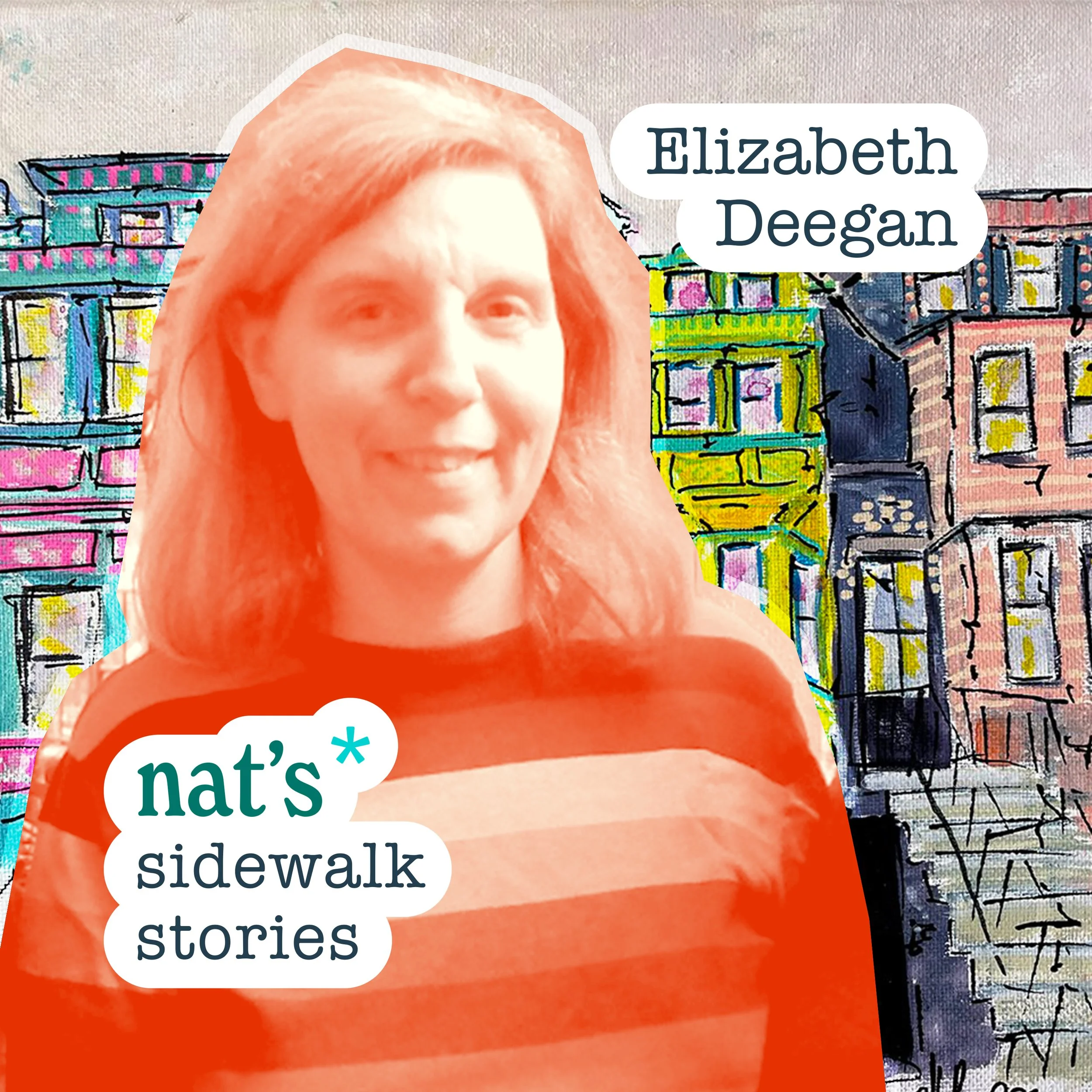
Episode #325: The Farthest Dot on the Map with Elizabeth Deegan
About This Episode
Elizabeth Deegan didn't move to Greenville with a plan. She moved there because she could afford a house with a clawfoot bathtub and a chunky banister, a place that felt like what a home is supposed to look like. What she found was a neighborhood with a real sense of community and almost no infrastructure to tell the rest of Jersey City it existed.
About fifteen years ago, she did something about that. She converted her backyard garage into an art space, recruited friends from Queens, Brooklyn, and Long Island to help build it, and started hosting shows. That became Project Greenville, still running, still volunteer-powered, still the farthest dot on the JC Friday map.
This conversation is about what it takes to show up for a neighborhood, year after year, on a shoestring budget, mostly without anyone asking you to.
Meet Elizabeth Deegan
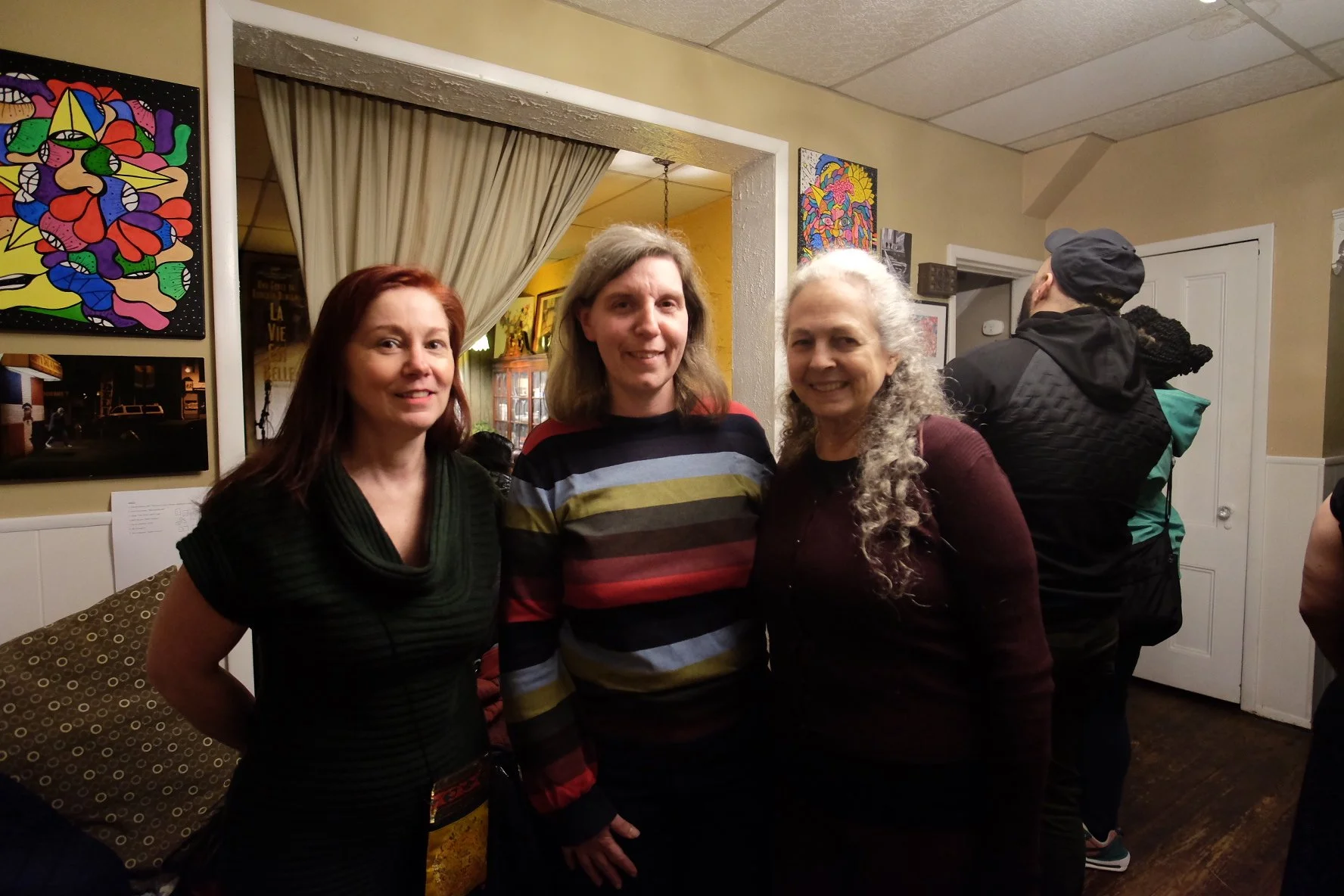
Photo by Jason Logan
Elizabeth Deegan is the founder of Project Greenville, an independent community art space operating out of a converted garage — and sometimes the living room — of her home on Winfield Avenue in Greenville, Jersey City. She has been running shows, hosting artists, and building community there for fifteen years, entirely on a volunteer and grassroots basis.
Project Greenville participates in JC Fridays and JCast, and hosts themed exhibitions throughout the year including a beloved Winter Wonderland show. Elizabeth is not an artist herself, she is, as she puts it, the person making the Canva flyer at 11 o'clock at night, hanging the art, and making sure people know it's happening.
Connect with Elizabeth & Project Greenville
• Project Greenville on Instagram: @projectgreenvillejerseycity
Key Insights
Greenville was invisible on the cultural map — literally. A tourist pamphlet Elizabeth found showed downtown Jersey City, the Loews Theater, Liberty State Park, and then an arrow pointing to Bayonne. That part of the city just wasn't there.
The only press Greenville got was bad press. The neighborhood was named in the paper almost exclusively when something went wrong — never for the sense of community Elizabeth was experiencing on her block every single day.
Project Greenville was built by outsiders. The friends who gutted the garage, repaired the concrete floor, and hung the lights were all from Queens, Brooklyn, Long Island, and the Bronx. None of them lived in Jersey City. They just thought it sounded like a good idea.
The art is almost beside the point. Elizabeth describes it herself: 90% of what makes a Project Greenville afternoon special is just Greenville. The Indian wedding down the street, the music from a neighbor's boombox, the clothesline. The art is the excuse to come.
Community fills the gaps institutions leave behind. When the city removed park benches to discourage loitering, high school students fought to bring them back — and funded it themselves. Nobody else was going to do that.
Fifteen years of building something changes what you can let go of. Elizabeth walked out of her own event to go see a comedy show in Staten Island — and the house ran itself. That was the moment she knew it had worked.
Places & Resources Mentioned
In Greenville
• Neptune Bakery — custard cups, heroes, a place to actually sit down
Boulevard Paint & Hardware Co — 1790 John F. Kennedy Blvd, Jersey City, NJ 07305. An old-school hardware store where the guys actually know your old house, won't bullshit you, and the ownership is being passed to someone who's worked there for 25 years. A model for how neighborhood businesses survive.
Columbia Park, Winfield Avenue — Elizabeth's corner. The park where benches were removed to discourage crime, and then a picnic table and benches arrived in concrete, courtesy of local high school students who fought for it.
Historic Greenville (as described by Elizabeth's neighbor)
What Greenville once had: shops all along Ocean Avenue, a drive-in theater, concerts at Roosevelt Stadium, a public pool on Kennedy Boulevard with a hamburger restaurant next door. Elizabeth's answer to the signature question is to go back to 1958 Greenville and ask some teenagers: what are we doing today?
Mentioned in Context
JC Fridays — citywide art event; Project Greenville is reliably the farthest dot on the map
JCast — Jersey City's open studios event
The Loews Theater, Jersey City — mentioned as evidence that an art community existed in the city that Greenville residents weren't being told about
Visual Documentation
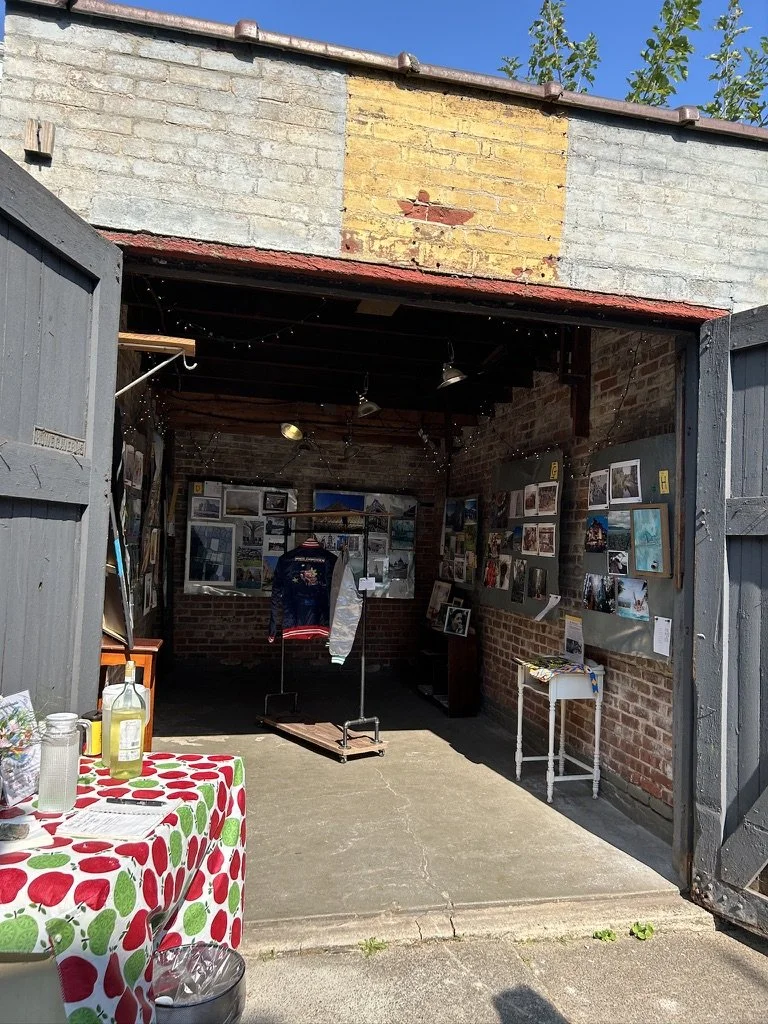
Project Greenville- The Art Shed
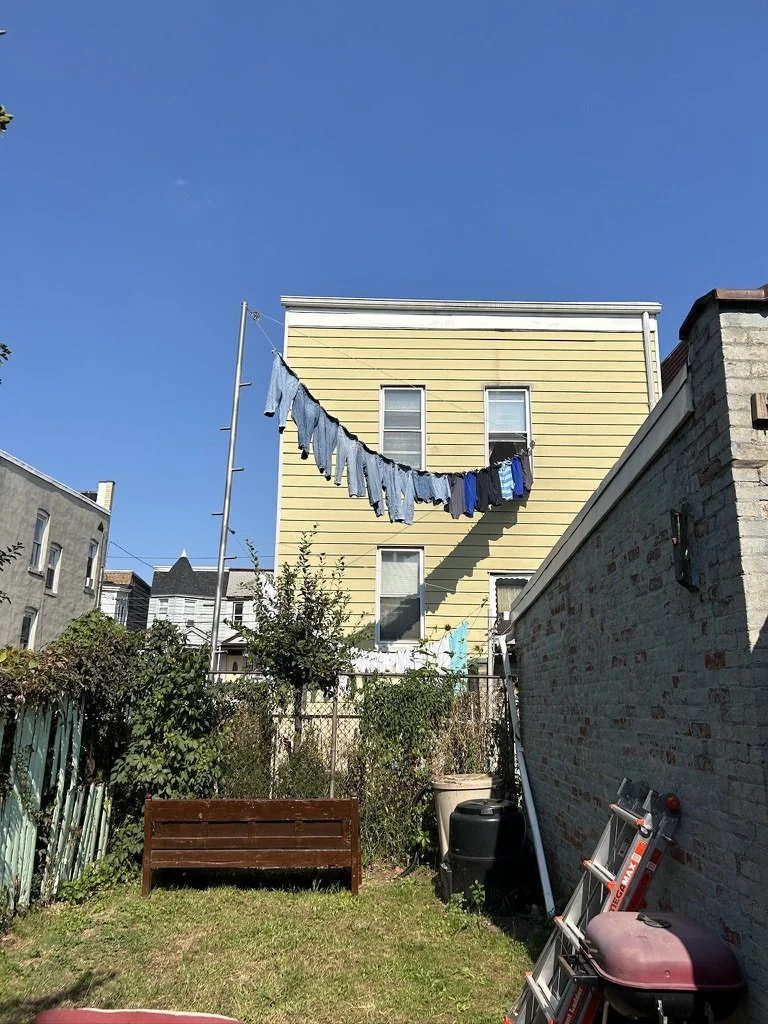
The Clothesline
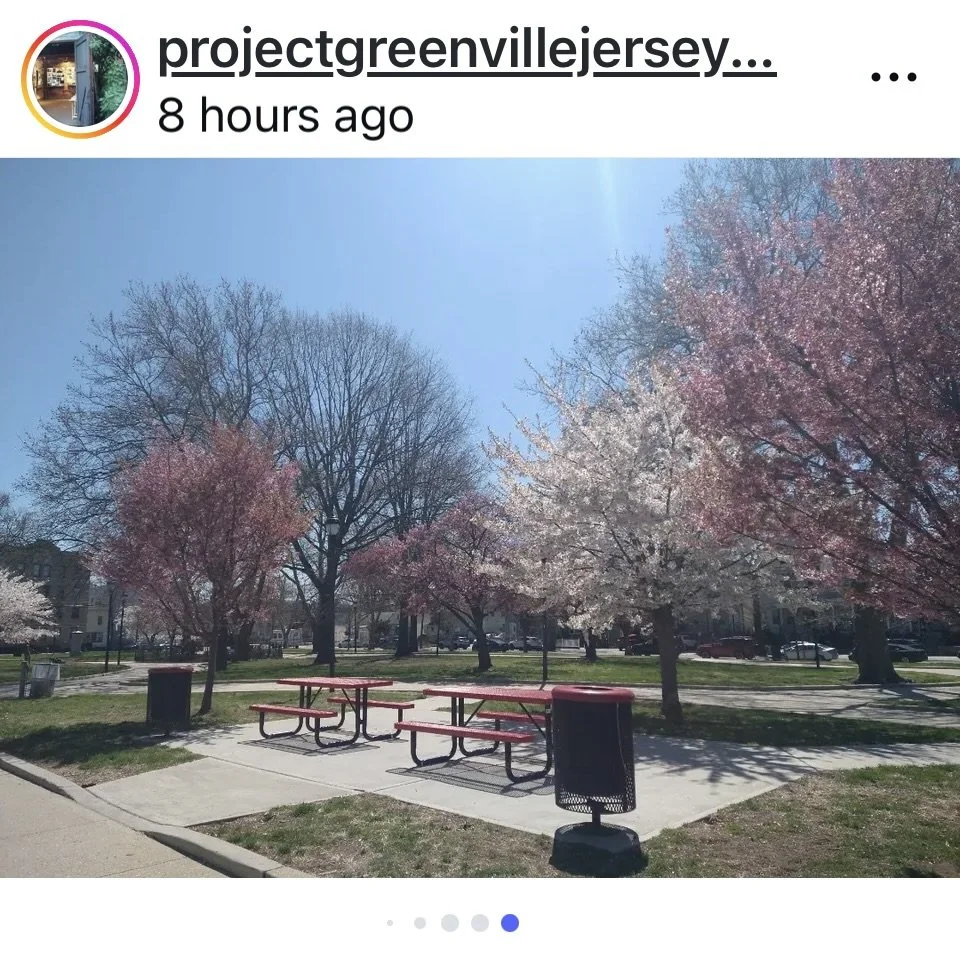
Photo of Columbia Park with benches in Greenville, photo by Project Greenville
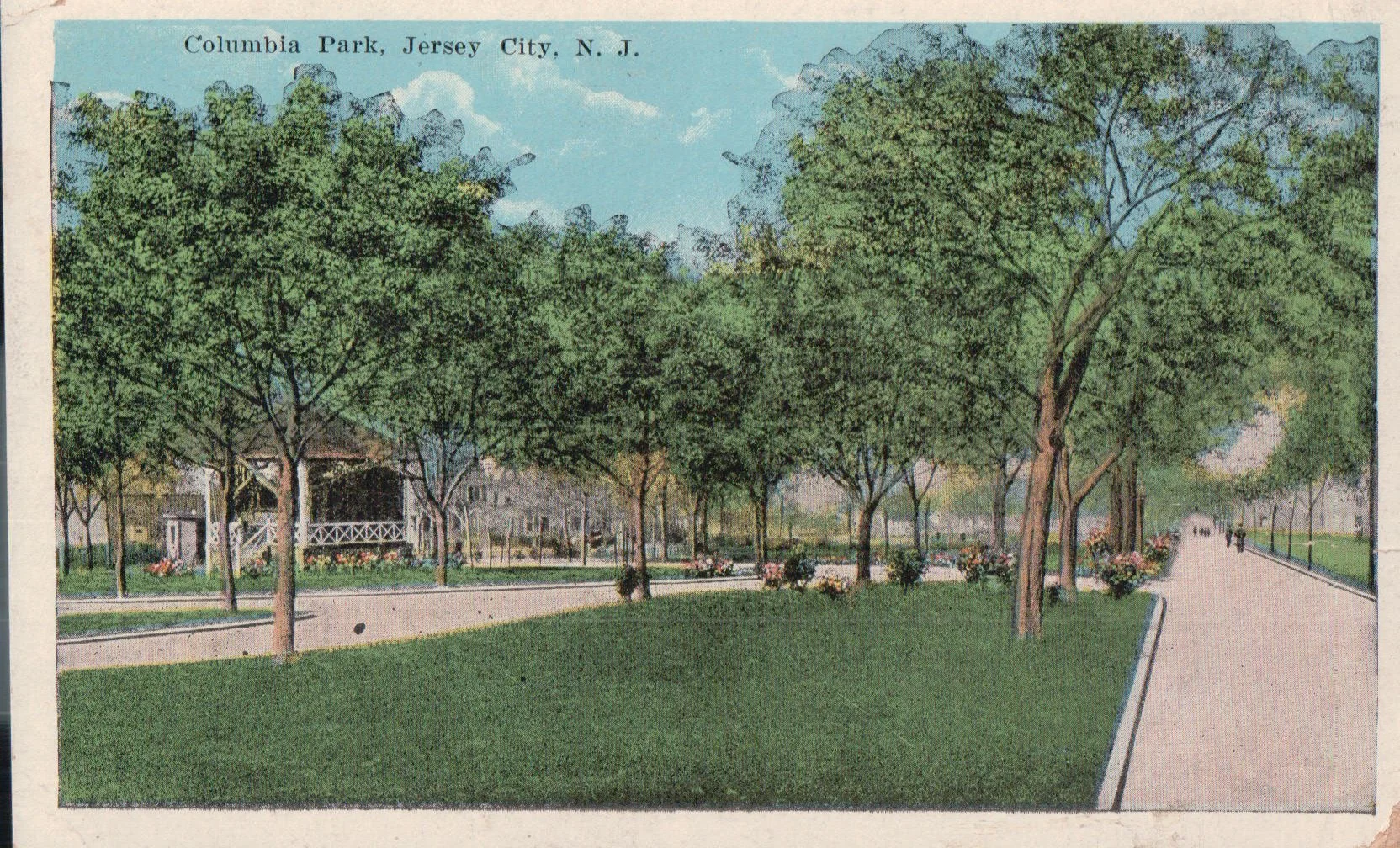
old postcard of Columbia Park
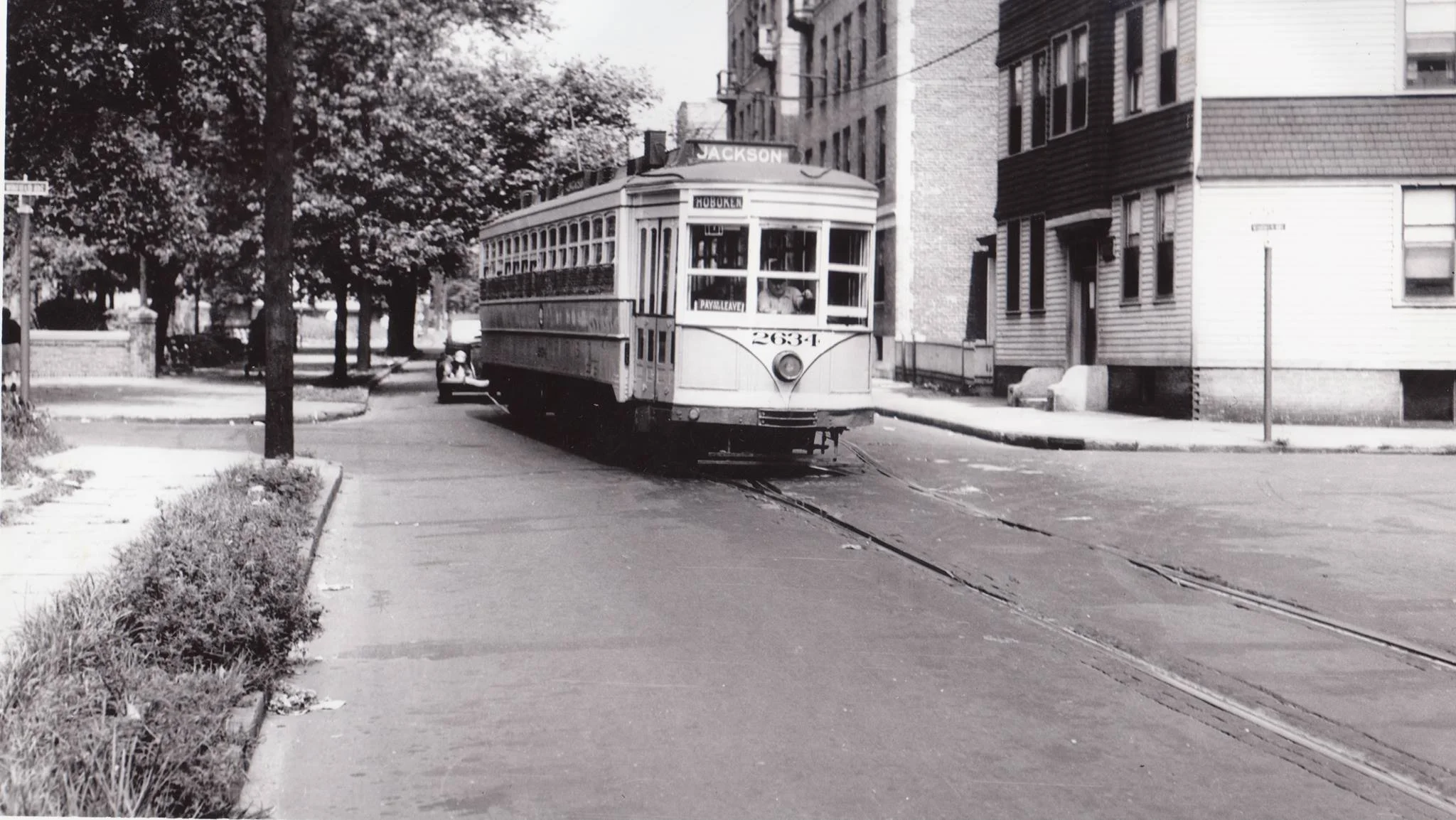
1945 Trolley at Old Bergen St and Winfield Avenue
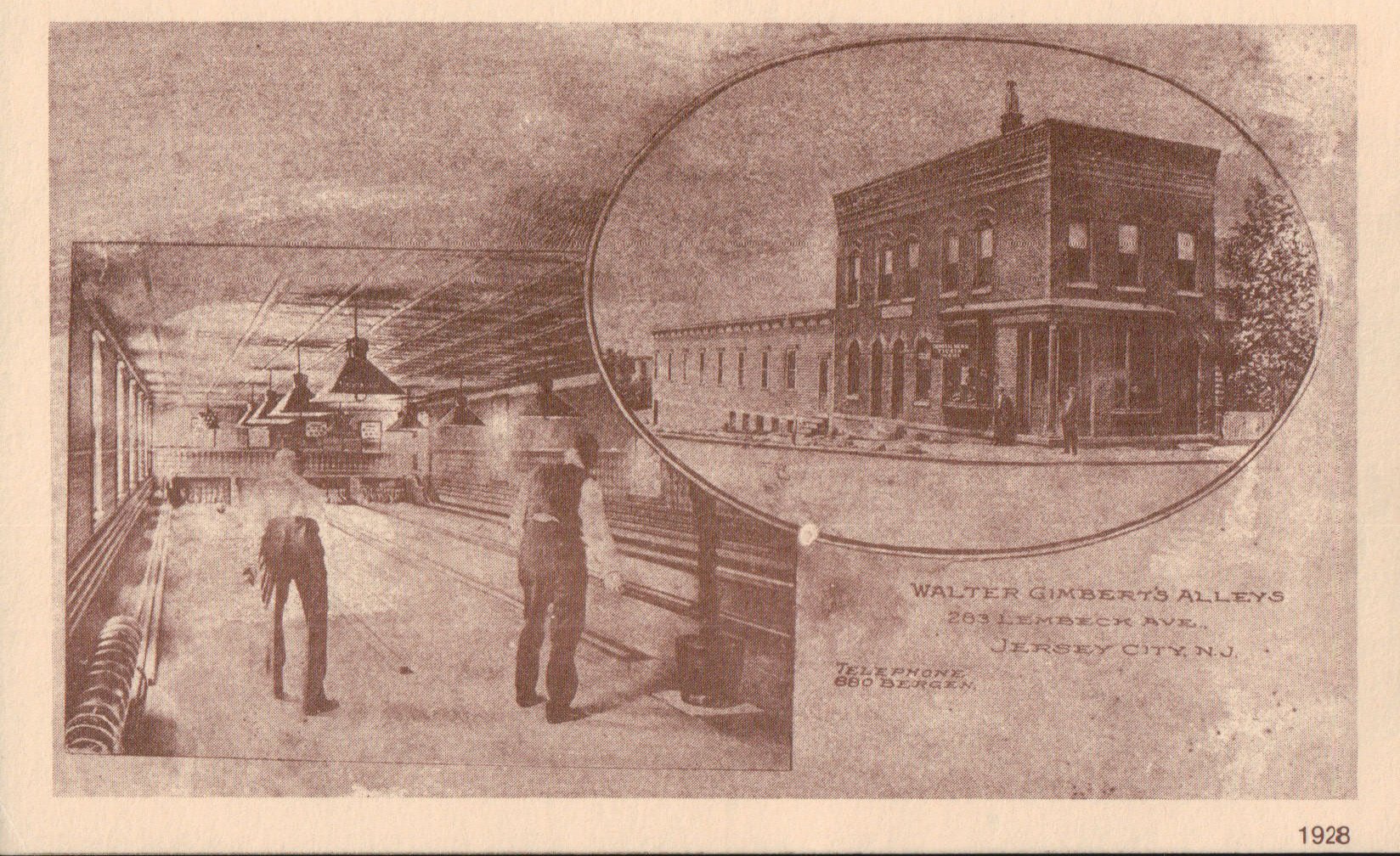
Bowling Alley in Greenville- long gone
Explore Further
A companion Substack article is coming the week after this episode drops. Subscribe to my substack here- so you don’t miss it!
Coming Up Next
My next episode will drop in two weeks and I am excited to have Chris Perez as a guest!
Connect with Nat
• Website & Substack: natkalbach.com
Email: podcast@natkalbach.com
Theme Music: "How You Amaze Me," composed by Jim Kalbach and performed by Jim Kalbach, Bryan Beninghove, Charlie Siegler, and Pat Van Dyke.
Support the Show: Subscribe to the podcast and sign up for Nat's Substack to receive stories and visuals that complement each conversation.
Share Your Story: What sidewalk stories have you discovered in your neighborhood? Share them with Nat via email or social media.
Full Transcript
Elizabeth Deegan: It was so unusual to see Project Greenville going on and be like, bye, and just like do a little soft exit and just watch it.
Especially the fact that it was the one inside the house made me really feel like now the house itself is like alive and part of the community. The thing that I always hoped for was happening right then in that moment.
The fact that it could still be available to people that wanted to come see some art or come hang out in the neighborhood, but that I didn't have to be there telling someone where the bathroom was. Somebody else can tell you where the bathroom is. It's great.
Nat Kalbach: Greenville has come up in this podcast more than almost [00:01:00] any other neighborhood in Jersey City, and almost always in the same breath, people who live there talk about it, like a place the rest of the city hasn't figured out yet. And it's probably true. It's a neighborhood with real community, real history, real beauty, and almost no infrastructure to tell people it exists. Elizabeth Deegan figured that out about 15 years ago. She wasn't an artist. She wasn't a curator, though she'll tell you, she's still getting comfortable with that word. She was just a woman from Queens who bought an old house on Winfield Avenue, then fell in love with a block that felt like the set of a play and got angry enough about what wasn't there to start building something herself. What she built is Project Greenville. An art space. It's inside a converted garage in her backyard, and sometimes it's even inside her actual house where she [00:02:00] hosts, shows, invites artists, and creates an excuse for neighbors who might never have met to be in the same room. This is a conversation about what it takes to show up for a neighborhood . Year after year on a shoestring budget, and mostly without anyone asking you to. I'm Nat Kalbach and this is Nat's Sidewalk.
Elizabeth Deegan: I grew up in Queens and my parents still live in the same house that I grew up in, I was looking in the five boroughs so I could still be close to work and close to what I then thought of strictly as home.
I had looked at a few houses, in like the Journal Square area. One I even went as far as to have inspected and was, trying to negotiate with the owner about things.
But, it had a lot of issues and, the guy showing me the house said, do you wanna see this other house? It's farther away, he took me to the block, Winfield Avenue and, he picked me up at Journal Square by car [00:03:00] and I was like, oh, that is far. But where I grew up in Queens was not like a convenient part of Queens to get to Manhattan. And Manhattan is like where I've always ended up finding jobs. So it wasn't that different of a commute, it was just in the opposite direction, so, when I got to the block, we pulled into the block and there was a house across the street that was like a newer style and I was like, oh, it's gonna be that house.
'cause he hadn't even shown it to me. And, then when I realized that it was my house, what, what soon to be came my house, I was thrilled. It was like, more of a classic looking house. House. A porch and a big chunky banister when you walked in and a clawfoot bathtub.
And, just a lot of like older things that not only reminded me of my childhood home, but sort of, from TV and movies and books reminded me of what I think of as what, [00:04:00] like a home looks and feels like.
Nat Kalbach: Elizabeth moved into the house in the spring of 2006, which means this summer will be 20 years. She didn't know many people in Jersey City yet. Most of her friends in her social life were still in Queens and Brooklyn. But Winfield Avenue surprised her. People talked over the fence while doing yard work. Neighbors she'd never met, said good morning, like they meant it. That was pretty cool. And slowly she started noticing what was missing.
Elizabeth Deegan: This summer is going to be, and this is like drum roll city, uh, 20 years that I've lived there.
Nat Kalbach: Wow.
Elizabeth Deegan: I realized that the other day. I was kind of amazed.
The idea of even having a house versus an apartment was with the thought of having people over at having barbecues and this kind of thing. But at some point, it was obvious that the neighborhood didn't have a lot of things to do socially, and it was obvious that there was, [00:05:00] um, just a lack of attention from the city to, provide or encourage any stuff like that. But also like basic stuff you know, the transportation wasn't great. The people that I was meeting there were like largely good people it's like a neighborhood where, because of the distance and the inconsistency with the transportation, most people have cars, which, you know, to, to somebody that lives near Journal Square or downtown, people probably think, oh, that's crazy.
What do you mean? You all have cars? But it's, it, it can feel very removed and, I started thinking about the few, coffee shops or restaurants, would they like host an event or show art? And then, at some point I, uh, had to like run an errand and go to City Hall and I could not believe what was going on at Grove Street. I was like, wait a minute. There's flyers everywhere for [00:06:00] events all over the place. Music and there were advertisements for things going on at the Lows theater.
Even though I had been getting out at Journal Square, I was like unaware of when and how to find out about things going on at that theater. That experience made me realize there is, a big community of people that are interested in art and music and things to do right in Jersey City.
Not constantly going into Manhattan or further than that but I hadn't realized that there was like this concentration of people in places encouraging that. And then I got really mad that the city truly took no initiative to sort of say, Hey, well let's include Greenville in this somehow. It was like they just assumed people in that area, whether due to lower income or whatever, just wouldn't have like a place in their heart for art or interest in live music or whatever.
It seemed [00:07:00] crazy.
When there was still the Jersey Journal besides social media. And the only time that Greenville was ever, um, named certainly by name was when they were, saying, someone got. Shot there, got hit by a car, a house was robbed, whatever. But you would not see like the word Greenville describing the neighborhood, unless it was in a negative sense.
But on Winfield Avenue there was like this, almost felt like the. Like the set of a play. You would be outside doing yard work and one person would talk to you and then they would go in their house, and then somebody else would be getting home from work and talk to you. There was like a sense of community, like I had never experienced before in my own home.
And I was like mad that that was, not what people at all thought of. When they thought of Greenville, it seemed very unfair to the neighborhood
Nat Kalbach: I'm, I like that you say that because other guests like, Daquan Sweeney and [00:08:00] Jen and um, Lucy. They all called this their home and, and they have that experience that you have. And of course, yeah, there are negative things, but so do they happen in other places as well?
Right? Like it's a city and there is no hey, we had six weeks of great summer and nothing happened that's not news, right?
Now we know Elizabeth wasn't from Greenville. She came for affordability and stayed because the neighborhood got under her skin In a positive way, and then around the same time, two things happened close together that made her feel like somebody had to do something
Elizabeth Deegan: I got this little pamphlet thing, it looked like one of those things that would be like, somewhere touristy, it had like a list of businesses and then when you opened it up, it was like a little map, but like a drawn map, like kind of cartoonish style.
And it showed all these things downtown. And then it had a couple of like little footsteps and [00:09:00] it showed the Lowes Theater and then it had an arrow and it said Bayonne. Like that part of the city was just not there. And there was a, cover of the Jersey Journal that had come out. It was probably like the April before we got started. And it was , after some kind of a shooting on Ocean Avenue, it had a photo of the cross streets, Winfield and Ocean.
And the headline was Living in Fear. Right? And I'm like looking at this headline while I'm like saying hi to the nice ladies at the bakery and I'm like walking past kids in the park and I'm like, this. Is not a complete picture. Those two things happening like very close to one another made me go, somebody's gotta make some kind of mention that this is [00:10:00] all bullshit, that there's this section here that's being like ignored or pretended that it's not there.
Or just like waiting for, some kind of gentrification thing to take care of all the problems that are there. I'm not even from there originally. I can't imagine how I would feel seeing those things if I had grown up there
and then after a while, just throwing ideas back and forth to my roommate at the time we just kind of were like, or I guess, I mean this is a big building in the backyard that could be a thing.
And we started like dismantling some of like the storage things that were in there that were just in there since I moved in. Some other friends came and helped me repair the floor 'cause the floor was like concrete but had holes in it.
Somebody else helped me hang lights. Somebody else helped me get all those metal pieces that we do a lot of our displays on using magNats. And it was just, it was interesting 'cause it was all like a group effort by [00:11:00] people that didn't live there. It sounded like a nice idea for the neighborhood.
And they all, you know, are friends of mine for a long time that were like handy and maybe some of them kind of artsy themselves. So they just wanted to like encourage that. Like all of the volunteerism was coming from people that did not have any, skin in the game.
Yeah, shout out to all the, uh, Queens, Brooklyn, long Island friends that came and did this
Nat Kalbach: elizabeth, you are opening your home, right? So where does home and Project Greenville begin? Is that even, separated?
Elizabeth Deegan: There, there can be, there can be a lot of gray area. I'm not a very private person. Like I'll tell you anything, but I do prefer Project Greenville to have like its own little spotlight. Because it's supposed to be, this means of other people getting to both share and experience art, I do shy away from [00:12:00] attention on me as a person versus me doing the project Greenville. Curating is a word that I, I also shy away from because I feel like it sounds too, I don't know, like lofty, someone said recently, uh, oh.
You know, did you curate the show? And I was like, oh, yeah, yeah, I did. And I was like really proud of myself for just being like, yes.
Nat Kalbach: People that way less experience have called themself. Curator, you're doing this for 15 years. You earned it. Stick to
Elizabeth Deegan: I appreciate that. Thank you. Even though I might be the person that like is literally hanging up the art or, making the flyer on Canva at 11 o'clock at night, I know that there are other people like doing nice. Things that help me be able to do that, people are always volunteering to bring stuff or to, come over before the show and either help with set up or clean up or whatever. So I, I know that there's [00:13:00] so much more than me involved in Project Greenville that it, it does make me like a little, yeah, a little embarrassed to have the attention beyond me
Nat Kalbach: You are not an artist, right? Like you are doing it really because this is a venue, this is where people can show their work.
There's people that can play music and you open your home. I think that's really so generous and time and space that's like the most valuable thing. And love, so I know that may make you uncomfortable, but here I am. I'm say done.
Elizabeth Deegan: Longer that I've done it, the more artists I've met that actually, you know, do live in Greenville and it's nice that it can also be a place where they can not just show work, but if they're not feeling like being involved in it that way they can like just come and talk to some people that appreciate art. That always makes me really [00:14:00] happy when it turns out that somebody like lives three blocks in this direction and five blocks in that direction.
They never knew about Project Greenville. They never knew about each other in the neighborhood, and then they've met at Project Greenville. It's like so awesome.
Nat Kalbach: That is cool. And that's exactly what wanted, right? It's a neighborhood and, and there is community not just in your place. The community is all around, but no one actually knows about it.
So that's really cool.
Elizabeth Deegan: There's always like a moment, maybe a week and a half before one of our events where I'm like, I'm tired, I can't find something. I'm getting all frustrated and I'm like, why am I doing this? And then something like that happens and I'm like, this is awesome. On the last one, my boyfriend and I found out about this comedy show that happened to be on the same Friday as JC Friday, but it was in Staten Island. And I was like, damn, we can't go to that. And then I thought about it and I was like, [00:15:00] wait a minute. I have parents who still have a business. They never go on vacation because they won't not be there.
And it makes me sad for them and it makes me crazy. And I was like, why am I doing that? Like I know enough people now. I trust all these people that participate, that volunteer. And I just threw it out there to like a handful of people that I know have some experience doing that and don't live too far away or whatever.
And sure enough, two awesome people, more than two said that they could, but like two were made The official people that I was gonna like at six o'clock be like, okay, now you're in charge. And it was so nice to just be able to still do the thing that I think is important for the community. But now that I have all these relationships with people, also be able to say, there's something that I wanna check out tonight.
So see you later. It was so unusual to [00:16:00] see Project Greenville going on and be like, bye, and just like do a little soft exit and just watch it.
Especially the fact that it was the one inside the house made me really feel like now the house itself is like alive and part of the community. The thing that I always hoped for was happening right then in that moment.
The fact that it could still be available to people that wanted to come see some art or come hang out in the neighborhood, but that I didn't have to be there telling someone where the bathroom was. Somebody else can tell you where the bathroom is. It's great.
Nat Kalbach: Elizabeth mentioned that sometimes she needs a break. There have been seasons where she sat out JC Fridays or J . You know, life things may get complicated with all of us when our parents get older, But something she said stuck with me. The in-house show, the one she walked out of, she said it's actually easier to hand off when the garage show, [00:17:00] even though it feels like a bigger act of trust. Turn off the lights, lock the door. Somebody else handles it. 15 years of building something will do that.
What would be like something where you like, you know what would be cool if we had this, that, or the other? Is there something that you would say we need.
Elizabeth Deegan: I keep it very low budget I've tried to like strip it down to the barest of the bare bones, the only thing that I always think of, especially during the winter show is, you know, those things that restaurants get in the winter so that when you open the door, you're not opening their main door, , they make like gigantic ones that are like the size of, um, garage door openings. And I have always thought that would be a cool [00:18:00] thing it could still look like the garage, but then when you, you know, shut that door behind you, you're actually a little warmer inside.
Nat Kalbach: Yeah.
Elizabeth Deegan: But that's, I have never investigated the practical possibilities of that because I have always assumed like, we don't have the money for that. But maybe we do. Besides that, we just always need people to tell people that it's happening, people should feel free to tell people about it.
Nat Kalbach: Absolutely. No, I agree.
Elizabeth Deegan: We are typically the farthest dot on any map, whether it's JC Friday or the J casts, like we're one of the farthest, if not the farthest, sometimes out on that side of town.
Nat Kalbach: I hope that more people are coming. I love your ideas for the themes. I think you do an amazing job. Bringing all these people together, and it's just an incredibly beautiful space. I have told that story several times, and the one, somewhere I came [00:19:00] and, you know, there was an Indian wedding, a couple houses down, and there were like people, uh, outside and there were people playing in the street, and then you had some music and there was like all these wonderful people and they were sitting in the garden and then there was a, like a bike tour coming by and they were looking at the artwork. And then your neighbor across had this line of clothes it was just such an, I don't know, there was something, something like so charming and down to earth and cool about it.
Elizabeth Deegan: And like 90% of what you just described about why it was so like, interesting and kind of fascinating to you that the afternoon is, uh, is mostly just Greenville.
Like if you had a friend there, not showing art, but just like coming over and like, you know, hanging out in their yard for that afternoon, you would've had 90% of that [00:20:00] experience. You would've seen the Indian wedding and heard music coming from somebody else's boombox and seen the, the clothes hanging.
Everybody loves the clothes hanging. That clothesline has been photographed many more times than that woman would ever honestly want.
Nat Kalbach: Do you have a couple recommendations of mom pop stores or bakery, you would say in Greenville are like, a known secret for people in Greenville.
Elizabeth Deegan: People do come from like every corner of the city and beyond for those, custard cups that the Neptune Bakery makes. That's a great bakery because it's not only really good, quality of food, but they also, like, they have a couple of tables so you could actually like sit down and eat together and have a sandwich.
They do also do like savory things. They have breakfasts, they have like heroes and stuff. And we have an awesome old school hardware store that, especially when you're someone [00:21:00] that has an old house, if you walk in there, especially if you have like the part with you or a picture of it, those guys know exactly what you're talking about.
They won't bullshit you. They're just
Nat Kalbach: I love that.
Elizabeth Deegan: cool guys that know how to fix everything.
You save so much time if you can actually find what you need with a place like that, and then you're keeping the money in the community. The guy that owns it is in the process of like selling it and, giving it over to a guy that's worked there for like 25 years, like right by his side.
So he knows exactly how the business works and what the customers are like, and what the neighborhood needs. And, and everybody already knows the guy. So once he's the owner, it's just gonna be like this nice, seamless transition and it keeps the business alive. It keeps, maybe somebody that wouldn't have had the opportunity to like start their own business instead.
Nat Kalbach: . So my last question, If you could spend an afternoon with anyone from Jersey City's past, [00:22:00] who would it be? Which corner would you choose as your meeting spot and what one question would you ask them?
Elizabeth Deegan: This is a hard question, but it's a cool question. I love this question. I, have this neighbor, she lives right across the street.
She's in her, uh, early seventies. She grew up a few blocks away and married the boy that lived in the house across the street from my house. Yes. And then lived there for the next, you know, however many years of her life. And, um, she tells like the greatest stories about what Greenville was like when she was.
Girl, you know how there were like shops all along Ocean Avenue and there was, uh, a drive-in theater. There were concerts at Roosevelt Stadium, there was a public pool right on the city line of, uh, Kennedy Boulevard with like a hamburger restaurant right next door. It just sounds like there was not only a [00:23:00] lot of stuff to do, but also like a lot of stuff that kept, teenagers busy and people, able to let their kids go out and do something, but know that they're like right in the neighborhood with other neighborhood kids.
So I would like to probably, just go back and hang out with some kids between the ages of like 16 and 25 in 1958 Greenville, and just say what are we doing today?
I'm sure that they would be doing something cool and in the neighborhood and it, it just sounds so awesome
Nat Kalbach: That sounds super fun. Do you have an idea which corner?
Elizabeth Deegan: Probably right up the street, like right at Old Bergen in Winfield, just meet at the park and see like what we're getting into today. It sounds so fun to be able to be more spontaneous in the neighborhood. Because there aren't that many places to go do things or, , events going on.
Nat Kalbach: Totally. What's the like cool place where they [00:24:00] all, maybe they even hang out in the , in the park, ,
Elizabeth Deegan: Possibly. Yeah. I've been told that there used to be the same way that there are in most parks around Jersey City, that there was a gazebo and there were benches and stuff. And that as, uh, the neighborhood changed and the crime ticked up rather than, discouraging people from hanging out.
They just got rid of the benches and the gazebo, which seems like a crazy way to deal with a problem like that. But, whether it's out of overwhelm or just, not putting a lot of thought into how else to do it without, destroying the things that could be good for a neighborhood, but I gotta say a few years ago, probably sometime during COVID or like right.
As things started to get a little more normal, all of a sudden on the other side of Columbia Park from my corner, a picnic table and benches [00:25:00] arrived and I was like, in shock, set up by the city in concrete, and our council person told me after the fact, like probably a couple years later that, it was due to kids at a local, high school
Nat Kalbach: Wow,
Elizabeth Deegan: for it.
Yeah. And um. I thank those kids and I think they even did some fundraising
Nat Kalbach: that's amazing.
Elizabeth Deegan: really. And now, like you do see them using it like in the afternoon if they're either at off of school or, or on a lunch break or whatever. But you see people all the time, different situations. You see people you know there with their kids or you see, even see like the guys that are cleaning up the park, like just having somewhere to actually sit and have their lunch that way they don't have to, sit in the truck or whatever.
Nat Kalbach: That's amazing. That's really cool. I loved talking with you, Elizabeth, and also learning. Way more about you and why you did that. I really love [00:26:00] what you're doing. Keep it going. And I hope more will come.
Elizabeth ended our conversation the same way she runs Project Greenville quietly without fanfare. She just said, I do love it when there is a nice crowd. 15 years, a garage, a backyard, sometimes a living room. No grand, no staff. No plan to become anything other than what it is. A reason for people to come to Greenville and realize it was worth the trip.
You can find Project Greenville on Instagram. I will link everything in the show notes, including the hardware store at natkalbach.com, along with some photos of the space and information about upcoming events. Our theme music is How You Amaze Me, composed by Jim Kalbach and performed by Jim Kalbach, Bryan Benninghove, charlie Siegler and Pat Van dyke. Until next time, [00:27:00] keep looking at the places you pass every day. There are stories in the sidewalk.
