
Episode #324: All These Paths with Melida Rodas
About This Episode
Some people seem to exist at the center of a community not because they’re chasing visibility, but because they keep showing up and doing the work. Melida Rodas is Jersey City’s Poet Laureate, the founder of the Jersey City Poetry Festival, a projection artist, former cruise director, paralegal, sailor, and mom — and in this conversation, she shares things she doesn’t usually talk about. We get into sailing through a storm on the Hudson, what the law taught her about poetry, going into the dark forest of memoir writing and finding your way back, and why she keeps choosing joy even when the creative work demands going to very difficult places.
Meet Melida Rodas
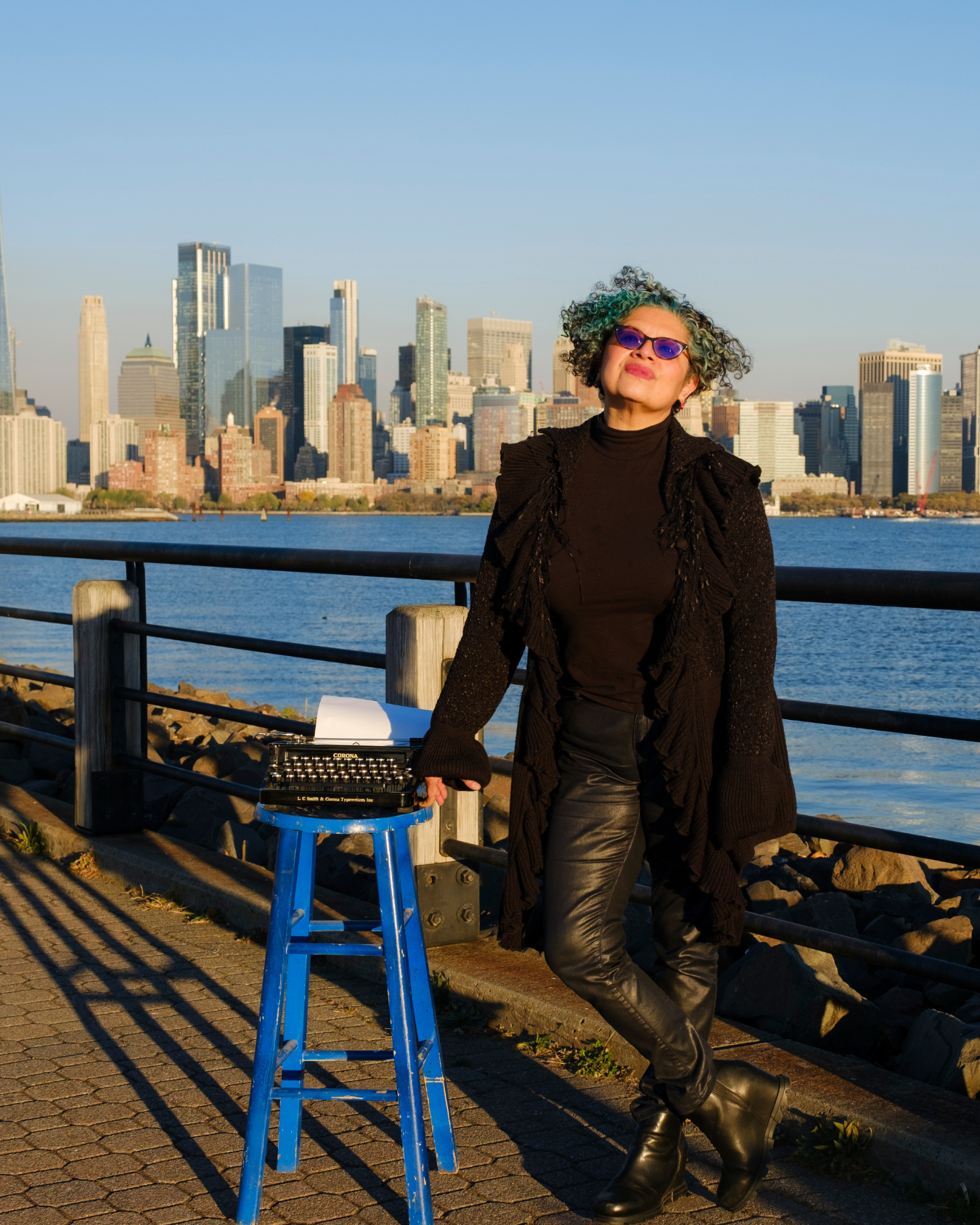
Melida Rodas in Liberty State Park
Melida Rodas is the Poet Laureate of Jersey City and the founder and executive director of the Jersey City Poetry Festival, a free, citywide nonprofit festival celebrating poetry in all its interdisciplinary forms. Born in Guatemala and raised in the New York/New Jersey area, Melida came to poetry through fine art — her degree is in sculpture — and has built a creative practice that moves fluidly between writing, projection art, photography, and film poems. She is currently collaborating with the Division of Parks and Recreation to embed poetry into Jersey City’s reservoir landscape, and is part of the creative team on the inaugural theatrical pilot of Monsters, Inc., a collaboration with Disney and City Kids Playhouse. She is also a member of the Lincoln Association.
Connect with Melida
Website: https://www.melidarodas.com/
Instagram: https://www.instagram.com/melidarodaspoet/
Jersey City Poetry Festival: https://www.jerseycitypoetryfestival.org/
REED Magazine: https://www.jerseycitypoetryfestival.org/reedmagazine
Key Insights
A life that looks scattered from the outside — cruise director, paralegal, artist, sailor, poet — can turn out to be a single convergence, not a contradiction
The discipline of legal writing made Melida’s poetry tighter, more compressed, and fiercely edited — two seemingly opposite worlds shaping each other
Sailing through a storm on the Hudson taught her that if you keep going when you could turn back, you earn something that carries you everywhere after
Writing memoir means learning to go into the dark forest with stones instead of breadcrumbs — so you can always find your way back to your present self
The Poet Laureate role is only as big as you make it; Melida turned it into a free citywide festival, a nonprofit, and a platform for interdisciplinary art
Liberty State Park isn’t just green space — it’s the shore where immigrant families stood and looked out at what they’d crossed everything to reach, and it’s worth fighting for
Abraham Lincoln passed through Jersey City twice: once alive to cheering crowds, once in a coffin — and the children of this city helped pay for his statue with their pennies
Poetry belongs in the landscape, not just on the page — the reservoir pilot project is proof that art can live anywhere the city does
Visual Documentation

Poetry Museum at the Museum of Jersey City History- photo curtesy of Melida Rodas
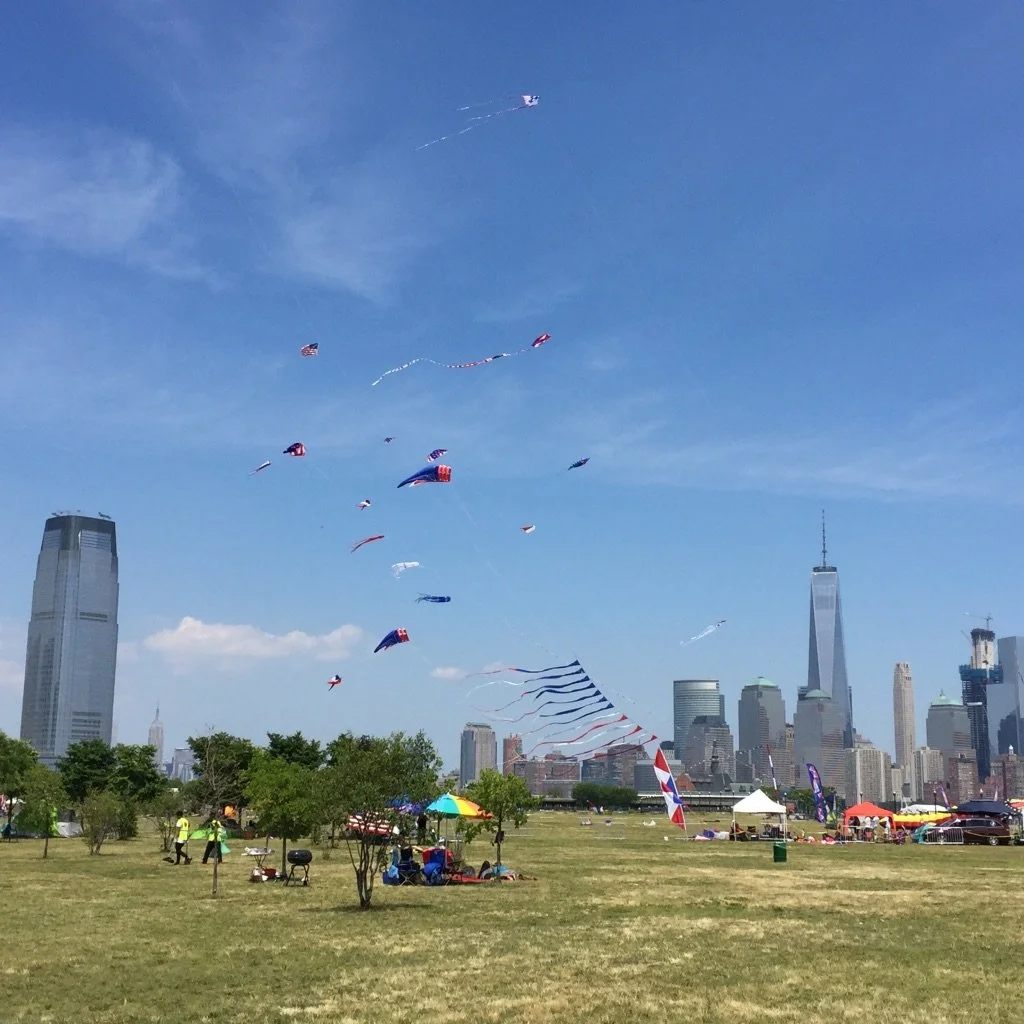
Liberty State Park - photo Nat Kalbach
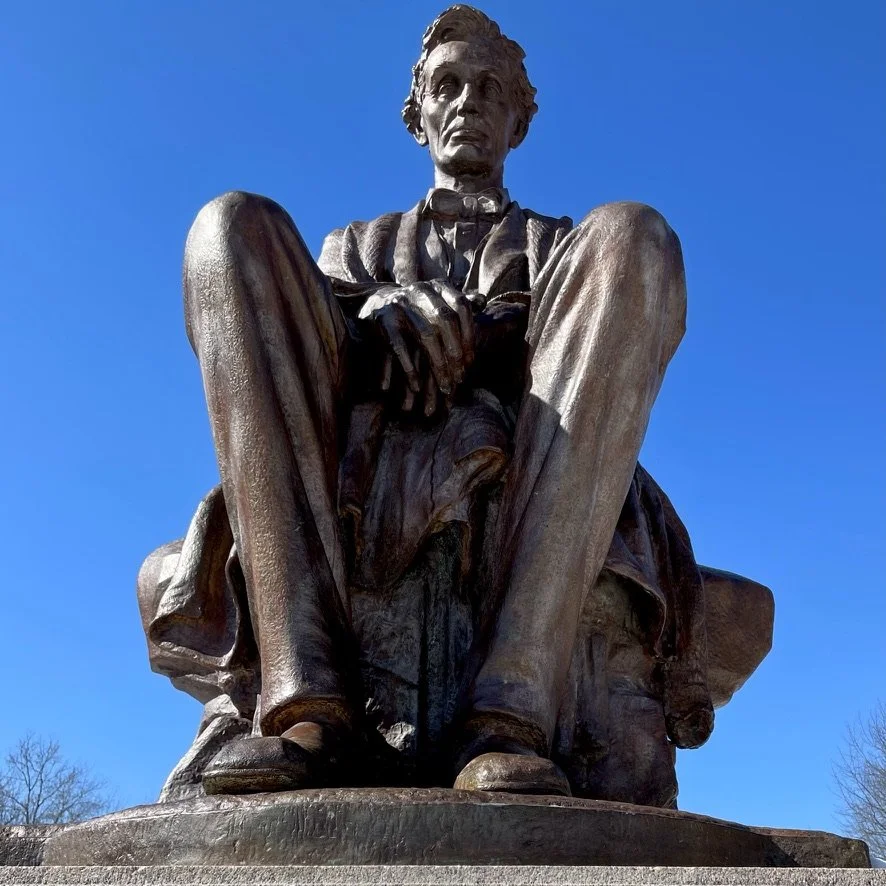
The Mystic Lincoln Statue at Lincoln Park in Jersey City- photo Nat Kalbach
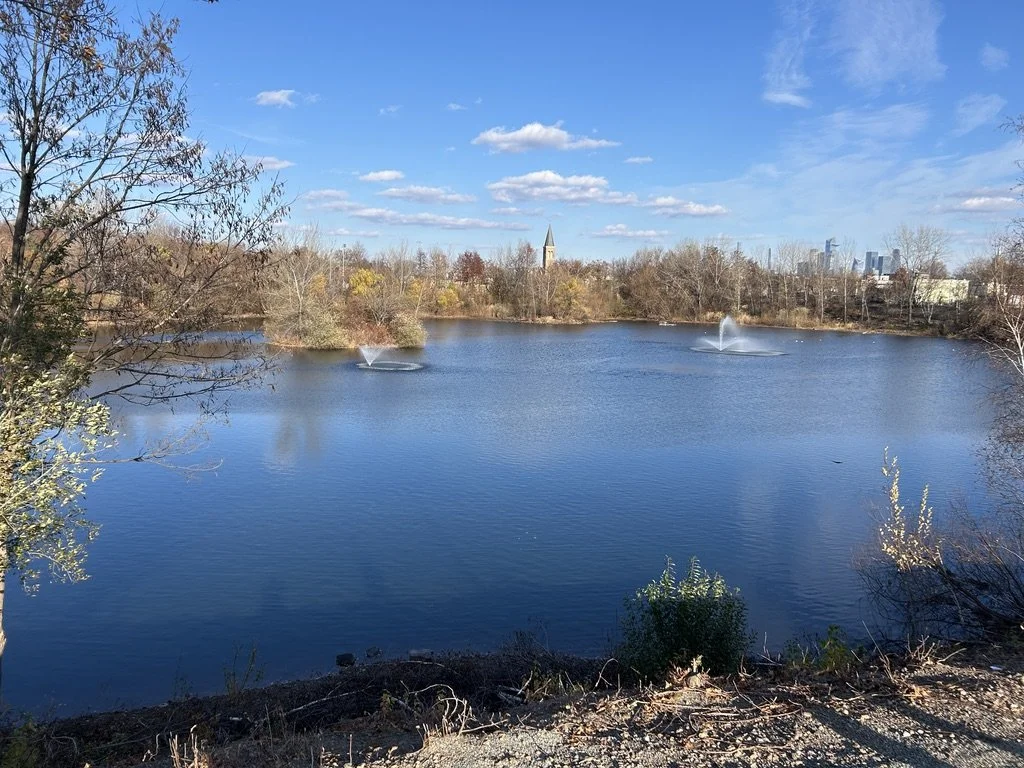
The Reservoir in Jersey City - photo Nat Kalbach
Related Resources
Explore Further
Companion Substack piece: “Maybe My Stones Are Making Art” — Melida’s dark forest metaphor sparked a reflection on what it meant to work as a paralegal on WWII reparation cases and asylum seeker cases, and how making art became the way to process stories too heavy to carry home. Coming soon.
Coming Up Next
Next up: a conversation with Elizabeth Deegan, the wonderful person behind Project Greenville.
Connect with Nat
Website: natkalbach.com
Substack: https://natkalbach.substack.com/
Instagram: https://www.instagram.com/natkalbach/
Email: podcast@natkalbach.com
Music: Our theme music is “How You Amaze Me,” composed by Jim Kalbach and performed by Jim Kalbach, Bryan Beninghove, Charlie Siegler, and Pat Van Dyke.
Support the Show: Subscribe to the podcast and sign up for Nat’s Substack to receive additional stories and visuals that complement each conversation.
Full Transcript:
Melida Rodas: [00:00:00] I parachuted off a cliff and I was like, I don't know where I'm gonna land, but I put my faith in God and the universe and in my own self. I don't know where I'm gonna go, where I'm gonna land, but I have to do what feels right in this moment. But by the grace of God, did I find out at my age now that all these paths, these multiple multi-dimensional paths, have now converged and made me who I am.
Nat Kalbach: There are people you meet in Jersey City who seem to exist at the center of everything, [00:01:00] Not because they're chasing visibility, but because they keep showing up, they're doing the work and trusting that curiosity is enough of a compass. Melida Rodas is the poet laureate of Jersey City. She's also a projection artist, a former cruise director, a paralegal, a mom, a sailor, and the founder of the Jersey City Poetry Festival. She holds all of those lives, not as contradictions, but as a convergence. All those paths, as she'll tell you herself, leading somewhere. I first encountered Melida at the Friends of the Liberty State Park Gala. Where she read a poem about her father flying a kite with her as a child, A man who came here as a CPA from Guatemala and worked as a dishwasher. The poem was about the park and the statue of liberty and grieve and wind, and [00:02:00] what it means to stand on that particular shore as an immigrant family. When I heard it, I knew I had to have her On this podcast . Today, she talks about things she says she doesn't usually share. Sailing through a storm on the Hudson, what the law taught her about poetry and why she keeps choosing joy even when the work demands going into very dark places. I'm Nat Kalbach. This is Nats sidewalk stories.
Melida Rodas: Well, thank you so much. , I'm so happy that you were there at that event because it really is close to my heart. As you could tell by the piece that I read there, where it begins with a core memory of, uh, my father and I taking a day and flying a kite. And those days were not very often because my [00:03:00] dad worked 80 hours a week.
He was a CPA, in my country of Guatemala. He was a certified public accountant. And when we came here, he became a dishwasher. It was the first job that he could find, and it was the restaurant where he stayed for all of his life. He worked in a couple of other places in between, but then return to that same restaurant again.
And that piece about Liberty State Park is about being with him on a day, a very rare day off. But it's multilayered in that it's a park that's overlooking the Statue of Liberty. And another moniker for this gorgeous statue is the mother of immigrants. If you [00:04:00] look outward towards the bay, you could see Ellis Island.
the fact that Sam invited me to read and his entire life's mission has been to preserve this park, just adds another layer of emotion and importance so that as a poet, as a mom, as a human being to advocate for this park, to advocate for green spaces that made it all the more important for me to use my voice as a vehicle for change to stand up, uh, in solidarity with the people that defend this park for decades now.
And I guess thirdly, it would [00:05:00] be the fact that, that poem was also tied in with a memory of my husband and I sailing on the Hudson River. I'm often asked questions about where my poetry began, how I became a writer, how I became an artist. I was an artist first, but I don't often talk about the fact that I actually know how to sail. And when I was thinking of this interview, I thought it would be a great opportunity to talk about some of the things that I don't often talk about, but that have helped to shape me as a person.
Nat Kalbach: So you sailed, the Hudson River. That's amazing.
Melida Rodas: Yes. My husband and I have often sailed the Hudson River, [00:06:00] and I always liked being on the water because my dad would take us to this very famously called Lake in Guatemala, and it's actually the crater of a volcano. So that body of water is actually water captured that became now a lake, but it's actually a crater.
When I met my husband and he turned out to be a sailor, I was fascinated with, uh, the sport and the beauty of using wind energy to propel a vessel forward. It reminded me, and I made that connection in the poem about the tension and the balance of air, right with the kite and also the sail, and how it's so glorious to be on the water [00:07:00] and to harness the wind as one would with a kite, and to learn how to glide across the water in a very green way.
We've sailed from the Hudson River to Shinnecock and, um, that was probably my longest sale. And it, took 12 hours. Going, there was not, as treacherous as coming back. We encountered a storm and midway, so we had the option to go back or keep going, and we kept going.
The size of the waves that were coming at us and the downpour that we were facing was, so, I would say in a way scary. [00:08:00] But it really taught me to, to sail, in the best way. I would say that that's when I finally got, as they say, my sea legs.
I thought that if I could get through this, I could get through anything and I could sail anywhere. And that's exactly what happened. And I, I'm thankful that I've had the opportunity to sail and look at the statue dock where you're allowed, because the National Guard does not allow you to be so close to the statue or Ellis Island.
But where we go to, at the very edge of where you're allowed, we've docked so many times taking in the weather, the, the scenery, the New York City skyline, the Jersey City skyline, and just bobbing around.
And what you do when you're on a boat [00:09:00] is tell stories. And I would say that we've, my husband and I have told each other a million stories and that's how we actually got to know each other. And that's how we fell in love.
Nat Kalbach: You see water runs all the way through Meldia's story, the crater Lake in Guatemala with her dad and the Hudson River with her husband. the bow of a boat looking back at the Statue of Liberty. She didn't plan any of it as a theme it's just where her life kept returning . Before she became the person. Jersey City knows as its poet laureate. She was a lot of other things, and most of them, as it turns out, she doesn't usually talk about.
I wanna ask you something else you were as me a paralegal for many years and that was a different part of your life how did, how did this experience that you had as a [00:10:00] paralegal or legal training influence who you are now and what you do in your creative work? If it did?
Melida Rodas: Sure. But first I think it's important to back up a little bit and tie in another job that people don't often know about, and then it catapults me into working at the legal office. I put myself through college by working as a cruise director for the spirit of New York and spirit of New Jersey.
I was very adventurous at that age. I saw an ad in the paper, I applied and I was really going from my fine arts degree, but I needed to fund my education. When you are a cruise director, you're the third in command on the vessel, which holds several hundred people. So it was the captain, the first mate, and then me. [00:11:00] And the reason why I wanted that job was because of my love of the water. And I was like, wow, this is like the perfect job.
You get to plan parties and you get to be on the water while you're at it. It was a beautiful, glorious experience where I got to host weddings Z 100 Bar Mitzvahs, sweet sixteens and things like that. And. Even though I was young, I was given such a tremendous amount of responsibility that everything that came after, like that treacherous journey felt like I could do this but that lifestyle, I would get off work from a ship at one in the morning.
I was the last one to leave and. No one else could leave without my permission and the captains. And so I was the last one and it was an [00:12:00] exhausting job. And I thought, this is not sustainable. These types of jobs are not sustainable. And therefore I sought out work that was more stable and that is where I landed in the law office. I was out of my depth in that I was a very lyrical sort of writer.
Law documents require you to be very specific, careful, detail oriented. There cannot be any errors. You get a docket number wrong. You get a decimal wrong. If someone's purchasing a house or going for an ordinance or a variance and things like that, like this is no joke. Another lesson to learn that if I have to be meticulous, this is the epitome of [00:13:00] meticulousness, if that's even a word, but that I have to sometimes, condense it and compress things into this diamond and make a letter really powerful in the shortest way possible, and that therefore influence my poetry.
It seems like an extraordinary and farfetched thing, but that's exactly what happened. So even though it felt like I was writing with my left hand and using that analytical brain and not that lyrical artist, brain, brain, they did influence each other . my poetry became tighter, more concise, fierce, fierce editing.
And then when I needed to create a [00:14:00] narrative for, certain legal matters, the heart of the poet would come through and kind of evoke or speak and advocate for a client. So they did influence each other in a very positive way.
Nat Kalbach: If you are a curious person and you're connecting the dots all these experiences, they form you and they can be very, very important.
And you may learn something that on the forefront is not like what you think it is, but it will give you a tool and inform you on who you may later become. It doesn't mean that it, we would've been better if we would've had a straight line to who we are now.
Melida Rodas: Yes, I appreciate that point so much. And the word that you used. I could really relate to, which is the word, [00:15:00] curious. That is a common theme in my life where I'm very, very curious. I'm inquisitive, I'm pensive. I have a little wrinkle on my forehead actually, because when I'm thinking I, I have such a serious face a deep groove between my eyebrows.
Because that is my thinking phase. I've been thinking so deeply for a long time. A younger age, and this all comes with perspective and being my age now, where sometimes I would have moments of self-doubt where I would think like, what the heck am I doing being a cruise director, being a teacher, being a paralegal, being an artist, being a poet, being, trying to learn how to play the ukulele, loving [00:16:00] photography.
Am I all over the place? And then this other part of me that's always been. A person that has wonderlust and this whimsical way about themselves is like, I really do not care because all I want to do is things that make me happy and that will benefit the world in a positive way.
So that even though I would have moments of doubt, I just really wanted to honor my happiness because my family had struggled so much. I didn't want to continue to be unhappy, and I parachuted off a cliff and I was like, I don't know where I'm gonna land, but I put my faith in God and the universe and in my own self. I don't know where I'm gonna go, where I'm [00:17:00] gonna land, but I have to do what feels right in this moment. But by the grace of God, did I find out at my age now that all these paths, these multiple multi-dimensional paths, have now converged and made me who I am. Like now my poetry is more tight, concise, and fiercely edited. Due to that, my sense of self, my confidence in my abilities to host a very complex, multi-dimensional poetry festival with a serious amount of components and organizational skills that require to put something together.
And then having that sense of [00:18:00] whimsy and creating things that are engaging and fun and thought provoking educational for young children, but without losing that element of like childhood and wonder and innocence. So all these things have converged where my art is interdisciplinary.
I can hop from being a poet, a projection artist to, being a photographer, a painter. My degree is actually in fine art sculpture, which is probably the thing that I do least now. But that I now. Feel like I sculpt with light. I'm a light designer and that light can be used to define space and [00:19:00] architectural spaces.
Nat Kalbach: I feel very related to you and I now realize that there is a component that all brings it together that I love, place-based storytelling. People are like, how can you do all of that? But part of me also needs these different things I'm actually the happiest. When I have a morning that it's like, okay, I am gonna work on an exhibition and then I'm gonna have to work a little bit on my book, and then I have a meeting regarding some historic preservation stuff. It sustains me having all these different ways. I think if I would have to concentrate on just that one thing. It would actually take my energy out.
Melida Rodas: Yes. I genuinely feel that the reason why I'm able to function at all is because these are all different forms of like self preservation, writing memoir, [00:20:00] and poetry, which is filled with yes, joyful resistance sometimes, but a lot of melancholy.
And this nostalgia, this yearning to be in the country where I was born. The fact that I grieve my father to this day, and the struggle that he faced before passing away, like that right there can take a lot. Out of a person. It can sometimes even break you. I described to one of my, writing teachers, my mentor, Eddie Junta.
You know what, Eddie, like, the thing that school doesn't teach you is that how to come back. And what I mean by that is that in digging deep into my soul, my subconscious, [00:21:00] my inner child, my shadow self, and all these things that I had put away in a locked compartment, and then opening up that box with so much.
Feeling and sadness and trauma if I write for long periods of time about certain things, I felt like I was in the deep, deep forest in the dark and not knowing where or who I was anymore. And what I was saying to Eddie was that it felt like walking in the forest, like cancel and gretel with bread crumbs.
And that I had to teach myself how to go out into the deep dark forest, but with like stones to find my way back to my present self. [00:22:00] 'cause my present self Melida is. Happy I am okay. I've forgiven. I've let go. I've arrived at a point where I can help others.
When I have those moments of where I've been writing so much where I'm like, whoa, this is getting a little bit too much from my heart, from my brain, and then turn to photography, it's like, whew. It's like a breath of fresh air.
Or I turn to and and do a little film poem, which I do and post on Instagram. The funny thing about that is when I write, I do those things for my soul where I'll make like a little nostalgic little film poem. Those are the things I get like two likes.[00:23:00]
Nat Kalbach: Yeah, but you don't wanna, worry about that, I do things that I just do for myself and I'm like, okay, not everyone needs to get it.
Melida Rodas: Yeah, there's like a certain little group of my friends they live for that, you know? They could care less about a flyer for something else. But I love them so much because I'm like, yes, because that one right there, that right there came from the soul, like from the of my soul.
Nat Kalbach: You mean authenticity in the real sense of the word and not the social media sense of the world,
Melida Rodas: it's true. When the press release went out and it was announced that I was the poet laureate, listen, I've been flying below the radar all my life. Like I, I work and live to work in stealth mode.
And, I started getting a bunch of friend requests to my private account, which was all about [00:24:00] puppies. My cousin's in Guatemala and I didn't want people to be in that space. My sacred space for my loved ones and really close friends, like friends from college or grammar school, which I'm still friends with. So I'm like, who am I to block out anyone and not show what this role could be for myself, for anyone that follows and, and what their tax dollars you're paying for.
So I felt there was a responsibility in that. And so I created the public account.
Nat Kalbach: You told me once that when you became the poet laureate that they told you that role could be whatever you made of it. And now you made it a free day, um, citywide Festival. Can you tell us why you did it and what making this festival [00:25:00] means for you and also for the city and for the people of the city?
Melida Rodas: I had done so many events that included multiple components already, where I felt like I am going to curate this with a lot of care and dignity and highlight local talent .
But being given that role, I, I felt this sense to level up. This role is, it is a heavy, heavy. Beautiful jewel that I'm holding, like what do I do with it? Like it can't go back into the same vessel that I'm already holding.
Maybe it needs to exist in a larger vessel. Therein [00:26:00] came the concept of the Jersey City Poetry Festival as a nonprofit entity. As a paralegal and my husband who is an attorney, we took that to the next level and created a nonprofit together so that it could exist.
That was something that was a legitimate organized entity with a tax ID number being recognized by the state of New Jersey and the city not just as a moniker, but as a functioning nonprofit organization that will service the community.
But because my background is interdisciplinary, I made the mission of the festival be that [00:27:00] exploring the synergy between all art forms, with the focus on poetry, but incorporating music, dance, theater, and any other art form involved. In presenting poetry off the page and on the page. In the past festival, the first of many, I hope, I created a project called The 100 Words Project, where I prompted 17 poets to create 100 word poems exactly to the word about climate change, climate justice, or preservation.
Then I created a zine, a digital magazine, with this interactive factor where if you click on the page, it actually turns and makes the sound of a [00:28:00] flipping page. Then I sat in my backyard at night among the trees, and I recorded the soundscape all these like Beatles chirping, and I created that as the background sound for the zine.
Then we performed it together in unison, and I projected onto the facade of the Museum of Jersey City history, either the words themselves or these iconic images and imagery that was, um, spoken about in each of the 100 words. It could have been just a paper magazine and there's value in paper magazines. I love them so much, but me being curious, as we said, I wanted to [00:29:00] see how far we could take that project. And then I included a young student from Waldo International School, Sophia Rosado, to take part in it so that it would not only speak to an audience of my age or slightly younger, but to bring in a new generation.
And it involved music and dancing by artists like Kara Hagan, who interpreted a piece by, uh, ed Beach Junta, and it included, uh, projections of her dancing in a body of water. Inside the museum, it featured multiple film poets like Isabella and Laa Cabrera, who are projection artists,
Nat Kalbach: that is so beautiful. Melida, what can you tell us already when the next festival is gonna happen this year?
Melida Rodas: The next festival and these [00:30:00] locations are booked, so it's actually official on September 25th, 26th, and 27th. So the 25th is a networking event where we go to a rooftop terrace exclusive restaurant that normally opens its doors to its members only, but graciously. They've allowed me to host there and the venue overlooks the New York City skyline and you could see the Statue of Liberty and it's in Greenville.
It's called the Store Club. All the way down Chapel Avenue, past Society Hill. Saturday it will take place at the Museum of Jersey City History. One more time. They've been so lovely and it's the perfect place to have it. And then Family Day is on Sunday where [00:31:00] children will perform, city Kids Playhouse, the Artist Avenue, and, the Jersey City Parks Coalition, the Jersey City Library. Our partners with Jersey City moms who have helped us so much with marketing, and I'm actually making an announcement, uh, during April, , poetry month.
Nat Kalbach: I saw that you announced, you are on the creative team of an inaugural, , theatrical pilot, of Monsters, Inc.
Bringing it to Jersey City, which is a collaboration with Disney and the, uh, city Kids Playhouse. Can you tell a little bit about that?
Melida Rodas: Yes, my daughter and I, ever since she was, I would say three or four years. Our thing is to watch musical theater together. So I, I love musical theater and it became our thing. [00:32:00] So now I've had the opportunity to collaborate with City Kids Playhouse in their productions for the past few years, into the Woods, Annie Matilda, and now we have the opportunity to work together.
Disney sought us out, based on the talent of the children and the creative team at City Kids Playhouse, and they want us to do the first ever production of Monsters Inc. When Disney decides to create from an animated film they have to find and scout for talent to create the sample for everyone else to follow.
Monsters Inc. Has never been adapted into a musical production. We will be setting the example for the rest of the world.
Nat Kalbach: That's so cool.
Melida Rodas: I know it's so crazy and, and a dream come true because I am an [00:33:00] a devout Disney fan. Dumbo being probably my favorite. And Mary Poppins. The fact that I get to work with young children that are so talented. They do give like a hundred percent.
And to work with people like Nicole, my colleague a fellow educator, for free because all of the productions are gonna be for free. Admission is free. And I have to mention that 14 C was so gracious when Nicole, my colleague, was contacted by Disney for this project.
We didn't know what we were going to do as far as rent space and being able to afford, uh, rehearsal space and having the ability to acquire a space and to have the funding for it. So I had an idea, which [00:34:00] was to submit an application to 14 C and I thought to lead with the fact that I am a visual artist, a projectionist that has put on shows like The Color and Light Festival in Asbury Park, which was an international festival, that I'm a resident of Jersey City with a track record and to boot that city Kids Playhouse is an amazing entity all to itself with multiple awards won at the Junior Theater Festival in Atlanta. By the grace of God and with, the generosity of 14 c we were given.
A glorious space with ample room to rehearse, create costumes, because when you do a pilot, you can't phone in and rent anything. We are making everything ourselves from scratch.
Wardrobe, props, painting things, set design. If [00:35:00] you would've told that little Guatemalan girl that came when she was years old, that she was gonna be working on a project for Disney and Pixar, I would say like, what?
Nat Kalbach: That's so cool.
Melida, is there anything else you wanna tell us?
Melida Rodas: Yes. One more thing. I'm starting a collaboration with the Division of Parks and Recreation, and we are going to be incorporating poetry within the landscape of the reservoir. So I'm working with the city of Jersey City and integrating little found poems within the landscape of, of the reservoir as a pilot.
And then we'll take it to other little city parks. People will be able to scan a QR code and read more poems besides the ones within the landscape at a magazine that I created called Reed. [00:36:00] REED based on the plant, the very resilient plant.
And I'm also working on making those poems in braille because the St. Joseph's School of the Blind is so close to the reservoir. I would love for those students to come to the reservoir and in a very tactile way, receive a poem just as much as we do with different types of abilities.
Nat Kalbach: That's so cool. I love it. Yeah, that's amazing. I can't wait to experience it. That's a really cool project. Thank you, Melida. Thanks for sharing that. If you could spend an afternoon with anyone from Jersey City's past, and you can be creative with that question, who would it be? Which corner would you choose, and what one question would you ask them?
Melida Rodas: Okay, well. If I could choose anyone in Jersey [00:37:00] City, I, I did think about this because, um, I would, I'm part of the Lincoln Association, so knowing that instinctively within a second, I thought Abraham Lincoln, and even though you may think Abraham Lincoln has nothing to do with Jersey City, he actually does, I know he's from Illinois, but in traveling to his inauguration, he passed through Jersey City and he actually did a speech at this little railroad station close to the exchange place by the Colgate clock.
So he did that and he was greeted by like 25,000 people. And, um, the nation was just happy to receive him. He then came through that same railroad station now as a corpse, [00:38:00] unfortunately, when he was assassinated. And of course everyone was grief stricken and, the juxtaposition of a new beginning and then an end that really stays with me. But besides that, there's the statue of Mystic Lincoln, which is in the park that I love. Another park besides Liberty State Park that I love and I love that statue so much. That statue is Lincoln as the man be before he becomes president.
He's very pensive as I am with my little frown, and he reminds me of myself in that he's just thinking, thinking he has no beard. He's just a Lincoln as a young man before anything has happened. But here's the capper Nat. When they created that statue, the people that commissioned that statue was [00:39:00] the Lincoln Association, which has been meeting every year since his death till now to the present without fail, and that when they commissioned that statue, they asked the Jersey City children to contribute to funding the project.
Little children donated pennies and nickels and accumulated $15,000, which is a lot compared to what it would be today. And that the overall project took $75,000 to make that statue, which was sculpted by the same person that did the buffalo nickel, and that the children were encouraged by the Lincoln Association to take part in this civic duty to uphold the legacy of Abraham Lincoln and the morals that he stood for and to honor the man that [00:40:00] basically emancipated slavery.
Nat Kalbach: And what would be the question you would ask them?
Melida Rodas: Because I know that he came from humble beginnings. He came out of poverty. I would wanna know if his poverty is, and his humble beginnings helped shape who he was. He suffered the death of his children. And I would wanna know, did it take that to approach a divided nation in the way that he did based on hardship?
And I think it's important because sometimes we all struggle, but maybe those are the things that make us who we are
make us stronger and better. And then, but it's a two part question because I also wanna ask him, what is your [00:41:00] favorite ice cream? Flavor. That's what I would also want to know.
Nat Kalbach: Wait, did they have ice cream back then already?
Melida Rodas: They had to have, I always used to watch a little House on the Prairie, and they always had all these little candies, they had to have ice cream. By the way, I love ice cream.
Nat Kalbach: Me too. Who doesn't? I don't wanna talk to you. If you don't like ice cream, what's wrong with you?
Melida Rodas: If people don't like ice cream, can we trust them?
Nat Kalbach: No, no. It's like people who don't like little cats and dogs. Same thing
Melida Rodas: exactly.
Nat Kalbach: That was so delightful. Thank you. Thank you so much for, being part of this and I learned so much more about you and it just confirms why I am so curious about you and I could talk forever with you.
Thank you, Melida.
Melida Rodas: Thank you, Nat. Nat. Seriously, like I've been really giddy. I've told [00:42:00] my sister, my cousins, my husband, my daughter, that I was going to have this interview. Like it means so much to me. And you know, it's women's history month and talking one-on-one with a woman is very, very special to me, I do not take this for granted.
I respect your work as an illustrator, as an artist, as an interviewer now. So it is my complete honor.
Nat Kalbach: Thank you.
You can find Melida Roda's work and keep up with everything she's doing, including the Monsters Inc. Pilot, the Reed Magazine, and the Poetry in the Park project at her website. I will link everything up in the show notes, make sure you follow her. What stays with me from this conversation is a lot. What really deeply resonated with me was something she said about memoir writing, about how she had to learn to go into the dark forest with stones instead of breadcrumbs. So she could always [00:43:00] find her way back to herself.
I thought that was such an amazing analogy, and I think that's not just a writing lesson, it's a life one. Take those stones with you when you go into the dark forest so you can find your way back. She really figured it out. Amazing.
Our theme music is How You Amaze Me. Composed by Jim Kalbach. Performed by Jim Kalbach. Bryan Beninghove Charlie Siegler and Pat Van Dyke. I'm Nat Kalbach. Thanks for walking the sidewalk with me today. Find more episodes and show notes at NatKalbach.com and see you soon.
