
Episode #215: The Subconscious City with Timothy Herrick
About This Episode
Timothy Herrick, writer, journalist, and longtime Jersey City resident, discusses his new book The Subconscious City: Love, Art and Artists, Jersey City, USA. We explore the relationship between artists and urban spaces, the role of documentation in capturing vanishing moments, and what it means to think visually in a rapidly changing city.
Meet Timothy Herrick
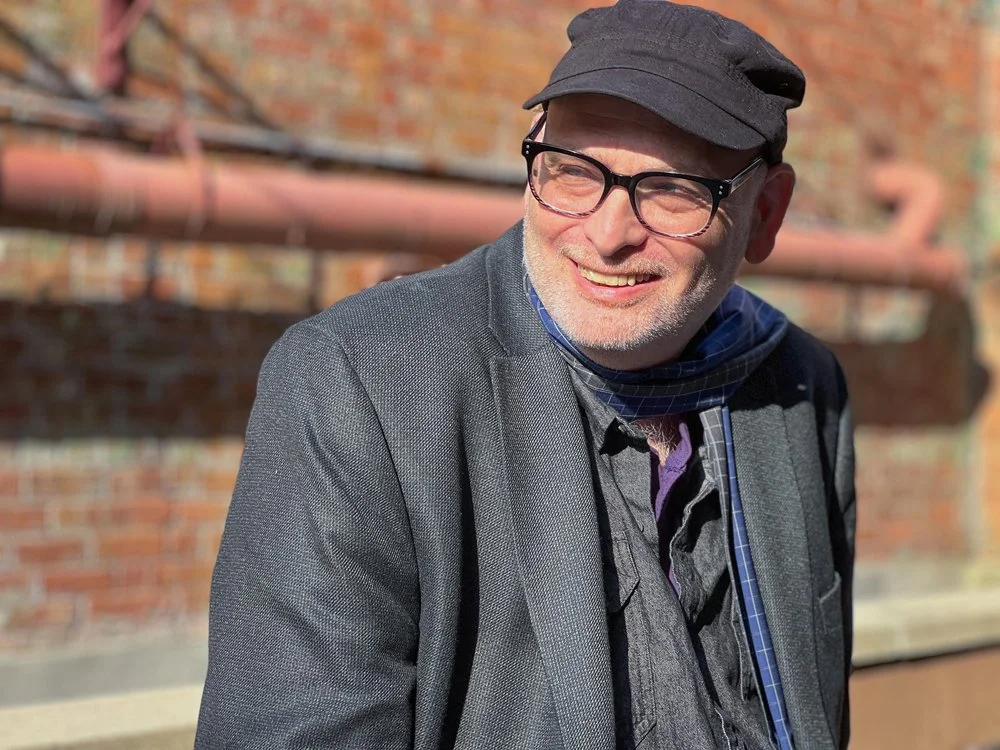
Timothy Herrick is a writer, journalist, and poet who has lived in Jersey City since the 1990s. He documented the city's art scene through his blog "Dislocations" from 2009-2014 and recently published The Subconscious City, a collection of fiction capturing a pivotal moment in Jersey City's artistic evolution. He also writes surrealist westerns and works as a business journalist.
Connect with Timothy:
Book: The Subconscious City: Love, Art and Artists, Jersey City, USA (available at Word Bookstore in Jersey City or online)
Previous work: Dislocations blog (2009-2014)
Other books by Timothy Herrick: Surrealist westerns published by Dusty Saddles Press
Key Insights
Artists as urban catalysts: Artists are often "canaries in the coal mine" of gentrification, bringing life to neglected corners, spurring economic development, then getting priced out themselves
Visual thinking and the subconscious: Art operates in our subconscious - artists create what they see in their minds, and viewers interpret it through their own subconscious lens
Documenting vanishing moments: The book captures Jersey City's art scene before the Trump era and major urban changes
Specificity creates universality: In fiction and poetry, making things as specific as possible paradoxically makes them more universal - authenticity comes through specificity
Art's complex relationship to cities: The relationship between artists, residents, and public art varies greatly: from murals to galleries to public funding debates
Historical erasure and memory: No plaque in Jersey City commemorates the 1643 Dutch massacre of the Lenape people, highlighting how certain histories remain invisible
Visual Documentation
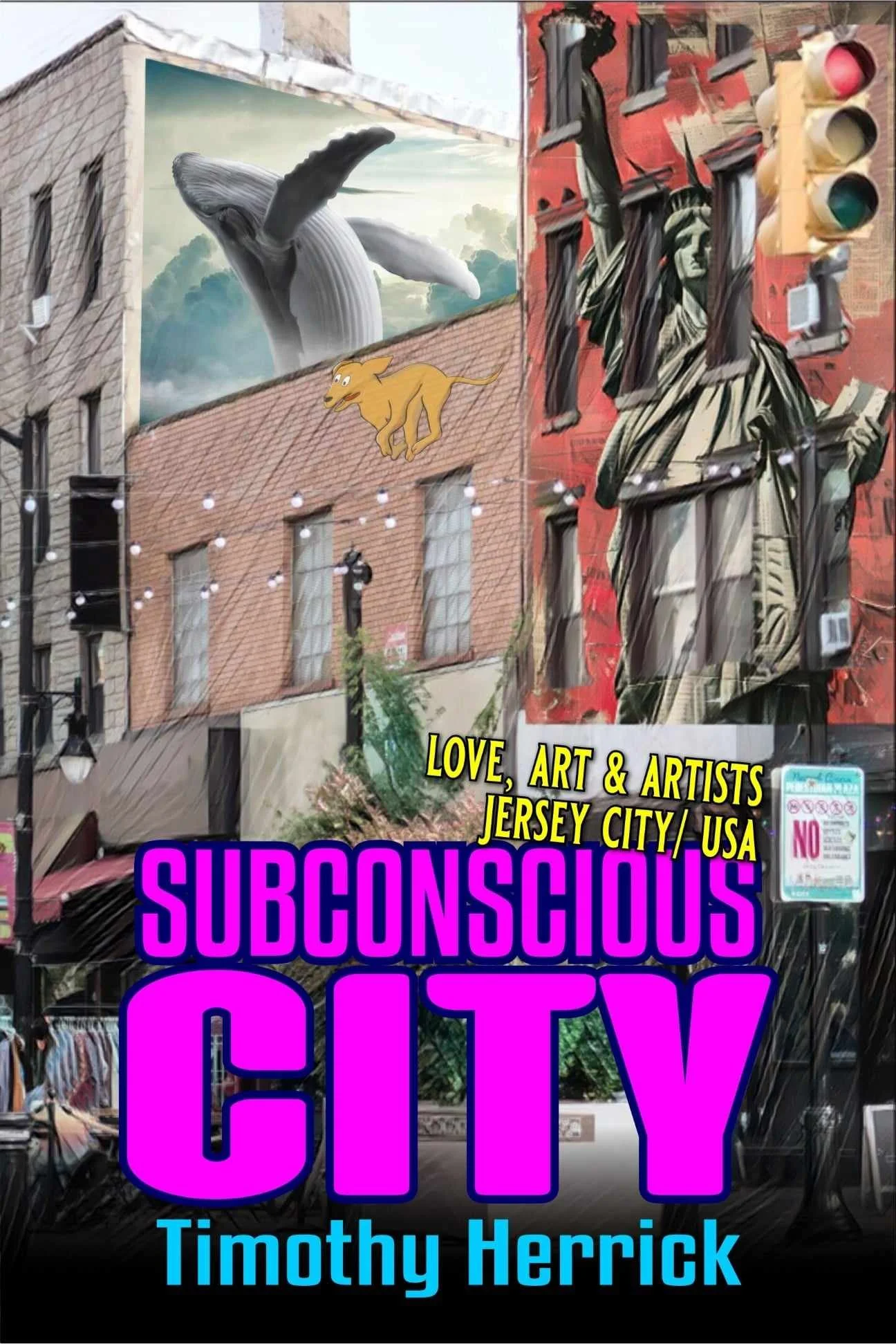
Subconscious City by Timothy Herrick
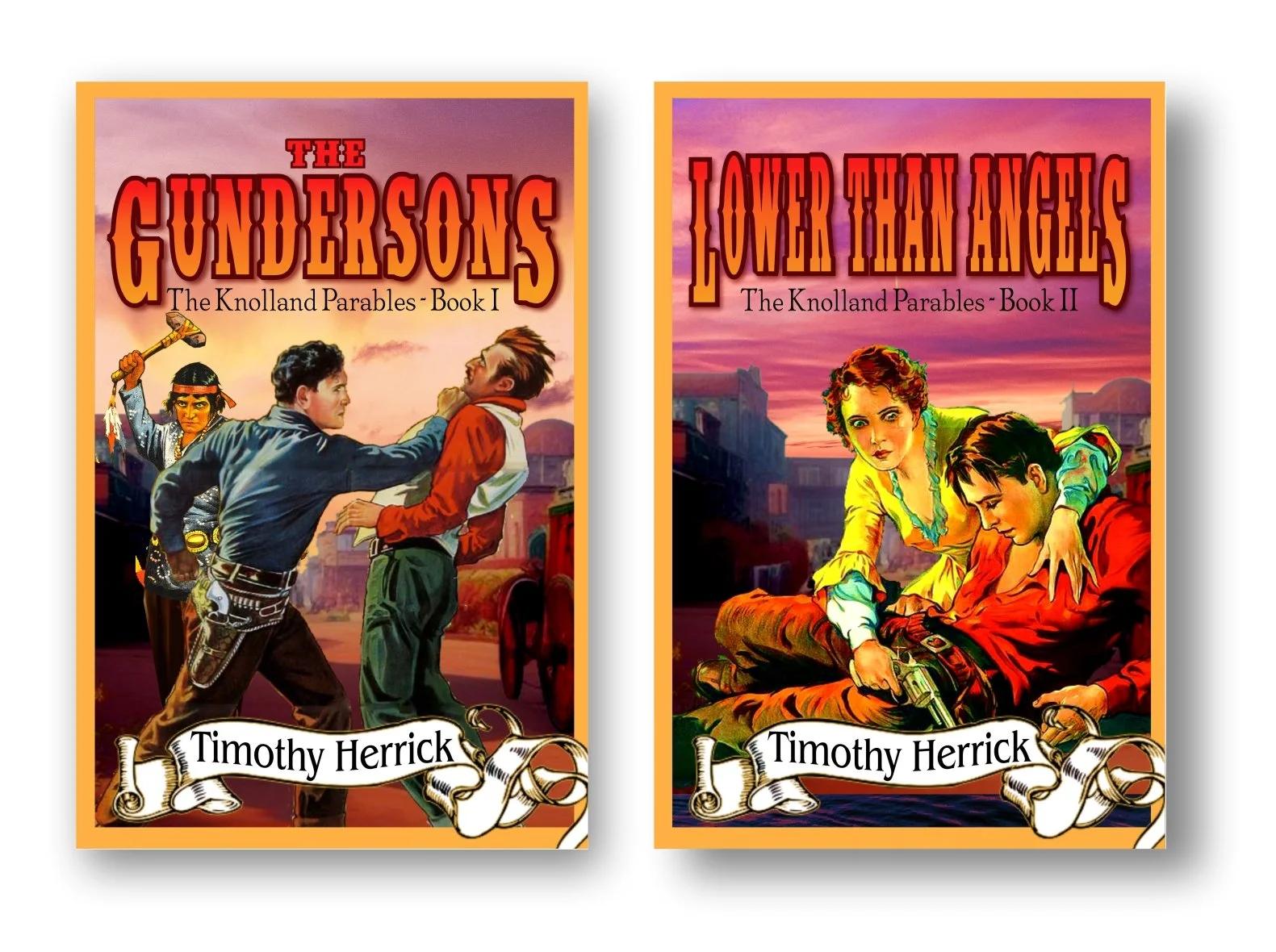
The Gundersons and Lower Than Angels by Timothy Herrick
Related Resources
JCTC (Jersey City Theater Company) - mentioned as an organization Timothy helped get off the ground
Newark Avenue pedestrian plaza - a key location in the book's stories
LITM (referenced as "Theorem" in the book) - former arts bar on Newark Avenue
Word Bookstore - local Jersey City bookstore where the book is available
Coming Up Next
Next time on Nat's Sidewalk Stories, I'll be speaking with my friend Zach Green, stained glass window artist and restorer and musician.
Connect with Nat
Website: natkalbach.com
Substack: Nat's Sidewalk Stories
Instagram: @natkalbach
Email: podcast@natkalbach.com
Music: Our theme music is "How You Amaze Me," composed by Jim Kalbach and performed by Jim Kalbach, Bryan Beninghove, Charlie Siegler, and Pat Van Dyke.
Support the Show: Subscribe to the podcast and sign up for Nat's Substack to receive additional stories and visuals that complement each conversation.
Share Your Story: What sidewalk stories have you discovered in your neighborhood? Share them with Nat through email or social media.
Full Transcript
Note: This transcript has been lightly edited for legibility.
Nat Kalbach: Welcome back to Nat's Sidewalk Stories. I'm Nat Kalbach, and today I'm thrilled to share my conversation with Timothy Herrick. He's a writer, journalist, and longtime Jersey City resident who's been observing and documenting our city's art scene since the early 2000s. Timothy just released his book, The Subconscious City: Love, Art and Artists, Jersey City, USA.
It's a collection of stories capturing a pivotal moment in Jersey City's artistic evolution. In our conversation, we dived into everything from the relationship between artists and urban spaces to gentrification to what it means to think visually. Timothy also shares his unique perspective on documenting change through his former blog Dislocations.
And we even touch on his other books, which are surrealist westerns. This was such a rich conversation, so let's jump in.
Hello Timothy. I'm so happy to have you. How are you?
Timothy Herrick: I'm, I'm good. The pleasure's all mine. So, and thank you very much. I appreciate it.
Nat Kalbach: Yeah, I'm so happy that I have you on, can you tell us who you are, and what you do?
Timothy Herrick: I'm a writer and, I've lived in Jersey City for, uh, since the nineties. My day job is, uh, I'm a journalist and sometimes a publicist and that kind of thing, but mainly a journalist these days. I cover, business issues and, there's not really a lot of crossover between the writing I do, uh, and the writing I do. So, so, but, but also, um, I'm a fiction writer and a poet. And, um, you know, regarding Jersey City, um, one thing that was probably transformative act was, around 2009. I just finished a piece, uh, I usually write short stories and short novels, and I had gone through, several, uh, things, relationship and that kind of stuff and, um, and, you know, crazy girlfriends and blogs were just coming on the scene, you know, it was just before social media.
So I started a blog, called Dislocations that I did for five years, it was mainly me thinking and walking around Jersey City and taking pictures and thinking about stuff. And, um, and also that included, writing about art in Jersey City.
That led to some work I was doing with, uh, JCTC and helping them get off the ground. And that's, that's kind of a long story as well. So I started writing that about the same time the Jersey City art scene, uh, began to really blossom or starting to blossom and, here we are today, so
Nat Kalbach: Yeah, we will come back to your blog, but I wanna ask you about your book. You just, came out with a book, which is called The Subconscious City, Love, Art and Artists, Jersey City, USA. And I read it,
what is your book Subconscious about? You have a wonderful dedication in the, beginning of the book, dedicated to all the artists of Jersey City and we who love them and all who love art, which is beautiful.
Tell me a little bit about the book.
Timothy Herrick: I would be glad to, and thank you very much for reading it.
So there's a novella, um, which is called Humphrey. And it's about, a guy who's a widow or, widower, right? Um. Yeah. And so his wife is a Jersey City artist who, died suddenly, and she was also a arts professor, and Tara is the daughter of his, uh, Colleen, his, uh, deceased wife and who, and Giselle is, uh, a friend of hers and they were both students of their mother. It takes place in that milieu of young Jersey City artists. Humphrey, refers to a humpback whale—a humpback whale is spotted in the Hudson Bay.
And, it goes viral and it, and it starts, a kind of movement, of, the artists in Jersey City. It kind of reflects sort of the early days of social media, where things would go viral and it was kind of a new phenomenon and it really is a way for the characters to discuss issues related to art and seeing and, thinking.
The next story is called the Red Dot. It's a long, short story and that is about a, high-end gallery moves to Jersey City and they have their first, um, art, show of Jersey City artists. And Jersey City artist, Omar Jackson, sells a painting.
That's where the red dot comes in. But, Omar has an interesting backstory. And it deals with issues of, um, race and crossing boundaries and how transcendent is art. The next story Sweltering is about a, Lenora, and, her friend. They are two artists, and Lenora is more, successful and, but she just broke up with her girlfriend, and is depressed and they go to, a art show at the bar, LITM.
That's, I call it Theorem, but, for various reasons, they have to leave the bar and it's a very hot night. And they go to the Italian feast.
The fourth story is, called, Before We Move to Glen Rock.
The main character is a, a woman who, um, was a life model in Jersey City. And she's wondering, uh, about love, she's very happy in her marriage, but she wonders how happy she is because how much do you really know the person you're in love with?
And then the final thing is a poem, uh, which kind of started it all. It's called, Collage Artists. And it's really about, um, the idea of juxtaposing images and, how an artist reflects on her memories and also her feelings and how that comes together in art. I really was trying to think about, you know, what does it mean to have visual thoughts and to think visually but you're still expressing ideas and emotions. And it just fascinated me. And, so I, I looked at different facets of that and the subconscious city.
I really don't remember how I came up with that, although I've always been interested in subtext and the subconscious and, you know, what is the collective mind? Um, what really affects us? And I realized that. With art that we see something, we see a work of art, an artist sees a work of art.
The artist creates a work of art and is creating what they're seeing in their mind, what they're seeing or, and putting it on canvas or whatever medium. And it's amazing how timeless this is, is the subconscious because the artist is working on the subconscious.
And when you see a work of art, you are actually interpreting it in your subconscious, you know, . I think I'm having fun with the idea of the subconscious is so jam packed. It's really a city because it's subjective and objective and collective and um,
Nat Kalbach: That's very cool. I liked your book a lot. I love the Humphrey. Um, and also the Red Dot were, my favorite, parts. How do you, how do you see the relationship between an artist's life in the city and their environment? Especially because you set it in Jersey City, right? You made it up, but you didn't really make everything up because you're still set it, very obviously in, Jersey City.
So how do you see the relationship between an artist's life and their environment, in this city?
Timothy Herrick: That is an interesting question. I know that there is relationship. And it's funny that, you know, the artist has a relationship to the city, but also is that the same as their relationship to the people in the city and, and what is, what about the people in the city and their relationship to the art?
And it's very, like, it's very different to see a, uh, your relationship to a mural as opposed to your, your relationship to a, a gallery like, and to go see your, like a show like you put on the other last week or last
Nat Kalbach: Mm-hmm.
Timothy Herrick: um, that's a, it's a very kind of different, relationship.
I mean, is there, is there a way that relationship should be, uh, also I think from a public funding of arts, from grants to the art fund and taxes, that is, we are all asking as citizens, what is the relationship of art to, the city? We live in a very precarious times to make an understatement, but if people remember back in like the 2020 election during, the, uh, Democratic, uh, convention, Biden and Bernie Sanders, mentioned art.
Not very specifically, but acknowledged art as part of something that government should fund. And I, I never heard anybody in the federal level in that context, uh, mentioned that, and I never heard it again either.
Nat Kalbach: Right.
Timothy Herrick: I think that there was this, momentum, nationally, but also at the local level.
And, and what's happening in Jersey City is, uh, I mean it's unique to Jersey City because there ain't no other place like it, but it's, art scenes are happening all over, uh, the country where they weren't happening before, and then also other cities in, Europe and, uh, Canada and all that, and Asia, I believe.
And so it's really, an evolutionary learning process, and we're still figuring it out. I mean, it is actually kind of interesting and, I wish the debate we're having locally is a little, was a little bit more deep, but it's probably, uh, my constant, complaint.
Nat Kalbach: You did say that, the book captures a vanishing chapter of the city and its artists. And so I assume like you wanted to document that era, um, or this time,
Timothy Herrick: I, I think the documentation part was more in hindsight.
Nat Kalbach: Okay.
Timothy Herrick: I love that line, uh, but actually the, uh, but the publisher came up with that one I didn't write the press release I sent out this time, or at least not fully.
But what occurred to me is that when, um, I mean, I was still finishing it up when COVID hit, and then I, I switched to the Western. The first Western is the Gunderson and the main character is an artist. And then I realized when I was, I never really thought of it as a collection together, but then when I started thinking about it, I realized that, because uh, our current president and this era is so different and the change so dramatically and also locally as well, that, this is a document of a certain, uh, time, in the city.
And, and it's not that it's that specific, but basically it ends before the Trump era and also, kind of in happenstance, if, I'm sure you're familiar with with Newark Avenue and they, and they have it paved and it's all very nice, but that actually. Doing away the traffic and, and making that and putting in the new sidewalks.
There was like just, uh, no cars in a street for many, many years. And, um, and so that, and also that was when the ARC bar, uh, LITM was open. And so it is a kind of during that period, so that's, uh, I mean, I, I mentioned that in the stories and all that, but just from a local angle, the thing with writing fiction and perhaps poetry that the way to make things
universal is to make them as specific as possible. It's a, it's a funny contradiction because, um, there's an authenticity with specificity
And so even though not everybody can relate to Newark Avenue, everybody can relate to the concept and you get the concept with as being when you're more specific.
Nat Kalbach: You also mentioned that neighborhoods became unaffordable for artists as well as our workers, which, everyone in Jersey City and also in New York does know, but so you had this urge in hindsight, to document that change, but how do you see the role of an artist in documenting urban change?
And I'm asking that because I'm very interested in that topic in my art and in this podcast as well. Do you think there is a role of the artists that they document that or they, maybe documenting is not the right word,
Timothy Herrick: I suppose documenting is the right word. I mean, do you feel, is that your. Major for you, for, um, especially the show that we just saw at Novado is that your motivation primarily to document or are you inspired and the documentation, is sort of more in hindsight.
Nat Kalbach: I think this show was a little different for me I think in the past it was more about documentation for me because I was also learning to read, the city and, um, you know, coming from a different country in 2013, I moved to Jersey City.
Even though you're, you grow up with a lot of, uh, American, TV and music and you think you know the culture, but then you move to America and there are a lot of, unknowns still. And it's like a new language, additional language that you, the vocabularies. You have to read the city, you have to read the people, and it spirals out, city, the state, the country, you know.
So I think in the beginning, my art was more about documenting. My show that you saw If These Walls Could Talk, was more a statement, I brought myself more in, uh, how that relates to the viewers is of course, I don't wanna give up, uh, away too much because I want the person to look at it and, either feel something or think about something or feel tension.
Timothy Herrick: It sounds like from, from your perspective, that the documentation was really part of the process of, assimilation, for lack of a better word. And uh, I think that is kind of interesting.
Nat Kalbach: You have looked at art, you have talked to many artists. You have, have artist friends. You have an insight into a lot of different artists of the city, right?
Timothy Herrick: I always, uh, liked art and always had. Have, uh, talked to artists, um, like from when I was an undergrad to the present day. A change that you really started to see, uh, particularly after 9/11 in, uh, Jersey City.
And also you'd read about it happening in Brooklyn and Los Angeles and how it's tied to, um, well, gentrification, which used to be called urban renewal. And so it's a very, it's actually kind of complex, whatever that relationship is because, especially when it comes to, um.
Grants and public planning, et cetera, et cetera, trying to quantify and perhaps qualify what is the benefit of the arts and, you know, why should they be funded? And that's a little bit more elusive, less elusive, is the fact that the relationship between the arts and quote unquote gentrification and that, and the artists are often the canaries in the coal
Nat Kalbach: Mm-hmm.
Timothy Herrick: A, um, gallery would open up in a raw space or in a, or in a dark corner. Um, and then they would bring life and people to that corner and or block. And that would spur economic development. Thus the cycle of gentrification. What happens is that, um, the artists get priced out and developers like, see they can make a lot more money using, opening up a Whole Foods as opposed to, uh, you know, a Jersey City art gallery. So, and it, and, but it's the artists that made that, a viable corner. Before I moved to Jersey City, I lived in the Lower East Side and the same thing was happening and I, that same thing was happening there. Um,
Nat Kalbach: So you said, um, your blog was called Dislocations, which is a very evocative title. Tell me what kinds of dislocations you were observing.
I believe you stopped the blog in 2014. So I, I read couple of your blogs and I'm glad they're still up. And I actually found it very cool that. In some of the last year where you wrote and you documented some of the shows and things that you saw, murals, I have the exactly same photos because I was trying to discover the city and you were documenting some, you know, artists murals in the alleyway downtown.
And I was like, oh my God, I have the same skunk picture. Because I was like, this is so cool.
Tell me a little bit about like why you called it Dislocations and what kind of dislocations you were observing.
Timothy Herrick: Dislocations was not about what I, er, observing. It's about me and not so much that, uh, I think we're all dislocated. Because, um, we're, we're souls trapped in bodies and we have consciousness, and yet we, we can't choose our parents. Yeah, so like life I feel is, a mystery and, um, I, I feel ambivalent towards life and I try to promote ambivalence as much as possible.
And so Dislocations was really about me. I kind of originally started to have an outlet for some poems that I couldn't find places for, and then I just started writing. The blogs were kind of happening and I, I knew a couple of, uh, a friend or two that started a blog and I was like, you know, I can write better than that.
I can do a better blog. And the fact that I started writing about art was that art was just happening. One of the nice things about writing about the artists, like I would like during the studio tour, uh, I would go to a couple of, uh, studios and just write about the artist, um, that I would go see just to, just to do that. I do know of two people who use those write-ups as part of, um, their, entry application for Bay Street, studios
so, the fact that I documented the art scene, was not really, uh, my intention. Uh, and also it really doesn't have anything to do with the term, uh, dislocations. But in retrospect it's kind of a, uh, it's really docu more so than Subconscious City that's really a document of that period of 2009 to 2014 in Jersey City.
It's kind of a snapshot of that, um, bygone era.
Nat Kalbach: You also mentioned, that you have written, surrealist westerns and, um, so how that's like so different from your book now, right? I haven't read your Western full disclosure,
Timothy Herrick: Oh, try together the catch up. Now. Um, the, uh, that is, I I have dabbled in genre. This one just, I happened to get lucky. I've written some horror, and also some noir, mainly short stories. But, I love the Western and it's really a totally fabricated universe. Uh, like a couple other writers who, are published by, uh, it's a really big publisher, Dusty Saddles, DSP. They also publish, some other, genres and they, they are big on like, this is how the West really was.
It's not Hollywood. And I'm kind of more like, well, this is more of a Hollywood where not, you know, so it's kind of very influenced by, um, the Western which I actually kind of studied for a good decade as just a thing to do. I just watched a lot of Western movies and read a lot of westerns and, uh, before I decided to write one, I just got an idea.
The problem with the westerns is that, um, they're kind of a meditation. They're kind, I call, they're kind of prose poems on America. But it's really more of 19th century America and, and issues of race and how they were figured they were thought about back then. Also what I think about America having lived here my entire life and my, you know, or like my, you know, half my family, they were from the, um, Mayflower.
I'm actually working on a another western. I hope to have a few books coming out soon and next year.
And one of them will be another western because they're doing a big thing about the, , the 250 anniversary of a United wanna do a series of Western. So, and I do have another idea for the Nolan series. Um, so I just don't have a title yet.
With Subconscious City is that, there's been a couple of books written, uh, about Jersey City and lot of it's about Hague and the politicians corruption and that kind of thing.
And it's just sort of been told. And I, I, and that's why I feel that writing about artists and looking at it, something that hasn't been told about the city is, is nice and fresh and, you know, it's,
Nat Kalbach: Yeah, that's why I liked it, it's, it's important to, you know, learn a little bit about Hague and, um, you know, sometimes you hope people would learn a little bit more about history so that they would understand what's happening right now. But, yes, you are right
that's not everything that defines the city and the art scene is a, is a big, is a big scene, uh, in Jersey City. So I, I thought it was fresh and, and great. What would you hope.
Readers, maybe particularly those that don't even know Jersey City to take away from these stories about this particular time and place.
Timothy Herrick: I hope too they'll. Have insights about the modern human condition. What does it mean to be human? What does it mean to be alive now? And, um, but, uh, but also what, what does it mean to think about these issues of art and where does, what is creativity and, and thinking visually, how does that affect our lives?
In the book, uh, although obviously there's artists as, as a lot of the main characters, uh, I made a point of showing the, if you will, around artists and their relationships with their lovers and family and friends. Um, because, art is especially visual artists, uh, you know, it's like you and your.
You and your canvas, but you need a studio and you, obviously you are, have friends and, and all that kind of stuff. And so you're not, you're not really isolated from the rest of society or the rest of the city. And it's interesting to look at where does that isolation end and, and that sort of thing.
Nat Kalbach: Timothy, my last question. If you could spend an afternoon with anyone from Jersey City's past, who would it be? Which corner would you choose as your meeting spot and what one question would you ask them?
Timothy Herrick: I was thinking about this answer and um, I would like to talk to any, uh, spend an afternoon with, any, Lenny Lenape before So in 1643, Dutch soldiers from Manhattan came over to Jersey City and they massacred like a hundred some odd. Um. Lenny Lenape, uh, not one plaque in this city or any reference to this historical event.
Is visible in Jersey City. It's something that, uh, I've been aware of since I was a kid. Uh, my father was into Indian lore. I was in the Boy Scouts and we did like, uh, the Indian Lore Dance Team, and he instilled a love of Native American history and culture, and we talked about the Lenny Lenape and I, I, when I moved here, I couldn't believe there was no reference to this at all.
And I would just love to talk to hang out, uh, by the river and, uh, ask them what to see, like, to just to talk to 'em about life. Because what I, I have a feeling that there must be something similar in the Leni, Lenny Lenape who live in Jersey City, and the people who live here now. I think that there's something about Jersey City that might transcend that, and I'd love to see that, uh, as po uh, as possible.
Also, I say the 1643, but also, if you look at the revolution there was a lot of skirmishes between the Dutch and the Lenape, uh, throughout New Jersey. And that's why there's a mix of Dutch and, and, Lenape names like Mahwah um. And also, a deeper reading of the Revolutionary War was that there was a big fear that to get people on the side of the revolutionaries, they, said that the British were forming Indian uprisings and slave uprisings whi, which they were.
But there were also, um, a lot of fear in New Jersey where a third of the revolutionists fought of attacks, by the Native Americans, by the Lenape. And so there, you know, there's not a lot of recorded history about them, but they were really very interwoven in the early history of this, uh, city.
And I, I find that, uh, interesting and I think it's very compelling that, that, that, uh, there might be a similarity to the place and was my answer.
Nat Kalbach: That was a great answer. I like that a lot. And, uh, um, gives me some thinking too. Um, this was such a great interview. I hope everyone is gonna check out your wonderful book, Subconscious City, by Timothy Herrick.
If you're in Jersey City, go to the local bookstore, support them, go to the Word, bookstore, you know where it is. If you're not in Jersey City, you can get the book through. Some other channels,
Timothy Herrick: Amazon.
Nat Kalbach: , Read it. Timothy, I can't wait for your next books. Maybe I have to read Western.
Timothy Herrick: Well, they're surrealist westerns, so they're different. And hopefully they're fun to read.
Nat Kalbach: Perfect. Thank you so much.
Timothy Herrick: Good. Natalia, thank you very much. I really had a good time. I really appreciate your interest. Good questions. Good talk.
Nat Kalbach: Awesome.
That was Timothy Herrick author of The Subconscious City. I loved his thoughtful take on the role of artists as both catalysts and casualties of urban change. Those canaries in the coal mine, as he put it,
His final answer about wanting to meet the Lenape people who originally lived here really stuck with me. It's a powerful reminder of the layers of history beneath our feet. If you're in Jersey City, pick up Timothy's book at Word bookstore and if you're listening from elsewhere, you can find it online.
Next time on Nat's Sidewalk Stories, I will talk with my dear friend Zach Green, who is an amazing, stained glass window restorer and also a musician, I'm really excited to have him. Our theme music is performed by Jim Kalbach. Brian Beninghove Charlie Siegler and Pat Van Dyke. I'm Nat Kalbach,
and this is it for today from Nat's Sidewalk Stories.
