
Episode #220: UN-Finished with Nat Kalbach
About This Episode
In this solo reflection, Nat looks back at Season 2's conversations and the thread that runs through them all: What gets preserved? What gets lost? Who decides? She connects these questions to her new painting "UN-Finished (Past, Present, Future)," which depicts the Jersey City Powerhouse using layers of sepia underpainting to represent the stories that are still showing through.
Season 2 at a Glance
This season featured nine guests, each bringing their own connection to place and preservation:
Rimli Roy wondered about the very first Indian family in Little India—what were their names? Were they nervous? Did they change their names to fit in?
Andrea McKenna mourned the old woman on Vroom Street who was born, grew up, and died in the same house—and whose stories disappeared with her.
Jerome China found his sacred space and challenged us to hold onto history, love, and imagination.
Duquann Sweeney is preserving his community through photographs, documenting dignity and joy in Lafayette.
Timothy Herrick documented a vanishing art scene and wanted to meet the Lenape to understand what this land was before we built on top of it.
Zach Green is keeping stained glass restoration alive—an endangered craft whose practitioners and manufacturers are disappearing.
Miguel Cardenas reminded us that "those old days are still happening—you just have to show up."
Dan Pierraccini & Alishia Taiping showed how community makes a place feel like home, and sparked an article about Jersey City's forgotten Elks Lodge.
Visual Documentation
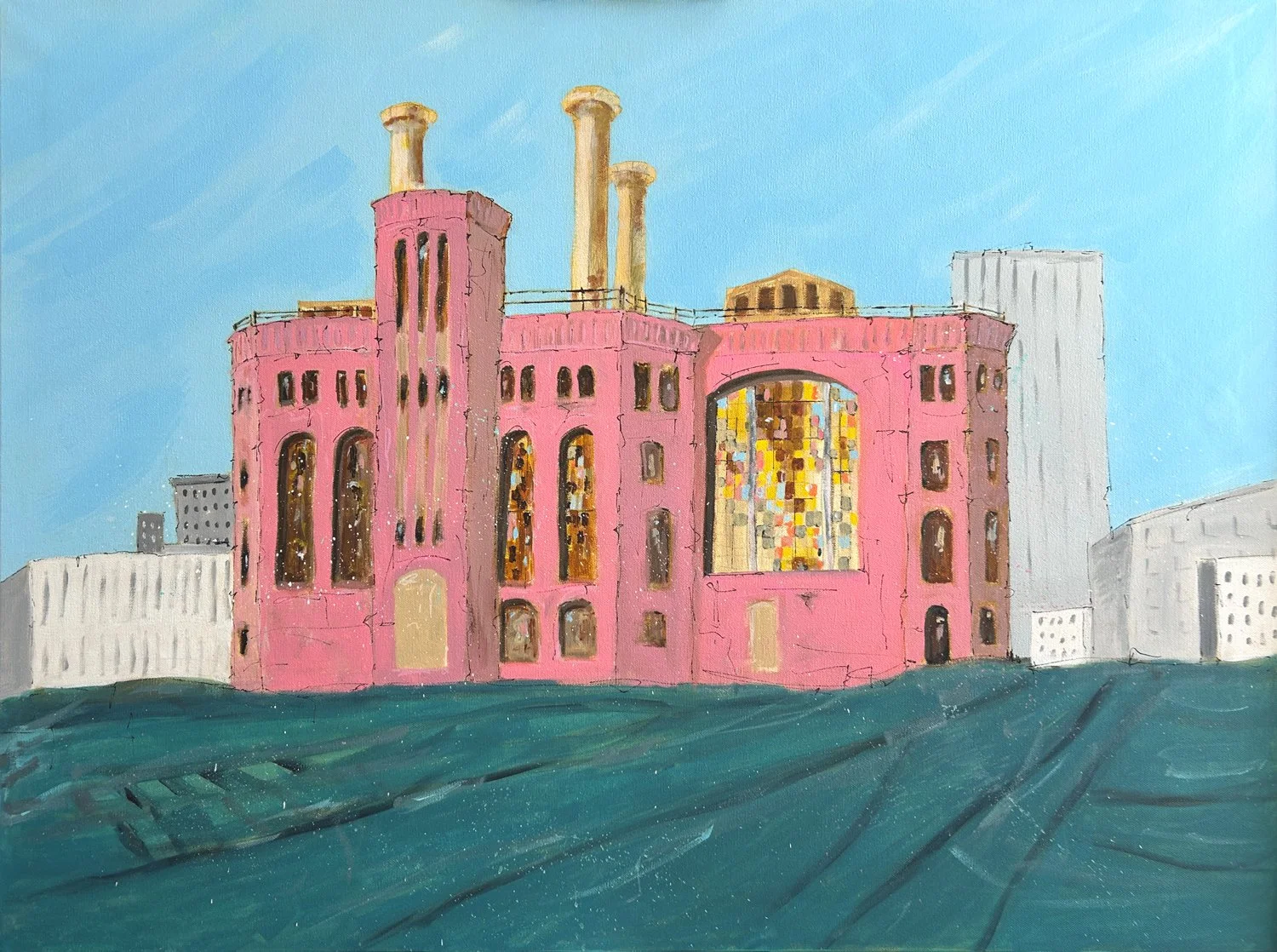
UN-Finished (Past,Present,Future)
Nat Kalbach, 2026, 30x40”, Acrylic Paint, Ink, Marker on Canvas
"Unfinished – Past, Present, Future" was inspired by the Met Breuer's exhibition "Unfinished: Thoughts Left Visible," which featured incomplete artworks—paintings interrupted by revolution, by war, by life. Nat used this as a framework for depicting the Powerhouse.
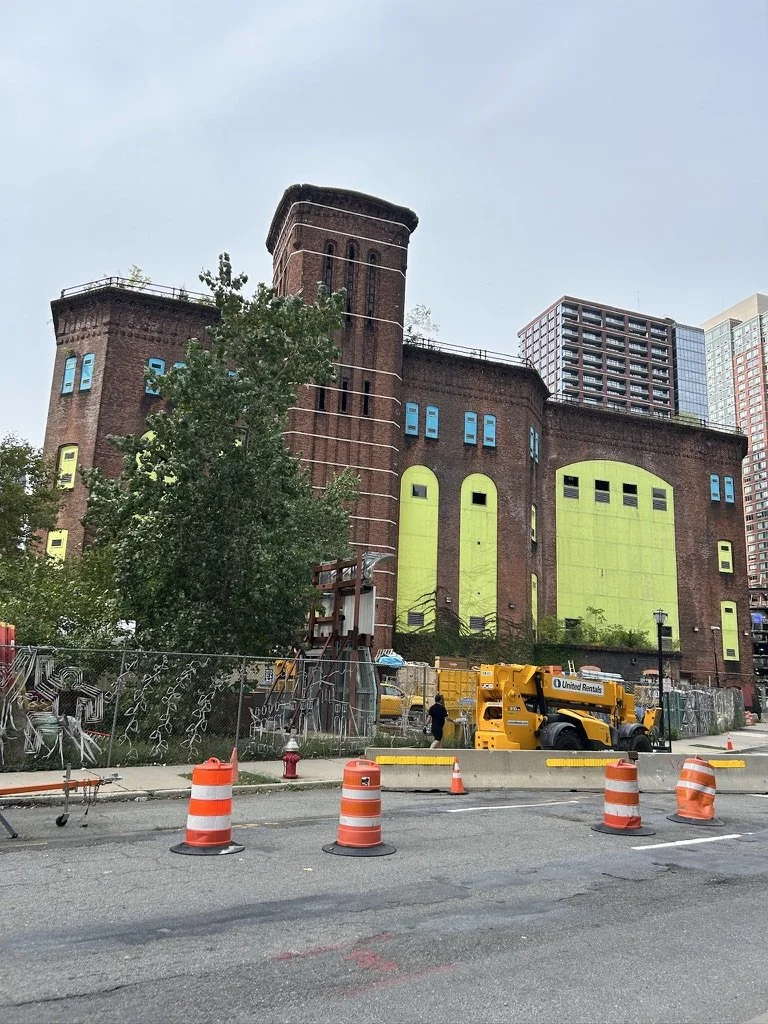
Powerhouse, September 2025
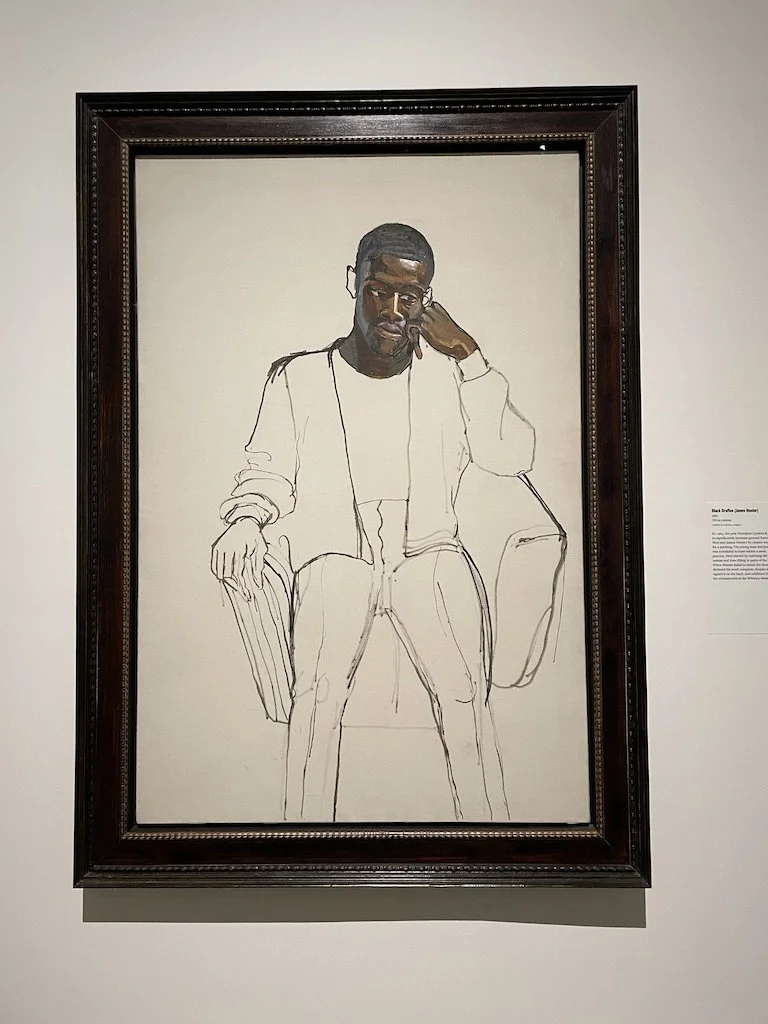
James Hunter Black Draftee, 1965, Alice Neel
The Bigger Question
How do we document loss when history is being undone? When stories are being rewritten even as we try to preserve them? When what we choose to remember depends on what we choose to see?
Related Resources
See the painting: "Unfinished – Past, Present, Future" is currently hanging at Novado Gallery in Jersey City
Save the Powerhouse: Jersey City Landmarks Conservancy's campaign
Walking Tours: The Landmarks Conservancy offers regular tours around the Powerhouse area
Related reading: "Where The Elks Once Roamed" article on Nat's Substack
Coming Up Next
Nat will be back in April with more conversations and more stories. In the meantime, keep your eyes open—the stories are everywhere. You just have to look.
Connect with Nat
Website: natkalbach.com
Substack: Nat's Sidewalk Stories
Instagram: @natkalbach
Email: podcast@natkalbach.com
Theme music: "How You Amaze Me," composed by Jim Kalbach and performed by Jim Kalbach, Bryan Beninghove, Charlie Siegler, and Pat Van Dyke.
Full Transcript
Nat Kalbach: Hey everyone. Welcome back to Nat's Sidewalk Stories. I'm Nat Kalbach. This episode is a little different. No guest today just me. I wanted to take a moment to pause To reflect on what I've learned this season Because I kind of like that and I wanted to share something that I've been working on. A new painting. And actually the two are connected. Meaning what I learned and the painting are connected, but let me get to it . So settle in and let's talk.
This season I had nine incredible conversations. Nine people. They each came with their own story, of course. Their own connection to place. And here's what I noticed. There was a thread running through all of them. I feel like that's always the case. I mean, of course you look for that, but seriously, And it started with Rimli Roy. Rimli founded Surati studio. She's been bringing Indian Performing Arts to Jersey City for over two decades. She organizes the Holy Festival, for example, and she's built a cultural institution. But here's what stayed with me when I asked her my signature question. You know, the one where I ask at the end, Hey, if you could talk to someone from the past in Jersey City, who would that be? Where would that be? And what would you ask? It's the question that, you know, a lot of people are like, oh my goodness, what am I gonna say to that? But I think most of them really enjoy it, and there's always something really cool coming out of that. and so here's what Rimli said. she actually wanted to talk to the very first Indian family who settled in what later became Little India. She said she'd want to know what was it like, how did they bridge cultures? Were they nervous? Did they change their names to fit in? So she wondered about the stories we'll never know. The experiences that were never recorded.
Then I talked with Andrea McKenna. Andrea's a painter and the gallery director here at Art House, She lived on Vroom Street here in Jersey City for years. And she told me about an old woman who lived two doors down.
This woman was born in that house and she grew up in that house, and she died in that house. I mean, that's pretty amazing. Andrea always meant to knock on her door and ask her questions. What was the street like? What was your life like here?
But she didn't, and now that woman is gone, and so is her story.
Jerome China is a metal sculptor. He transforms his backyard in McGinley Square into what he calls a sacred space, The only place on Earth where he doesn't have to compromise. Now, here's the thing. Jerome lived in Jersey City before in the eighties for four years, and he had zero connection to this place. He never went to Lincoln Park, never explored downtown. He just used his apartment as a place to sleep between trips to Manhattan. Nothing to get grumpy about. Many people in Jersey City are like that. Still, and again and again, But then he came back years later. Everything was different. He was different. Our relationship to place can change completely.
And then there was Duquann Sweeney. He is a photographer from Bergen Lafayette, His black and white portraits. they really radiate Dignity, joy care. When he received his award from the Landmarks Conservancy last year, he challenged the audience. he said, hold onto history, hold onto love. Hold onto imagination. And then he said something that really hit me. He talked about history being erased. African American history, Latino history, Palestinian history. He was thinking about all the stories being dismantled, rewritten, undone.
Then I had Timothy Herrick. He wrote a book called The Subconscious City. It's about Jersey City's art scene, The underground, the raw spaces, The years before everything changed. He called artists the canaries in the coal mine. You know the story. They move into a neighborhood, they make it interesting, and then they get priced out.
I asked him if you could meet anyone from Jersey City's past, who would it be? And he said he'd want to meet the Lenape, The people who were here first before all of us. He wanted to understand what this land was before we build on top of it.
I talked to my friend Zach Green. He restores stained glass windows. The Belcher mosaic glass in our house, the church windows. Most people never look up to see. he called stained glass restoration, by the way, an endangered art. It's really sad. The practitioners are dying off and the manufacturers are disappearing. The knowledge is being lost. and of course I asked him the question and he said he'd go back to the very beginning. see the first settlers arrive, and then he said he probably apologized to the Lenape people. for what we've done to this place.
And then I had Miguel Cardenas. architect educator, co-founder of the Jersey City Pride Festival.
He said something really interesting, he said, people always say, Hey, remember the old times? They mourn what's gone. And you know what he said? He said, those old days, they're still happening.
You just have to show up.
And then finally, um, my last guests were my friends, Dan Pierraccini and Alishia Taiping. The heart of Forget the Whale. it's a great band that really brings pure joy to just about every festival and event in town. And of course, we talked about music and about volunteering and about Elk's Lodges and about friendship. So they are part of a friend group we call the downtown expats. people who got priced out of downtown, but they stayed connected. We have dinner parties, theme nights.
We dress up, we're silly, we laugh. It feels like high school, but I mean like in the best way, actually better than high school.
What's better than high school is a college. I don't know. You get the gist. And Alicia said something that is really beautiful, she said She hadn't had a friend group like this since she was a teenager. Moving to Jersey City and finding this community. That really made her feel at home. And Dan.
Well, when I asked him who from Jersey City's past he'd want to meet, he said he'd want to meet the first Elks who opened the lodge here. There was one on JFK Boulevard. It's near Journal Square and it's closed. So he wondered what did those first Elks do? who were they? Were they artists, musicians? What needs were they serving? What made them interesting? That conversation got me thinking and I ended up writing an article about that Lost Elks Lodge. You can read it on my Substack. It's another layer of Jersey City that's mostly forgotten.
So here's what I kept hearing in season two. What gets preserved? What gets lost? Who decides? The first Indian family, the old woman on Vroom Street, the Lenape, the stained glass knowledge. The artist who got priced out . Layers and layers being added, being erased, and in a kind of round away way. That led me to my new painting.
Let me explain.
so you might know that I paint the powerhouse a lot, not, not the actual building here in Jersey City.
Oh, you know, I'm not a graffiti artist. I wish. I mean, on Canvas.,
That building, it's the old Hudson and Manhattan railroad powerhouse. It's just sitting there and it's fenced off and it's deteriorating, but it's still standing. It's been there for like, you know, over a hundred years. Since I moved here in 2013, I painted it many times, Different angles, different moods, different messages. It's really captivating me. And my last powerhouse painting was called Downtown Dynamo. It hung at Novado Gallery. It was part of my exhibition there, and it was about energy. The literal energy, the building once generated for our trolley system and the path, but also the energy.
It still sparks in people's imaginations. So that painting sold recently and honestly, I mean that in itself is amazing. 'cause you know, that's my livelihood. I'm an artist, so of course I was thrilled. But I, it also really meant something to me that someone connected with that vision of mine, with the powerhouse, because I'm not painting, you know, they're building in a realistic way, not a real representation. And I was super stoked that Novado asked me to paint another powerhouse piece. Something different.
So let me tell you, the mind works in mysterious ways. Inspiration is not a straight line.
And maybe you find that interesting, and I promise you it will come together with all the stuff that I was talking before. So hear me out. But anyway,
I started thinking.
I Was reading the news, you know, there's a lot going on and I'm talking about something else. You know, the other else, because it's insane. I was reading about National parks.
I was reading about how the current administration is removing information about slavery from historic sites. Rewriting the narrative. Dismantling history, and yes. A little weird, but again, imagination is not a straight line. But at the same time I was still thinking about the powerhouse painting. The smoke stacks are gone now. There used to be four, then three no none. Now, if you think about architecture like language, Smoke stacks are the punctuation marks that say, Hey, yo, I'm an industrial building. And without them. Well, the building loses part of its identity. the history is literally being undone, erased.
and then I remembered an exhibition at the Met Breuer. Almost 10 years ago now. It was called Unfinished Thoughts Left Visible. That show was all about incomplete artworks. Paintings that were never finished. Some artists just couldn't finish. Some chose not to. Some were interrupted by life. For example, there was this French artist, his name was Jacque Louis David. He started painting a portrait of an aristocrat, Madam Dupastel. But then the revolution came and he found himself on the opposite side, and so he stopped. He was like, I'm not having it. I'm not gonna paint that one. he left it unfinished. There was also a beautiful painting by Alice Neel I love her, and it's a, it's an amazing painting. A black man, James Hunter Black. He only came for one sitting . Then he was drafted for the Vietnam War. He actually came, never back for another sitting, but all good. He survived. But Alice Neal, she had painted his face.
His body was still, you know, just sketched and, and she was like, you know what? It's done because this is the story. This young man's life got interrupted. And so she signed it and therefore the unfinished painting became finished. So those paintings, they all showed their layers. The process, the thoughts left visible. When I was thinking about it, I thought, wow, that's what the powerhouse is. It's an unfinished story. The layers are still showing through.
So then I painted it that way. I started with an under painting and sepia tones, Almost like an old photograph. That's the past. And then I painted the actual painting on top. saturated colors, Pretty vivid because you know, that's what persists. What's still standing, what's driving imagination in some of us on what to do with that building. And then I left some of the areas unfinished on purpose. The sap is still looking through. That's what's been lost. The sky. Vast, unresolved, stretching upward. That's the future. We haven't written it yet, I call the painting Unfinished. Past, present, future. The central window in the painting. It kind of glows even though it's broken. Uh, there's warm light coming through, damaged pans and old layers breaking through new ones. Because that's what this building does. Even if the windows are boarded up, it insists on being seen. It's like, Hey, I'm here . Even in its current state. And so the painting asks a question, well, it's actually me asking that question, but you know, the painting asks the question. How do we document loss when history is being undone, as time moves on? When the stories are being rewritten, even as we try to preserve them? when what we choose to remember depends on what we choose to see.
Now, this is why I make this podcast. Rimli wonders about the first Indian family. Andrea missed her chance to talk to Helen . Jerome found his sacred space. And Duquann is preserving his community through photographs. Tim is documenting a vanishing art scene, and Zach is keeping an endangered craft alive. Miguel reminds us to show up . Dan wants to know about the Elks who came before. and Alishia reminds us that community is what makes a place feel like home. If you think about it. We're all doing the same thing in very different ways. we're trying to hold onto stories before they disappear. I paint buildings, but really I'm painting time. I'm painting what we are losing and what we choose to remember. The powerhouse is unfinished. So is Jersey City's story. So is mine. So is yours. And actually, so is the story of the United States of America. And you know, that's not a bad thing. It means we still get to write the next chapter.
Okay, I'm going to take a short break. I'll be back in April with more conversations and more stories. And in the meantime, if you want to see unfinished, it's hanging at Novado Gallery in Jersey City. And if you're interested in the powerhouse, look up the Jersey City Landmarks Conservancy. They're running a Save the Powerhouse campaign, and I'll link it in the show notes. They also do regular walking tours around the area there. Um, and sometimes they come to the gallery and I will be in the gallery to have a little talk about the painting and some other stuff. I link it in the show notes. thanks for listening and thank you for caring about these stories. I'm Nat Kalbach, And this is Nat's Sidewalk Stories. Our theme music is How You Amaze Me, composed by Jim Kalbach, performed by Jim Kalbach, Brian Benning Hove, Charlie Siegler, and Pat Vandyke. See you in a few weeks. Keep your eyes open. The stories are everywhere. You just have to look.
