
Episode #328: Ley Lines with Deep Space Gallery
About This Episode
Deep Space Gallery has been called the spiritual heir to 111 First Street — the legendary warehouse artist community that was demolished in 2007 and never stopped being mourned. What makes that comparison remarkable is that Dutch, one of Deep Space's co-founders, never once set foot inside 111. He didn't inherit that legacy consciously. He just built something that carried its spirit anyway.
In this conversation, Nat sits down with Jenna Geiger and Keith VanPelt, who goes by Dutch, to mark ten years of Deep Space Gallery at 77 Cornelison Avenue, built into the side of Bergen Hill. They talk about graffiti and lineage, the doula parallel for gallery work, the strange gravitational pull Jersey City exerts on outsider-y people, and a woman named Erminnie Smith who was doing something remarkably similar on Pacific Avenue in 1882 - with Oscar Wilde.
Meet Jenna Geiger and Dutch from Deep Space Gallery
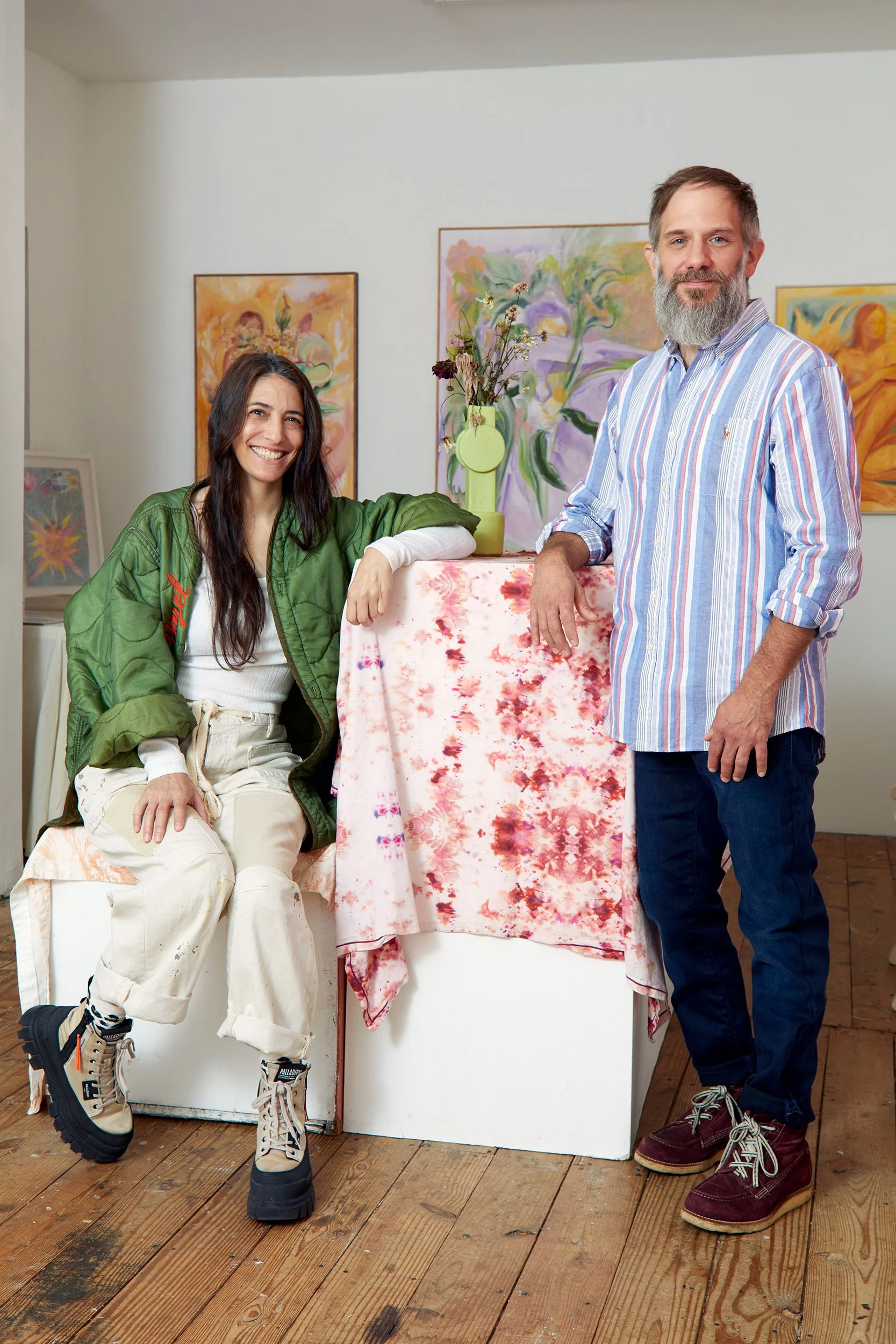
Jenna Geiger and Keith Van Pelt aka Dutch - Deep Space Gallery -photo credit Megan Maloy
Jenna Geiger
Jenna Geiger is the lead curator, co-founder, and co-owner of Deep Space Gallery in Jersey City. She has curated monthly solo and group exhibitions since the gallery opened in 2016. Her curatorial roots grew from an academic background in anthropology, where she developed a deep appreciation for art as a system of meaning, a way communities understand themselves and translate values across time. Before Deep Space, she worked as a family nurse practitioner and spent years as a doula. She brings all of that into how she holds space for artists.
Keith "Dutch" VanPelt
Keith VanPelt - Dutch - is the founder, director, and co-curator of Deep Space Gallery. He studied at the duCret School of Art in Plainfield, NJ, where he learned stained glass, and his work as a painter and muralist is informed by deep roots in graffiti culture. He built the gallery walls himself. He is currently working on a new mural, alongside ongoing stained glass commissions. He describes himself as someone who needs a prompt - and then delivers.
Connect with Jenna & Dutch
Location: 77 Cornelison Avenue, Jersey City, NJ (Bergen-Lafayette / Bergen Hill)
Key Insights
You don't have to consciously inherit a legacy to carry it. Dutch never made it inside 111 First Street — and still built something Tris McCall called its spiritual heir.
Their gallery philosophy was never a mission statement. It evolved from showing graffiti artists who were incredibly talented with some not formally trained, and the ethos grew from there.
Jenna describes her role as a gallerist the way she describes her work as a doula: reading what the person needs, holding the space, not imposing a framework. Asking, "What is driving you to make art now, at this particular juncture in your life?"
Jersey City has a force field. Jenna calls it the ley lines of this latitude and longitude, something that draws outsider-y people who are looking for places to congregate and express themselves.
In the 1880s, a woman named Erminnie Smith was running a salon on Pacific Avenue where Oscar Wilde read, Thomas Edison demonstrated the phonograph, and five hundred people showed up on a Saturday afternoon. Her house still stands.
Selling art is not just revenue. It's an act of endorsement: the collector is almost voting for an expression and sending it out into the world to live a life the artist will never fully know.
Places & People Mentioned
Deep Space Gallery, 77 Cornelison Avenue, Bergen-Lafayette. Built into Bergen Hill. Gallery upstairs, The Hive flex space downstairs. deepspacejc.com
Summer in the City Group Show at Deep Space Gallery August 8 - 22,2026
111 First Street: The legendary warehouse artist community in what is now the Powerhouse Arts District. Demolished 2007. Tris McCall called Deep Space its spiritual heir.
58 Gallery at 58 Cole Street, run by Orlando Reyes. Described as Dutch's introduction to the Jersey City art scene; ran approximately 2002–2012.
Pro Arts Jersey City: Grew directly out of JCAST and the 111 First Street community. Continues the lineage.
Art House Productions: Founded by Christine Goodman; described as the theater branch of the same creative ecosystem as 111 First Street.
Elevator Studios: Run by Shimonna Stokes, near Hamilton Park. Collaborating partner in Wandering Lights Projects.
Majestic Theater lobby: One of the off-site curation spaces for the Wandering Lights Projects collaboration.
Dickinson High School: Where Jenna's grandfather, Saul Geiger, taught phys ed for 42 years and taught generations of Jersey City kids to swim.
150 Bay Street: Where Jenna hung Dutch's stained glass for JCAST in the early days.
Caven Point: Wildlife and birding spot in Jersey City where Wandering Lights Projects hosted a bird watching field trip tied to an exhibition of wildlife artists.
Visuals
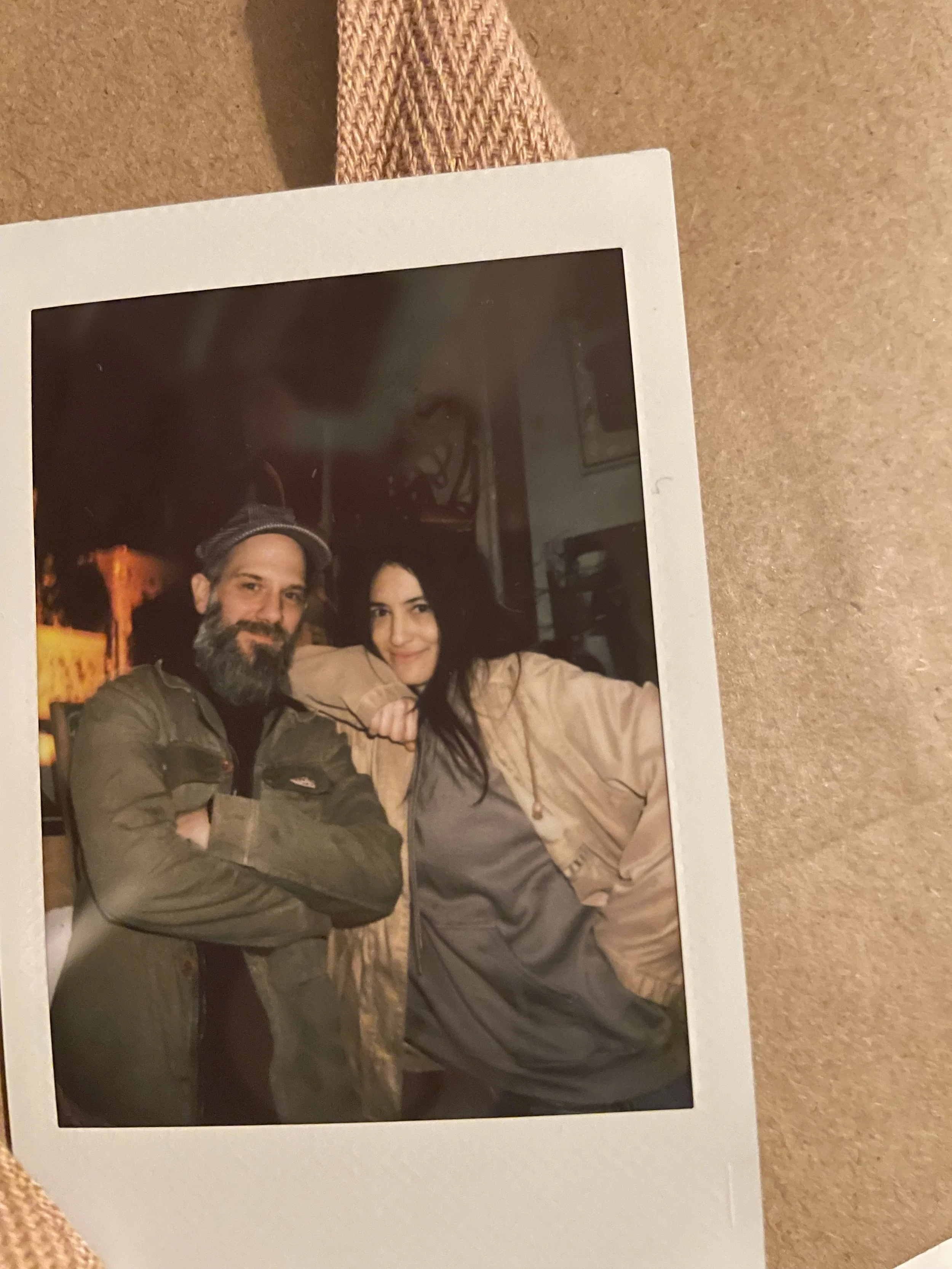
Dutch and Jenna
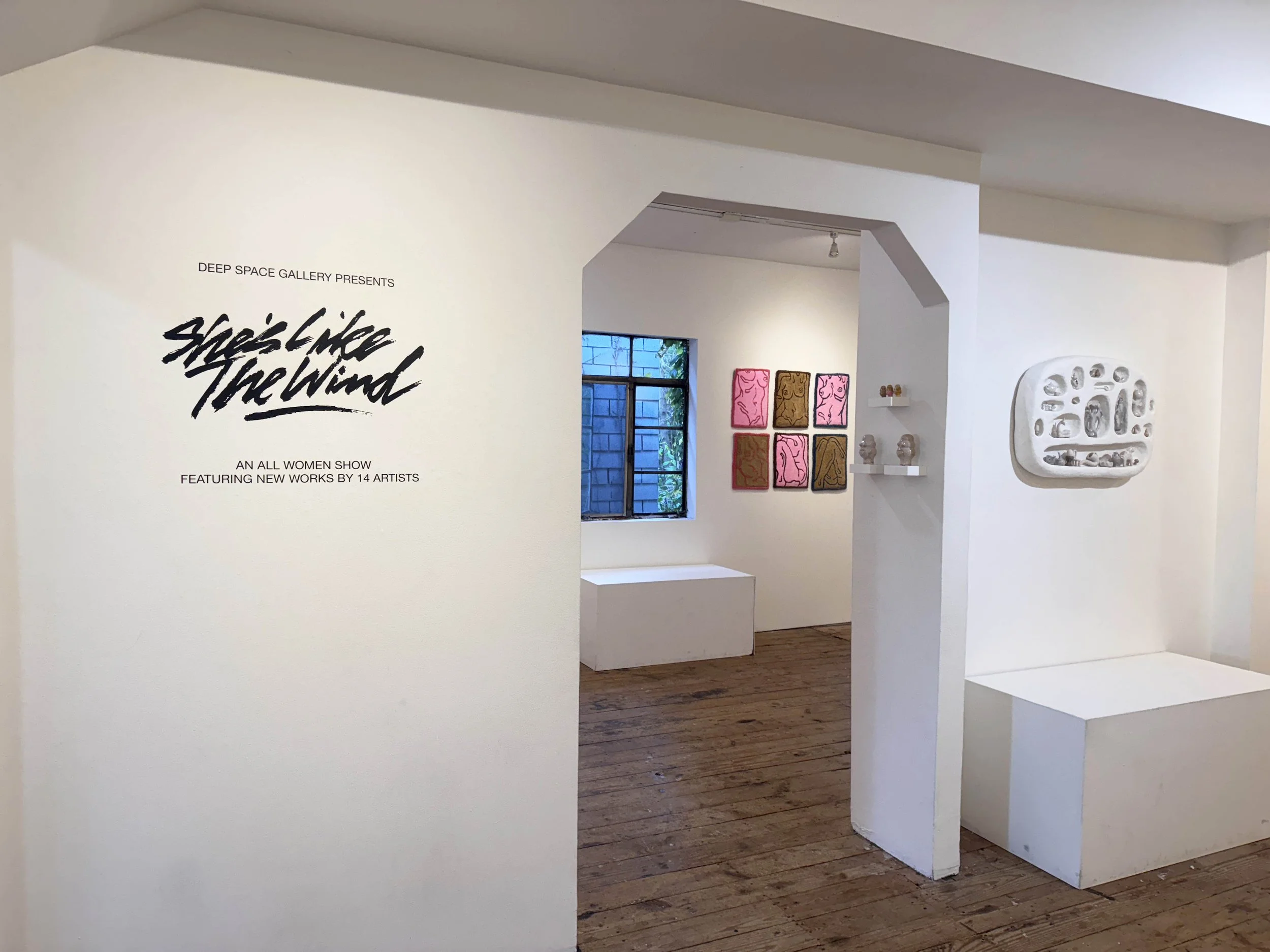
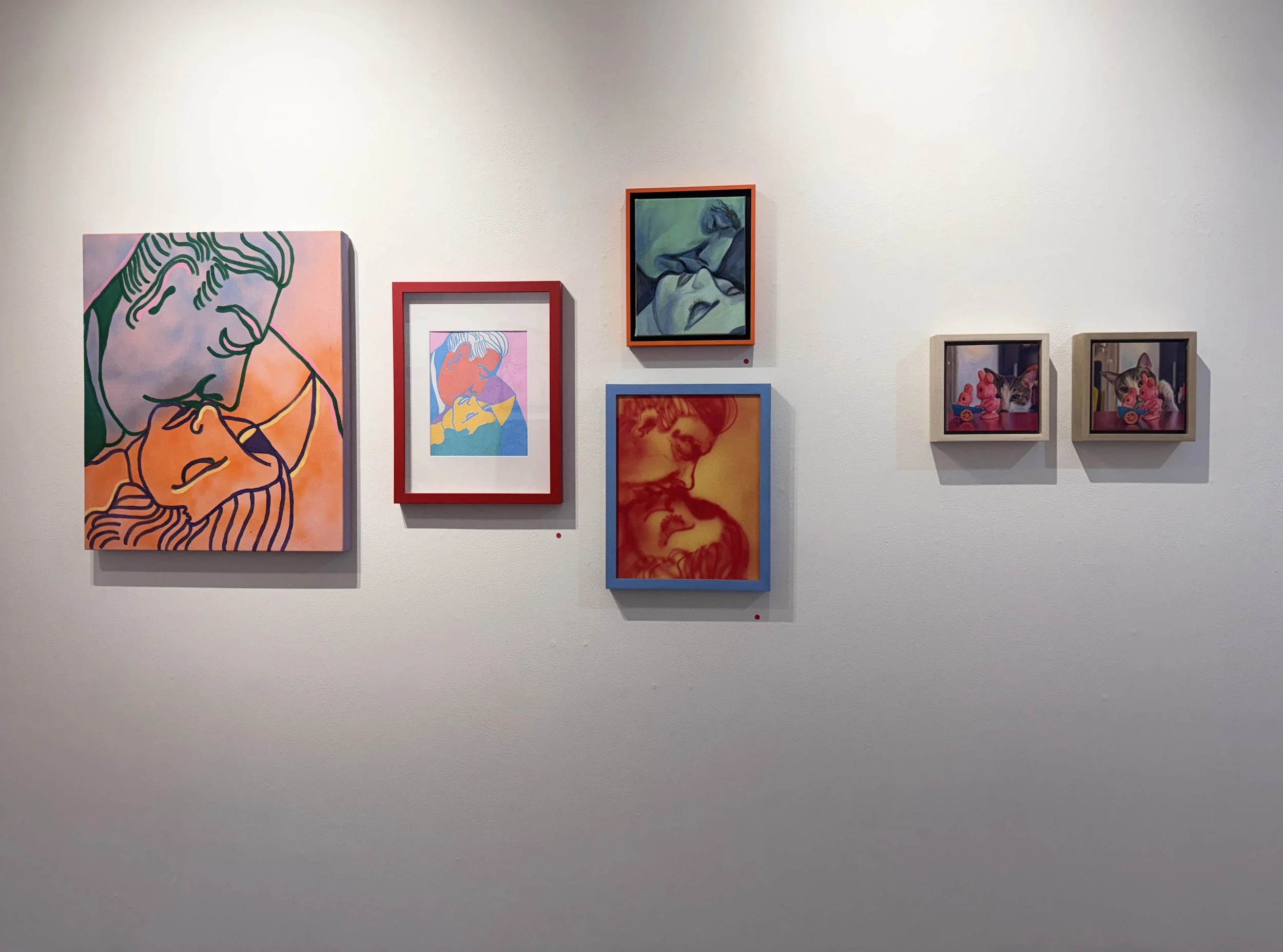
Deep Space Gallery - She’s Like the Wind Exhibition Space - artists shown Sarah Grace, Shimonna Stokes
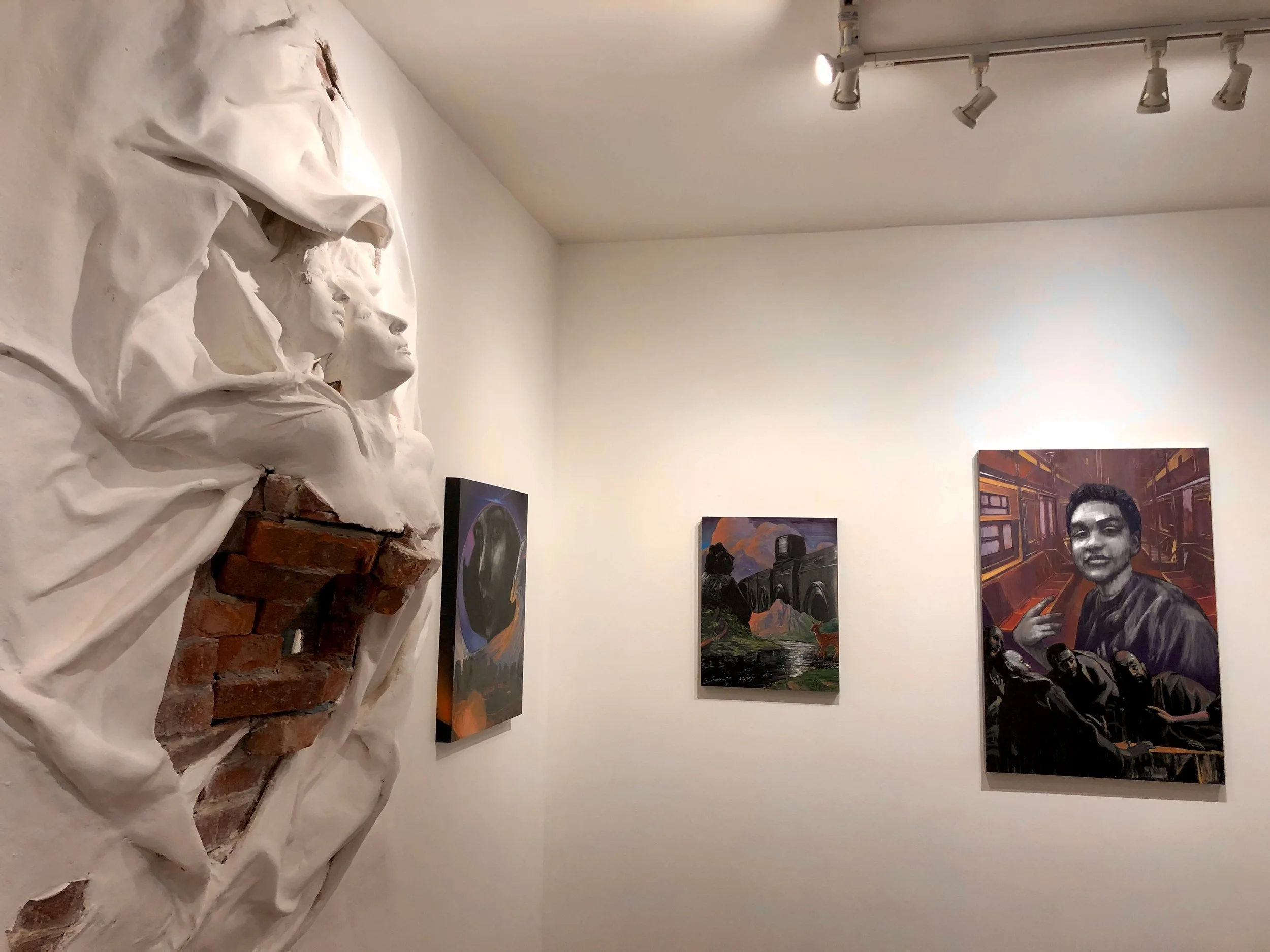
Deep Space Gallery- She’s Like the Wind - artists shown Amelia Shields, Jodi Gerbi
Deep Space Gallery- Distort Exhibition in 2020
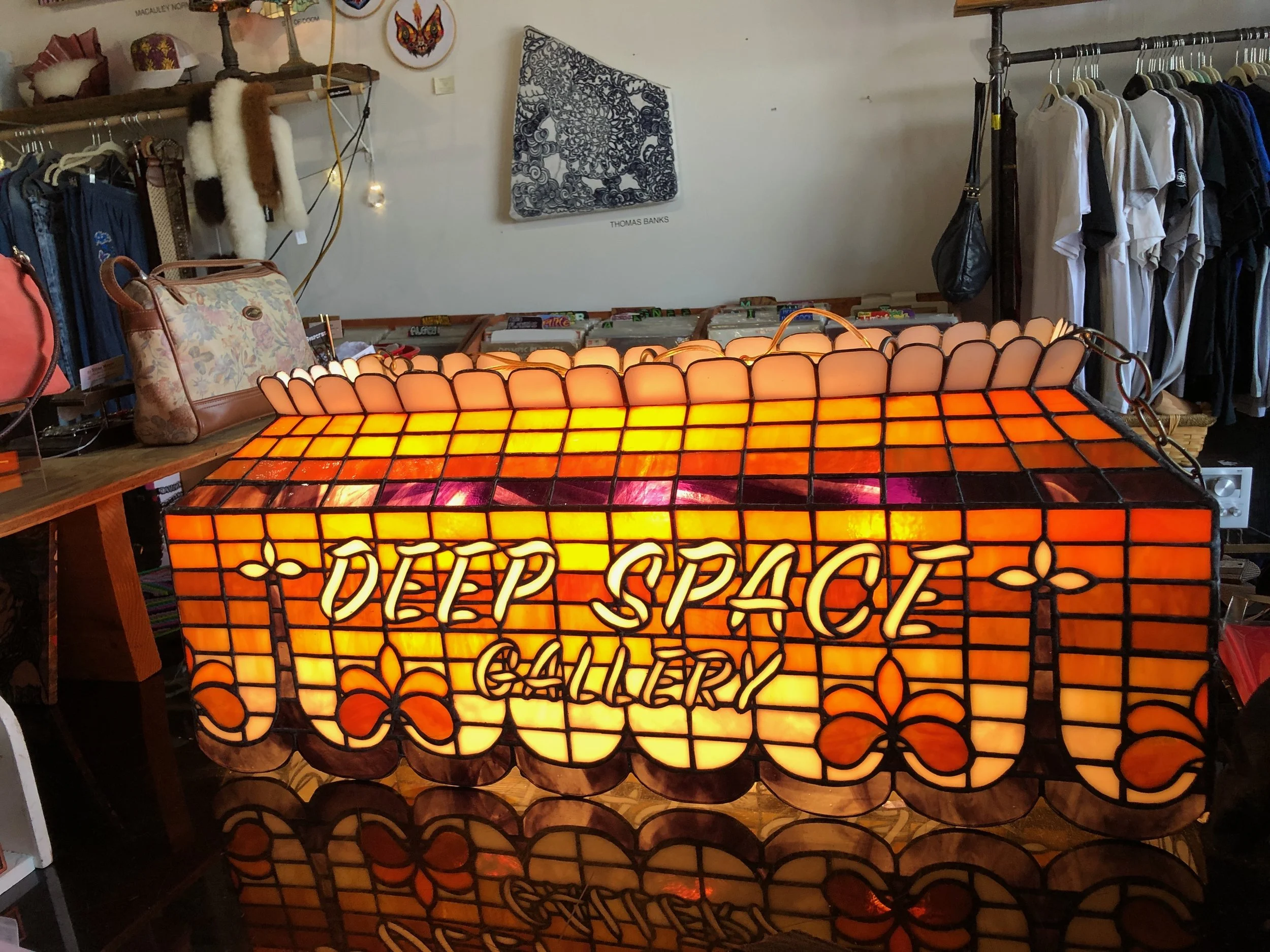
In the Hive at Deep Space Gallery in 2020
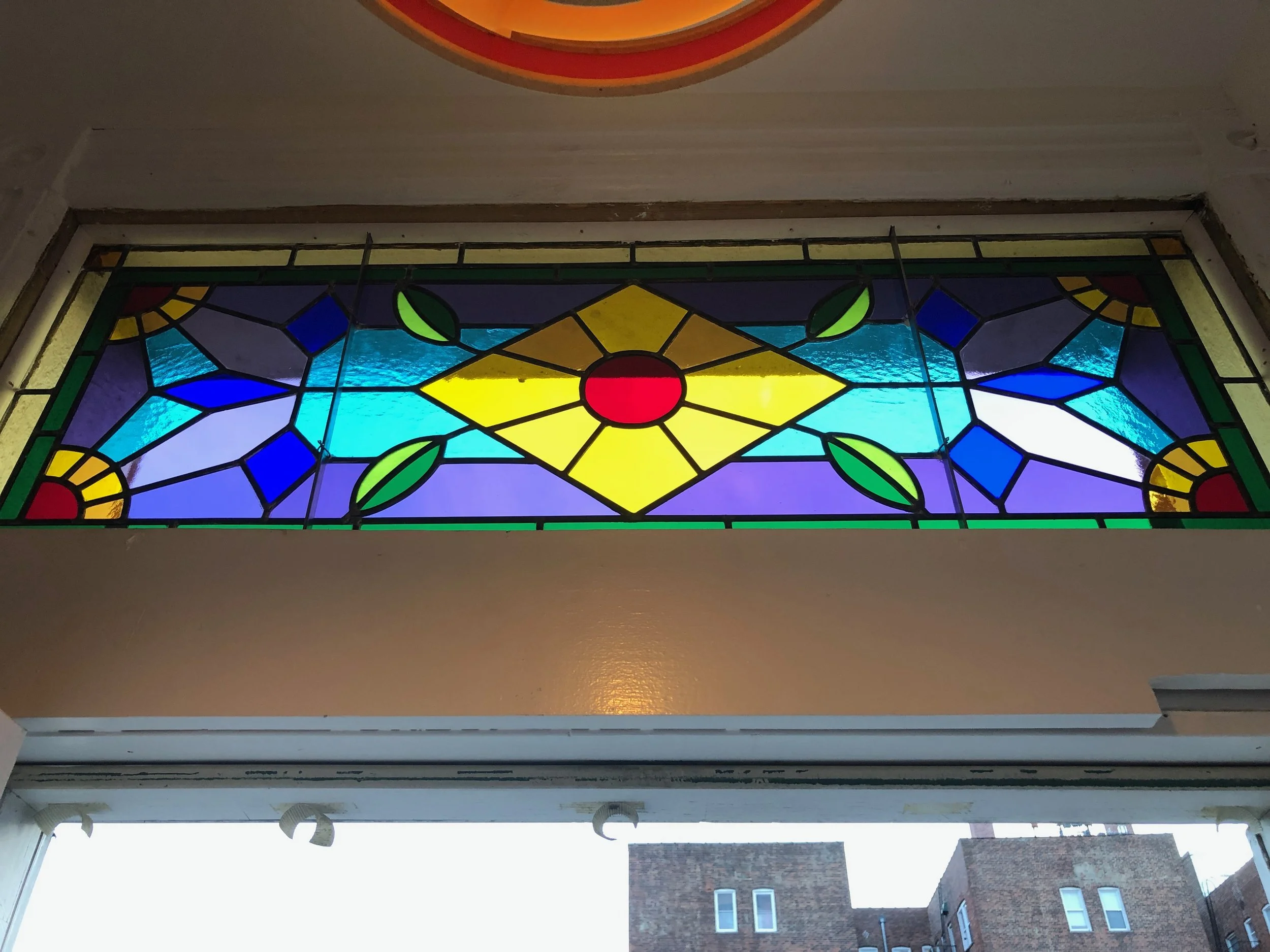
Stained Glass window that Dutch made for us inspired by pattern that were in our fireplaces - 2020
Cross Episode Connections
Tris McCall (NSSP #105, Season 1) — Called Deep Space "extremely 111 First Street" in his episode. That quote is delivered directly to Jenna and Dutch here, and their response is one of the best moments in the episode. Worth going back to #105 if you haven't heard it.
Distort: Mentioned here as an early founding partner and supporter of Deep Space Gallery, and the inspiration for the gallery's name. Distort is the subject of one of the next episodes.
Connect with Nat
Website: natkalbach.com
Music: Our theme music is "How You Amaze Me," composed by Jim Kalbach and performed by Jim Kalbach, Bryan Beninghove, Charlie Siegler, and Pat Van Dyke.
Support the Show: Subscribe to the podcast and sign up for my Substack to receive additional stories and visuals that complement each conversation.
Share Your Story: What sidewalk stories have you discovered in your neighborhood? Share them with me through email or social media.
Nat's Sidewalk Stories explores the intersection of place, community, and storytelling through conversations with practitioners, community leaders, and local changemakers.
Full Transcript
Jenna and Dutch: [00:00:00] It's that spirit that I think is in the air in Jersey City or in the vibration of Jersey City, the ley lines , who knows, of this latitude and longitude that makes people aggregate here who feel a little bit, different or outsider-y and are looking for places to congregate and express themselves.
Nat: When I had a podcast a while ago with Tris McCall, who is a writer, critique, and, probably the person in Jersey City who's tracked more of its art scene history than anyone, He told me that Deep Space Gallery has an extremely 111 First Street feel, and he meant this as the highest [00:01:00] compliment.
111 First Street was the legendary warehouse artist community in what we know now as the Powerhouse Arts District It was demolished in 2007, and it is still mourned.
But here's the thing. When I told Jenna and Keith, who goes by Dutch, the co-founders of Deep Space Gallery about this, Dutch said he had never even been inside One Eleven. He didn't inherit that legacy consciously. They just lived it. Deep Space Gallery sits at 77 Cornelison Avenue, and it is built into the side of Bergen Hill.
It's been there for 10 years now. It started as a scrap metal warehouse with Pepto-Bismol pink walls and a cast iron bathtub somebody threw off the roof. Tell me something that's more Jersey City than this. Dutch built the gallery walls himself. He grew up building skateboard ramps and borrowing lumber from [00:02:00] construction sites, so the physics were familiar.
And Jenna, she came from nursing, medical anthropology, a PhD she walked out of, and years as a doula, and she brought all of that into how she thinks about holding space for artists. In this conversation, we talk about what it means to build something beautiful in a city that's changing faster than you can track.
We talk about graffiti and lineage And the question of why any of us make art at all. And we end up somewhere I didn't expect, kind of like in the 1880s at a salon on Pacific Avenue where a woman named Ermini Smith was gathering scientists, poets, and Oscar Wilde.
That house still stands. You just have to know where to look. I'm Nat Kalbach, and this is Nat's Sidewalk Stories.
Dutch: I'm Dutch. This is Jenna, and [00:03:00] we are longtime friends. We're both grew up in New Jersey, but we met in Jersey City. I went to a little art school in Plainfield, New Jersey called Ducre School of Art, and it's a great little place.
It was like a old Victorian house with a school attached to it that we got to live at at the time, and really shaped my art that's where I learned to do stained glass, I would just kinda daydream off into the stained glass, and it was just one of these moments where it was like, "Wow," like I didn't really know people did that, and so that was, like, really cool knowing that I could make something, and then I just really dove into it. What drew me to stained glass, too, was the finality of it, I guess.
I don't know if that's the right way to put it, but, it was kinda like a beginning, a middle, an end. There was a process that gave you the result that you kinda - designed, where painting [00:04:00] was a lot of trial and error and open-endedness, which I've learned to love more now. I moved to Philly for a while, had a little art studio, almost like a pre-Deep Space space there where it was a couple of my buddies were living there. And we would put on little... I guess even at the art school I would go in the hallway of where we lived and hang my friends' artwork and we called it the small gallery. Anywhere there was walls, I would always gather my friends' art and show it.
So that was kind of precursor to Deep Space.
Nat: Jenna's path to Jersey City is not a straight line. She grew up in the New Jersey suburbs, and then she went to Montreal for college. Then she moved to Jersey City in 2006 and started doing JCAST almost immediately. JCAST is, short for Jersey City Arts and Studio Tour, and it happens annually for decades.
Was hanging Dutch s-stained glass in her own apartment for [00:05:00] one of the early shows, and then she also went back to school and got her nursing degree and eventually a master's. Before she decided that being a generalist, someone who wants to understand everything, was not a limitation.
It was the whole point
Jenna and Dutch: My, father, grandfather, great-grandfather were all Jersey City, natives. I still to this day wanna go, to Dickinson High School where my grandfather taught phys ed for 42 years,
so I'm like, somewhere in Dickinson High School there's gotta be, like, archive pictures of Saul Geiger who, taught a lot of kids in Jersey City how to swim. That was, like, a big thing, you know?
Which really hit us one day when we were over here with our buddy who grew up in Jersey City. Biz Nice. Shout out to Biz Nice, who's a- Local DJ.
Yeah , and he was on the phone with his, who was it? His- His godmother ... his godmother. And he said, "Oh, I'm here with my friend Jenna Geiger and Keith [00:06:00] Dutch." She was like, "I-" And she goes, "Geiger? Like Saul Geiger?" Like Mr. Geiger? He taught me how to swim
When I came to Jersey City, I was looking for, a kinda artist, mixed-use loft space with my best friend that I grew up with. And Oh." This feels like I could live here. 'Cause after living in Montreal, no other place felt right. I had already been doing JCAST while this whole adventure of me going to school in Madison. Every year from 2006 till 2015, I was participating in JCAST, putting on exhibitions in my home space. I was, living at 150 Bay, like in the early days that 150 Bay first was habitable, and a whole wall, two walls of windows were just filled with Dutchie's stained glass for JCAST.
And yeah, I guess I've always been friends with artists and creatives. [00:07:00] It's like where I felt most at home. And, I don't know, I guess it was like 2015? Maybe like 2014. W- Jen and I would always be up late hanging out- Fantasizing about like- Fantasizing about-
what could we do with all these talented people that we know, and their talent isn't really being utilized. And like how could we pool that together? And all kinds of ideas came from that era of what to do.
I had a studio in Newark, I just never, never felt at home in the Newark art scene. I wasn't there enough. I already had my people out here, the studio was great, but I just didn't- He has a commute to his studio
didn't get there. You know, not a bad commute. And I was just kind of like, I would love to find a place closer, and it would be cool to get a bigger place and then you could have a smaller space in that bigger place and have your friends around and everyone benefits 'cause the rent's cheaper.
[00:08:00] Found it on Craigslist, it was a warehouse. An old scrap metal warehouse
really not pretty. Someday we gotta show pictures of what this, what Deep
Nat: I would love
Jenna and Dutch: looks like now.
Oh, it is- Yeah, part of our, um, spoiler alert, a part of our 10-year anniversary?
The walls were barely finished. The walls that were were this weird Pepto-Bismol pink. There was a cast iron bathtub. It was like, "Does someone live here?" What was going on in here?
I remember the scrap metal guy came and, he threw this, what must have been 300-pound cast iron tub off the roof into his pickup truck. Yeah. Our age friends that we brought by got it, and they saw the, the diamond in the rough.
But our older people, or Jenna's parents, or whoever we'd bring here- Anyone who was, like- Was like, "What are you- ... civilized was like, "What are you doing?" "What do you see here?" "What are we missing?"
It's like all these little nooks and crannies and- I don't know. It just felt like a fun house
We were, like, going back and forth with the [00:09:00] landlords on a lease, and - I think we asked the landlord- ... "You better go" ... about too many questions, and they were like, "You know what? Like, no deal. You guys you're asking too many questions and want too much." And we were like, "Okay." And then probably a couple months later, "I still see it online."
I'd drive by and the sign was still up. I remember their office was in Secaucus. I just drove out there one day, met with the guy, and I was just like, "Look, I still want the space." And the new lease that got presented was not as favorable as the first lease that was presented.
And I was like- "You know what? Fuck it." "I'm gonna sign the lease. And I remember I drove right to Jenna's place remember that big thing we were looking at?
I just- He's like- I just like- "He's like I signed my name on the dotted line." I'm like, "What are you talking about?"
Nat: Wow.
Jenna and Dutch: And, um, yeah. And at that point no one else was in anymore. That, yeah. "Oh my God," like, "What did I just do?" I gave them a deposit, I signed the lease for five years and, got the keys and- Oh my God, and the space was so raw.
Do you know those hollow bricks, it's like that's what used to be, or it is, still is [00:10:00] downstairs, but- Yeah.
Nat: Oh, wow
Jenna and Dutch: to kind of put walls in front of
Nat: You did all that
Jenna and Dutch: Yeah. So I was doing carpentry before this and I grew up skateboarding, so we were like always building ramps, and I had a, a half pipe in my backyard that we built. My dad had some tools in the basement and we would go steal wood from a construction site at the end of the night in the, in the suburbs and build ramps. I knew how to build some stuff and had some tools and had a bunch of friends that were- Yeah, everyone pitched in on the let's clean this place up.
It was a big community. It was kind of exciting, like everyone was... And I guess at that point this whole, general network of people that we knew were somewhere in their 30s. Somehow it felt like a meaningful thing to do. This was 2016, 2015 into 2016. It was worth it and exciting Yeah. It was like, let's get all this rubble out of here. There was straight [00:11:00] up, like, rubble. Yeah. I forgot about the rubble. Yeah. It was- We had to get rid of just rubble.
Nat: So you call it Deep Space. Where's the name come from?
Jenna and Dutch: So the name is a nod to my... I was into graffiti a bit as a youngster,
So my crew was Alone in Deep Space. Well, AIDS Crew- Well ... is what people would know it as From, yeah. And it had many acronyms. Alone in Deep Space, America Is Dying Slowly.
And It Don't Stop. So , when we started the gallery, it was our buddy Distort, who a lot of people around town know. He was our early partner, and one day was just like, "What if we made the upstairs a gallery?" And I was just like, "Okay," "That's cool."
"Yeah, maybe we'll do that." And, kinda figured the downstairs would be paying the bill.
Upstairs would just be this passion project, that the downstairs would subsidize, and the opposite happened, and the gallery took hold right away I've taken calling it the flex space- Yeah ... because it's been so many things, and can still [00:12:00] be so many things, and it has been many diff- yeah, it's like it doesn't really have an identity, but is everything When we were like what if it was Deep Space, and I remember Distort was like, "Yeah, 'cause I wanna have a show there, and it'll be like my solo show, and it'll be like Distort Alone in Deep Space," And it's got a cool ring to it, it's a space for deep thoughts, deep conversations, so many different interpretations. Yeah
And a bunch of, , AIDS crew artists graffiti artists who are formally trained artists and have had been in group shows, solo shows. So our first show ever, was an AIDS crew member, one was another graffiti artist but from another crew in Philly. We've definitely had a lot of street artists in the show.
It's just been like- No, it's more street art, gr- really graffiti artists. It's, whatever, I'm gonna get, uh, nitpicky with the term street art, 'cause I... There is a difference between street art and graffiti. Yes. For sure. And, sometimes the two don't get along, and [00:13:00] they both can coexist, and sometimes it's not always, uh, not always a pretty coexisting.
Nat: You say that you're, a mix of, formally trained artists but also outsider artists has there ever been a show where you put two of these parts together and you created a conversation that was surprising to you
Jenna and Dutch: I think more natural and norm. We didn't begin the gallery with, a mission statement I think it's something that evolved probably out of beginning with showing street artists, graffiti artists that they're not necessarily formally trained, but incredibly talented. The DIY you can do it, dream something up, figure it out as you go, just take the first step kind of thing is what happened.
I remember early on we were like, "We're gonna give you a proper gallery experience , even if you never imagined that there would be like a gallery wall that your art would go on," we're going to take your art seriously. We have [00:14:00] mid-career artists that have shown in major galleries in Chelsea and whatever showing right alongside a person that this is like the first piece of art they've ever shown publicly.
And that has always been important to us, it's how like the world is. Everyone's in different stages of things, and the idea of being like so polished that you're only seeing people that have been through art finishing school, um, was not i- ever our ethos.
People often say, "This feels so authentic."
There's no pretense maybe. There's quirky, real rawness about the space itself, and I guess I see artists often as being super, quirky, raw people. And, in a sense it's like these things have all magnetized together.,
Nat: One thing that I wanted to mention, I don't know if you heard the podcast, but I did an interview with Tris McCall, and he, talked about you [00:15:00] guys.
He said that, Deep Space has an extremely 111 style feel. So meaning, um, 111 First Street,
Jenna and Dutch: I never made it in there. I know the legend. It's one thing I regret is I don't know. I I was never presented with an opportunity to go there,
Nat: he says that, he sees the shadow and the imprint of that lost community, living on in what you're doing at Deep Space. When you hear that, did you know that people are seeing you like that,
Jenna and Dutch: So funny. I don't think that's weird. I think it's, there's something about, there was a culture I'm gonna say, early 2000s. Right as we changed millennia Jersey City was a light for all the moths, the weirdo moths to come aggregate at.
And One11 was, one of those central places where people congregated, and it wasn't just visual art. It was, like, makers and music and all [00:16:00] kinds of stuff going on, and I think, that energy still lives on in Pro Arts Pro Arts grew out of the 111 First Street JCAST.
Out of 111 First Street. In a sense, there's a piece of Art House that feels like it's an extension of 111. Christine Goodman began that project, and that project was, the theater people aspect of this scene that felt like, "Oh, I'm gonna start something and I'm gonna call it Art House Productions, and we're gonna figure out how to do it."
So all these things are- are pieces of that. And in a sense, maybe, Deep Space is a next gen kind of iteration, with a different whole crew of people. There's definitely still 111 artist connections that work with us,
and yet we're a whole different cohort of creatives.
It's [00:17:00] that spirit that I think is in the air in Jersey City or in the vibration of Jersey City, the ley lines , who knows, of this latitude and longitude that makes people aggregate here who feel a little bit, different or outsider-y and are looking for places to congregate and express themselves.
When we first found this space, I was doing tons of research, about this whole area, and I found... downstairs in our back, deep, deep, deep space downstairs a bunch of books of stuff around this area, and there was this, woman in the late 1890s who ran a, group called The Aesthetic Society of Jersey City, and had her space on Pacific Avenue, and she would do salons.
And at these salons, there's [00:18:00] like menus in this book that show the lineup. Oscar Wilde read work here. It was like the names of these people, it was like, wow. This was a cultural, intellectual, creative hub, and I loved it. It was a woman who was leading The Aesthetic Society of Jersey City and hosting these gatherings
and that, for me, that was always a fantasy of getting people together to talk about important, deeper things. So, when I found that, I was like, "Ah." It's part of this area. It's built in somehow,
I've heard the kind of, parallels with 58 Gallery. 58 Cole Street. Orlando Reyes ran it. Dancing Tony was a big part of it.
That was my intro to the Jersey City art scene. I [00:19:00] had a solo show ... solo show there. A couple- And the first gigantic miniature show
Yeah, the thing I was doing in Philly, I would love to do it here, and they were on board. But it was a quirky little space on Cole Street where Orlando had his studio space, and they would do live music and DJs , when artists could afford to be downtown, so yeah, that's, you know, another one we get often is, "Wow, you guys are really carrying the torch."
The 58 torch,
Nat: keith, I have a question about you as an artist, doing also gallery work
Are you having problems to carve out that time for you as an artist, or how does that work for you to do both things at the same time?
Jenna and Dutch: Timing is a problem for me in general, as a lot of artists probably do, I'm procrastinating a lot. It'll be the night before the mini show and as I tell Jenna, like, "I'm gonna make some pieces, so leave a little space for me."
And we're hanging the show till 7:00 in the morning, and then I'm here [00:20:00] making pieces till 3:00 in the afternoon, and we're opening the show at 7:00 PM. So you know. As an artist, I often tell people I, I'm not always very creative. I'm pretty good at making art, but I'm not, flowing with ideas.
I'm envious of my friends and fellow artists that are just they have ideas just coming out of them that they can't wait to express, where I'm like, I've been blessed with, some friends, our friend Rebecca, who's a interior designer who tries to work my stained glass into all these projects she does, and it keeps me busy.
It gets my creative juices flowing. I'm working on a mural right now. But inspiration is, is not always there. That's the tough part for me. But when I have a project, I'm pretty good at, okay, I gotta get in there and make this thing.
You need like a prompt ... get stuff done Which I would say most artists do need a [00:21:00] prompt.
I mean, we work with over 200 artists. I feel everyone has a different way. Some artists are like I- I have never used a sketchbook.
And there's other people that, like, s- their sketchbook is what their art becomes. They work from that. And, what it means to be creative is, is, you know, we could have a whole
Nat: Yeah, - I just had two weeks where I just didn't feel it. I used to be really worried about it. Like, am I, weird that I don't have that, urge? No, I'm actually kind of cool with it, you know?
Jenna and Dutch: Yeah. When I was probably 12 years old, my cousin and I were on the boardwalk making friendship bracelets and selling them to passerbys, and I remember my grandmother telling me "Oh, you're gonna be an entrepreneur."
Before I even knew what the word meant. She's like, "Uh," like, "Okay, I see what's going on here."
The gallery's a great happy medium for me where I, I'm, are surrounded by art. I get to work with artists. I'm never trying to crowbar my art [00:22:00] into the gallery, if it's the right fit. It's not just like a, a place where I know I can show my art, so I need a gallery.
That's not,
In the way that I work with artists, I feel like I'm, like, doula role for them in terms of helping them understand what it is that they're doing or they're trying to do, or why they're doing it, and everybody has a different reason that they are doing art. And of course, you're comparing yourself to other artists "Oh, well, what an artist is supposed to do?"
But that's... Doesn't matter. Ultimately, it's like why do you make art or why are you making art now? What is driving you to make art now at this particular juncture in your life? And it might change, and sometimes artists are like, "I want more. I wanna create bodies of work. I wanna be part of the art canon for posterity and the future of human civilization."
And some people are like, "I just need to do it 'cause otherwise I will go insane." Some people are like, "I grew up in a [00:23:00] household of artists, so the idea of continuing to make work is, really important to me and central to, who I am."
What do you feel like motivates your art making?
Life keeps throwing things your way that you're gonna have to work through, and maybe you're just in a period right now where it's, not quite clear, and maybe you can occupy your creative time with something that makes you feel you're moving. Maybe doing color explorations. I'm doing some pencil drawings ' or I'm messing around with watercolor 'cause I haven't done that in 10 years. Just so that you're moving things along when you're not quite sure what it is that you wanna put out there in visual imagery.
Um,
I feel like that-
Nat: have more understanding of artists and how we feel than many of us a- about ourselves. Which is funny. You're right." You know exactly how we're, how we're ticking.
Jenna and Dutch: I talk to artists about art, for as long as I can remember. It's a very lonely space in your, where am I in this [00:24:00] creative cycle? And just having someone sit down next to you and be like, "Oh, I see what you're trying to do there." "Are you getting stuck here, or is it there?" Or, "Are you feeling like you're not able to break through this place?"
I think there is a, there is an element of that for a gallerist or a curator that, you're working with artists in this way that you're trying to help them, almost consolidate whatever it is that they're doing at this moment in a way that would be presentable then to an audience that doesn't necessarily know any of the background of their experience.
You're there to help them meet audience that doesn't necessarily already have a relationship with what they're expressing.
We don't like to put our artists in any kind of binding Agreement, for example. We want them moving through things as What feels right for them. And I think some [00:25:00] gallerists are, like, we are trying to professionalize your artistic practice and get your artworks up to a certain price point and get a market for them and...
Yes, those are things, for sure, but not every artist that's their goal, and I wouldn't say that that is our goal of being a gallery selling art is important to us for reasons not just, for revenue to come in, but because it's, again, part of this ethos of it's important that people's expressions then go out and live in the world and people are almost endorsing whatever that expression is by deciding to collect it.
I think there's something, so beautiful about that. So I mean, if an artist is looking for advice about professionalizing themselves, we definitely have 10 years of experience now that we're able to, guide them through that as well. Having seen what the world of art market is.
Nat: I wanna ask you about, Wandering [00:26:00] Lights projects. I think that's like a collaboration, project, and I think you two love to collaborate with other people, which I also think is, a strength of you guys
Jenna and Dutch: Wandering Light specifically is a little side project we started with our friend and artist, Shimonna Stokes, who runs Elevator Studios by Hamilton Park.
And we were approached by Paul Silverman to take over the curation role that was, Kristen DeAngelis, who's now at Mana. She was curating a couple buildings of theirs in the Majestic Theater lobby, and then another, and she was curating, and she needed to step away to go full time at Mana, and she suggested Shimonna really. And Shimonna was like I've never really- She's like, "I can't do that alone.
Help" ... never really done curating. I don't know. Like, do you guys maybe wanna, like, team up on this?" And we were like, "That sounds great."
But we wanted it to feel a little different, and I don't know. I'd say the art we show here [00:27:00] isn't always, but leans towards quirkier at, at Deep Space, where the art that we show There's more of a formality to it. A little more of a formality. Not always, it's in the lobby of a building where there's residents and,
it shouldn't just be Deep Space doing it. It felt like it should be its own little thing, to be Wandering Lights Project. Yeah. Yeah, it felt, yeah. And because we do so many different collaborations, sometimes it feels like this particular collaboration should have its own identity, and Wandering Lights Projects, grew out of that request for curation in a space, but we knew that we'd be doing kind of programming ideas for that.
Like, we did a bird watching session, at Caven Point, that grew out of artists that we were showing that were wildlife artists. They were birding during COVID. The two artists that we showed at The Majestic, and we made a bird watching field trip to Caven Point from the art show.
[00:28:00] Collaborations are essential to us. We feel that it's what connects us to others. I almost feel like the word community is so overused at this point, but it's really, just network relationships. Sometimes people just feel like so siloed in life, and I feel like anytime we w- we work with people, there's something just so life-affirming about it that it's really important to us we collaborate at any, any opportunity. We love it. It's a wonderful way to, better understand a person and their business, and then we end up recommending them for something else.
We're not in a competitive every man for himself kind of vibe. Our vibe is let's grow together, everyone doing better is better for everybody,
Nat: You're not downtown, so actually it, it has to be a destination to [00:29:00] get to your gallery. How do you feel about, like, how people find you,
Jenna and Dutch: I'd say definitely when people come in and we don't recognize them, it's one of our first questions, "Oh, how did you find out about it?" And it's usually their social media or we poster a lot, so we'll put up flyers around town, and a lot of people respond to that. And, you know, it is people in the neighborhood, too.
People walk. It's interesting 'cause while the neighborhood's growing, this block really hasn't changed very much. There's some housing that went up down the street and down the other way and around the corner.
And it's like w- I, I have friends that live downtown they live by Hamilton Park, and if you're talking about something in the Italian Village, they're like, "Oh, it's so far away." And I'm like, it's, it's a couple blocks away. What do you mean it's so far away? It's, this weird thing where, I don't know, people don't get out much,?
But when people do it's amazing. And, we're, [00:30:00] keep weird hours over here, and so it's not often that someone's just walking by and coming in. But- But on a night that we open up the garage- Yeah ... people who are like, "I, I drive by this every day, and I saw it open, so I came in." Yeah, I walk my dog- That happens
down here and People are curious. If they do walk by- Yeah ... or drive by it- They do ... they're like, "What is that place?"
Nat: that's cool
Jenna and Dutch: Sometimes I'm like, "Oh, you know, are you new to Jersey City?" "I moved here two years ago."
"Well, that's impressive that you found us within two years," ' I think it's maybe part of why we are motivated to go- out.
It's just so that there's almost like more lines of pathways that people could come here, but also that we could bring the energy that is this Deep Space thing to other pl- like, we'll come to you. You can't come to us, we'll come to you.
Nat: If you could spend an afternoon with anyone from Jersey City's past, who would it be, which corner would you choose, and what would you ask [00:31:00] them?
Jenna and Dutch: Erminnie Smith. That's the Aesthetic Society lady. A vibrant cultural milieu of Jersey City in 1882 that she was at the helm of.
This all occurred on Pacific Ave. I feel like we never went to the, the number on Pacific Ave where it is, I would sit on that stoop and talk to Erminie Smith, I would wanna just hear why she, in that era, which was her own turn of the, pre-turn of the century time, why she was in Jersey City, how did she get artists and intellectuals to come to Jersey City to her salons? How did she build, this network of really interesting people that are not just letting life come to them, but are ex- you know, pursuing things that they find interesting, that they're enthusiastic about.
There's something about that word enthusiasm,
that the [00:32:00] word root is, theos, like God. The thing that inspires, godliness in a person, which I think is a really interesting thing. I love when people are enthusiastic about something , call it passion. It's just something that really moves you, something soulful, something inspiring, something that, again, is like, what are we doing here?
What even is life, and exploring those types of questions. I think, yeah, a, a nice stoop talk with Erminie Smith would be really awesome,
the stoop sounds cool, but I'd like to be in the, in the room With like- Oscar Wilde ... at one of those events. Yeah.
That would be so cool
Nat: It was great talking with you.
Jenna and Dutch: Oh, awesome. We'll see you soon.
Nat: After we stopped recording, I kept thinking about Erminie Smith. In 1876, she started gathering people on Pacific Avenue. [00:33:00] Scientists, poets, artists. It's said that about five hundred people came to some of those meetings. That's crazy to think. Thomas Edison brought his phonograph. Oscar Wilde came to read. The house she held those salons in still stands today, if you know where to look. What Jenna and Dutch have built at Deep Space isn't so different.
It's the same experiment. Make a space. Come and be curious here. See who shows up. You can find Deep Space Gallery at 77 Cornelison Avenue in Jersey City. I will link up their website, and by the time this episode airs, their 10-year anniversary show may be still going on.
But in any event, go by and take a look at this amazing gallery. Knowing them, I know something new will already be on the wall, our theme music is "How You Amaze Me," composed by Jim Kalbach, and performed by Jim [00:34:00] Kalbach, Bryan Benninghove, Charlie Siegler, and Pat Van Dyke.
